


With early warning systems lagging behind global targets, the WMO is urging governments to invest in climate preparedness, scientific monitoring and adaptation ahead of COP31.
UN weather agency chief praises Türkiye’s preparations but urges governments to turn climate pledges into action, expand early warnings and strengthen resilience.
The World Meteorological Organization (WMO) has warned that the developing El Niño could become unprecedented in strength, raising concerns over extreme weather and humanitarian risks as world leaders prepare for the COP31 climate summit in Antalya, Türkiye, where governments face mounting pressure to turn climate promises into concrete action.
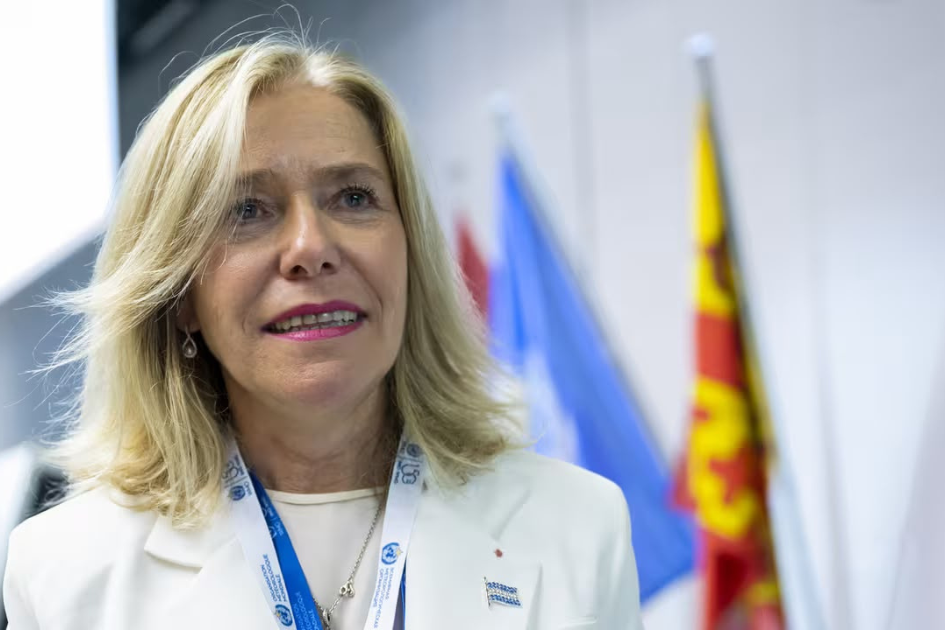
WMO Secretary-General Celeste Saulo, speaking to Türkiye’s Anadolu Agency ahead of the November 9–20 conference, praised the host country’s preparations but stressed that the success of global climate negotiations must be measured by implementation rather than political declarations.
Her remarks come as the UN weather agency forecasts an exceptionally powerful El Niño, potentially disrupting rainfall and temperature patterns worldwide, threatening food security and increasing risks for communities already vulnerable to climate change.
In its latest seasonal outlook, released on October 26, the WMO warned that sea surface temperatures in the tropical Pacific could rise to 3.8 degrees Celsius above average between November 2026 and January 2027.
The projection, if realised, would indicate an El Niño of exceptional intensity, although its impacts would vary significantly across regions.
The warning adds urgency to COP31, where governments are expected to address climate adaptation, emissions reductions, finance and the implementation of commitments under the Paris Agreement.
El Niño intensifies global climate concerns
Saulo said the developing El Niño demonstrates the urgency of strengthening climate resilience and adaptation as extreme weather increasingly threatens lives, livelihoods and economies.
El Niño is a natural climate phenomenon associated with unusually warm waters in the central and eastern tropical Pacific. It can disrupt atmospheric circulation, affecting rainfall, drought conditions, temperatures and storm patterns across different parts of the world.
When combined with long-term human-induced global warming, these disruptions can compound existing climate risks, particularly for developing countries with limited resources to prepare for disasters.
During an October 21 briefing on the WMO’s seasonal outlook, Saulo warned that the emerging event could exceed the range covered by monitoring records used over the past four decades.
The organisation cautioned that the phenomenon could peak towards the end of 2026, with consequences continuing into 2027.
A powerful El Niño does not necessarily produce severe disasters everywhere. Its effects depend on regional weather patterns, seasonal conditions, preparedness and the exposure of vulnerable populations.
Nevertheless, the forecast has heightened concerns about agricultural production, water availability, extreme temperatures and humanitarian needs.
The WMO and the UN Office for the Coordination of Humanitarian Affairs have called for stronger anticipatory action to prevent foreseeable climate hazards from developing into humanitarian emergencies.
For climate-vulnerable countries, the warning reinforces the importance of investing in reliable forecasting, climate-resilient infrastructure and community-level disaster preparedness.
Early warning systems remain critical
Saulo placed particular emphasis on the United Nations’ Early Warnings for All initiative, which aims to ensure that everyone worldwide is protected by effective early warning systems by the end of 2027.
She acknowledged that progress had been made but warned that implementation was not advancing quickly enough.
“There is a broad recognition that early warning systems save lives,” she said, while expressing concern over the pace of progress.
Effective early warning systems require more than accurate weather forecasts. They depend on reliable observation networks, accessible communication, community preparedness and the ability of authorities and residents to take preventive action.
The WMO will participate in a high-level COP31 event on November 11 dedicated to accelerating the initiative. The event will also feature a report on the global status of multi-hazard early warning systems.
Saulo highlighted the Systematic Observations Financing Facility (SOFF), which supports least-developed countries and small island developing states in strengthening meteorological and hydrological observation networks.
Many vulnerable countries continue to face shortages of monitoring equipment, technical expertise, forecasting infrastructure and sustainable financing.
These gaps can weaken disaster preparedness and limit the effectiveness of adaptation planning, particularly in communities exposed to recurring floods, droughts, cyclones and extreme heat.
Improving observation systems would not only strengthen national forecasting capacity but also contribute to more accurate regional and global climate predictions.
Climate justice demands stronger financial support
The WMO’s warnings also underline wider concerns over unequal access to climate information, adaptation resources and disaster protection.
Although climate science has significantly improved the ability to anticipate extreme weather, many developing countries lack the financial and institutional capacity to translate forecasts into effective community-level protection.
This disparity raises questions of climate justice, particularly for countries that have contributed relatively little to historical greenhouse gas emissions but face disproportionately severe climate impacts.
For these nations, expanding early warning coverage requires sustained investment in infrastructure, trained personnel, communication systems and locally led adaptation measures.
Developing countries are also seeking greater access to predictable, grant-based climate finance, alongside technology transfer and capacity-building support.
Such assistance can help governments strengthen disaster preparedness without adding to existing debt pressures.
The challenge for COP31 will be to connect scientific warnings with practical financing arrangements and measurable implementation.
Without adequate support, improved climate forecasts may identify approaching hazards while leaving vulnerable communities without the resources needed to respond effectively.
Türkiye praised as COP31 faces implementation test
Saulo welcomed Türkiye’s leadership in hosting COP31, describing its preparations as strong at both organisational and strategic levels.
She expressed confidence in Turkish Environment, Urbanization and Climate Change Minister Murat Kurum, the president-designate of COP31, and highlighted the country’s commitment to science-based climate policymaking.
Saulo recalled Kurum’s September visit to WMO headquarters in Geneva, where discussions focused on strengthening national meteorological and hydrological services.
She said the WMO’s priorities were closely aligned with the COP31 Action Agenda, particularly in clean energy, urban development, youth engagement and community resilience.
Türkiye will hold the formal presidency of COP31, while Australian Climate Change and Energy Minister Chris Bowen will serve as President of Negotiations under a special arrangement between the two countries.
The summit will bring together governments, scientists, businesses, civil society organisations and climate advocates to advance international cooperation under the Paris Agreement.
However, the conference will also face difficult negotiations over emissions reductions, adaptation financing, loss and damage, and the transition away from fossil fuels.
Developing countries are expected to press for stronger financial commitments from wealthier nations, particularly to support adaptation and address climate-related losses.
The effectiveness of the conference will ultimately depend on whether governments can bridge the gap between diplomatic commitments and practical results.
For the WMO, translating scientific evidence into policies that protect people and economies will remain a central priority.
The organisation is scheduled to present updated climate information during COP31, including assessments of El Niño, extreme weather risks and the importance of strengthening global observation systems.
Saulo urged governments to accelerate implementation and ensure that climate science guides decisions at every level.
“Please use science and evidence-based content to drive your policies. Move faster. Implement now,” she said.