

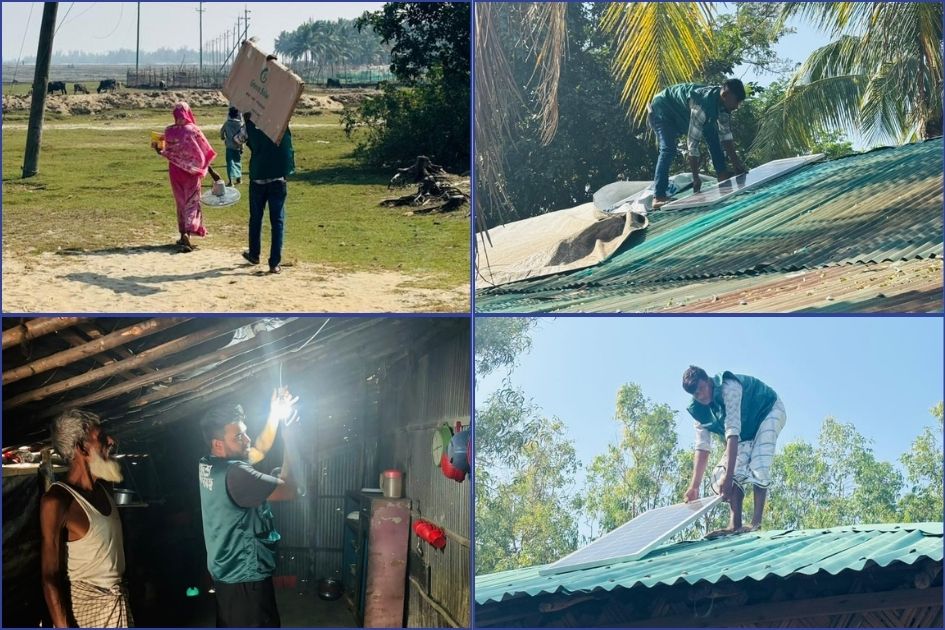



Solar power on Bangladesh’s Sonadia Island is transforming lives, improving communication, education and resilience, while offering a model for reducing dependence on volatile global fossil fuel markets in the future.
When fisherman Akram Hossain leaves the shores of Sonadia Island for the sea, his family no longer has to wait days without hearing from him. There was a time when that silence was common, not because he was lost, but because there was no electricity to charge a phone.
Out on the Bay of Bengal, Akram would spend days fishing. Back home, his wife worried. Communication was uncertain. Mobile phones often ran out of charge. Kerosene lamps gave off weak light at night and life on the island slowed after sunset. For families like Akram’s, the absence of electricity was not just inconvenient. It was isolating.
That story is now beginning to change. To understand why that change matters, it is worth stepping back and looking beyond Sonadia.
As tensions between Iran, Israel and the United States escalate, global energy markets have once again grown uneasy. Much of the world’s oil supply moves through the Strait of Hormuz, a narrow maritime corridor in the Middle East that carries roughly one-fifth of global oil trade. When tensions rise in the region, the effects spread across shipping routes, fuel prices and energy supply chains. Countries that rely heavily on imported energy feel these shocks most sharply. Bangladesh is one of them.
The country imports most of the fuels that power its electricity system, from oil and coal to liquefied natural gas (LNG). Recent data show Bangladesh spent around BDT 1.43 trillion on fuel imports in FY 2024-25, while LNG imports alone cost about $3.88 billion in 2025. When global conflicts push up prices or disrupt shipping, those costs eventually show up in electricity tariffs, government subsidies and household budgets. In other words, Bangladesh’s energy security remains closely tied to events unfolding far beyond its borders.

To be fair, the country’s energy planners face real constraints. Rapid economic growth has pushed electricity demand higher while building large-scale renewable infrastructure requires investment, land and stronger grid systems. Transitioning an entire energy system is never simple for a developing economy. Yet moments like the current global crisis raise an important question: how can Bangladesh gradually reduce its exposure to these external shocks?
Part of the answer may lie in places like Sonadia.
For decades, this remote island near Cox’s Bazar remained disconnected from the national electricity grid. Life after sunset meant darkness, heat and silence. Children studied under kerosene lamps. Families struggled to charge mobile phones. Even basic communication with the mainland could be difficult. Recently, however, a quiet transformation began.
Under a renewable energy initiative implemented by Footsteps Bangladesh in partnership with Prime Bank, solar electricity systems have been installed for 311 households on the island. Each home received a small solar setup providing four lights, a fan and a charging point for devices. The project also trained five young island residents to maintain and repair the systems, helping ensure the technology can be sustained locally.
On paper, the change may seem modest. On Sonadia, it has been profound.
For Akram Hossain’s family, electricity now means something simple but vital: connection. For his wife Amena Akter, that connection brings peace of mind. In the past, when Akram went out fishing, she sometimes waited days without hearing from him because there was no way to keep their phones charged.
“Before the solar electricity came, we often had to wait a week or more to speak with him,” she recalled in a recent report. “Now I can call him whenever I need to. I feel much less worried.”
His phone can stay charged. His wife can reach him while he is at sea. The uncertainty that once stretched for days has been replaced by regular conversations.
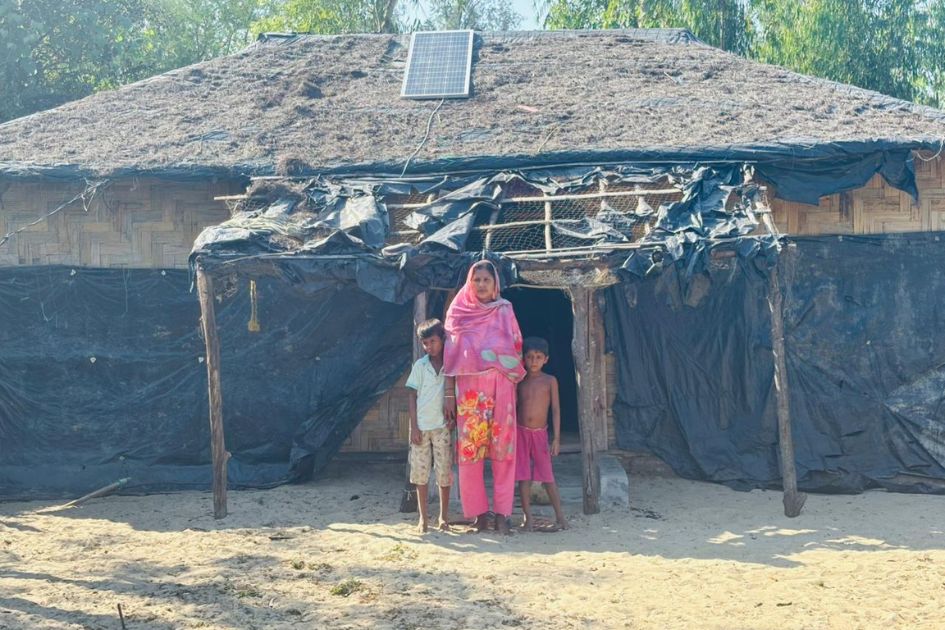
Elsewhere on the island, children now study at night under proper lighting instead of smoky kerosene lamps. Shakila Begum, another resident, remembers how difficult evenings used to be. Her children tried to study under dim kerosene light that filled the room with smoke. “Their eyes would burn and they couldn’t concentrate for long,” she said.
Today, with electric lights in her home, her children can study comfortably after sunset. “It feels like our evenings have changed completely.”
Small shops stay open longer. Homes that once fell silent after sunset now glow with steady light. As night falls, the island looks different. Instead of scattered kerosene flames flickering in the wind, rows of homes shine with electric light. Sonadia Island, once draped in decades of darkness, is now powered by the sun.
At one level, this is a small initiative. Three hundred homes will not transform Bangladesh’s national energy system overnight. But its importance lies in what it demonstrates. It shows that decentralized renewable energy can work even in remote and underserved communities. It shows that electricity does not always have to travel hundreds of kilometres through expensive infrastructure. Sometimes it can be generated right where people live.
Around the world, countries are increasingly embracing this idea. Denmark now produces nearly 60 percent of its electricity from wind, while Spain generates more than half of its electricity from renewable sources. Uruguay, though far smaller than many developed countries, produces almost all of its electricity from renewables. These transitions did not happen overnight. They required policy commitment, investment and long-term planning. But they show that renewable energy is no longer a distant ambition. It is already becoming a cornerstone of modern energy systems.

For Bangladesh, the path ahead will likely involve a mix of energy sources. Fossil fuels will not disappear from the system immediately. But projects like the one in Sonadia offer a glimpse of how the country can gradually build resilience by reducing dependence on imported fuels and strengthening energy security from the ground up.
At a time when global conflicts can shake energy markets overnight, the lesson from Sonadia is quietly powerful. Energy independence does not always begin with massive power plants or billion-dollar infrastructure. Sometimes it begins with a small solar panel on a rooftop, a charged phone in a fisherman’s home and the simple reassurance that when someone goes out to sea, their family can still reach him.
On Sonadia Island, that reassurance now arrives every evening, carried not by oil tankers crossing distant straits, but by the setting sun.
The writer is the Executive Director, Youth for NDCs




