

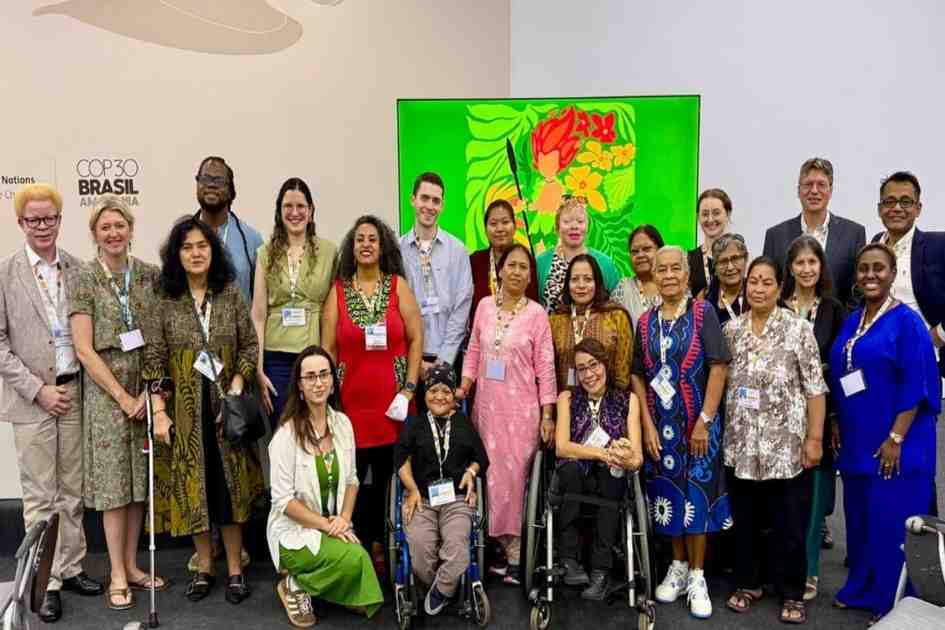



The UN climate framework has formally recognized the Disability Caucus, granting persons with disabilities a coordinated platform to influence negotiations, climate finance access and Loss and Damage discussions ahead of COP31.
In a significant move for inclusive climate action, the United Nations Framework Convention on Climate Change has officially recognized the Disability Caucus, giving persons with disabilities a formal platform within global climate negotiations.
The decision, confirmed this month, marks a historic milestone for more than 1.3 billion people with disabilities worldwide, many of whom face disproportionate risks from climate change but have long remained underrepresented in international climate policy discussions.
The recognition places more than 120 global organizations under a coordinated stakeholder group within the UN climate process, strengthening their ability to engage in discussions, advocate for inclusive policies and contribute to shaping future climate action.
Disability rights advocates say the move addresses years of exclusion from key decision-making spaces during annual climate conferences. Activists have raised concerns about what they describe as eco-ableism, policies and systems that fail to consider the needs of persons with disabilities during climate emergencies and adaptation efforts.
Issues such as inaccessible evacuation routes, lack of inclusive disaster response planning and climate infrastructure that overlooks universal design have often left persons with disabilities more vulnerable during extreme weather events and environmental crises.
The newly recognized caucus is now preparing to engage more actively in upcoming climate negotiations, including efforts leading up to COP31. One of its key objectives is to achieve full Constituency status within the UNFCCC process, which would allow it to intervene more directly in official sessions and contribute to negotiation texts alongside other recognized stakeholder groups.
Among the caucus’s priorities are improving access to climate finance for disability-led organizations, ensuring that loss and damage funding reaches affected communities, promoting inclusive infrastructure in the transition to renewable energy and urging governments to integrate disability-specific indicators into their Nationally Determined Contributions.
The recognition follows nearly a decade of advocacy by disability rights organizations and grassroots activists who have pushed for greater inclusion within the UN climate framework since around COP21.
According to advocates, integrating disability perspectives into climate planning can strengthen resilience and create systems that work better for entire communities, particularly during disasters.
“This milestone proves that inclusive climate action is not optional. It is essential for a just and resilient world,” said Shitaye Astawes of the African Disability Forum.
Maulani Rotinsulu of the ASEAN Disability Forum said the recognition sends a clear message that persons with disabilities must be included in climate decision-making at all levels.
Juan Ángel De Gouveia of RIADIS described the move as a turning point that allows the lived experiences of persons with disabilities to shape global climate policy.
Damian Griffis of the Pacific Disability Forum said the decision is particularly important for vulnerable island communities already facing severe climate impacts.
Advocates say the recognition is an important step forward but the caucus will continue working toward full constituency status to ensure stronger representation in the global climate negotiation process.
Sohanur Rahman, Executive Coordinator of YouthNet Global, welcomed the recognition and said inclusive participation is essential for meaningful climate action.
“Climate justice must be inclusive and accessible to everyone. The recognition of the Disability Caucus is a powerful step forward to ensure that persons with disabilities are part of shaping climate policies, decisions and solutions at all levels,” he said.




