




The UN has issued the first carbon credits under the Paris Agreement’s Article 6.4 mechanism, marking a milestone for global carbon markets amid renewed concerns about offsets and greenwashing.
The United Nations has approved the first carbon credits under the global market created by the Paris Agreement, formally launching the long-awaited Article 6.4 mechanism nearly eight years after the accord was adopted in 2015. The decision marks a turning point for global carbon markets, but it also revives long-standing fears that offsets may delay real emissions cuts if used as a substitute for phasing out fossil fuels.
While UN officials describe the move as a milestone for climate finance and environmental integrity, climate experts and civil society groups warn that even a better-designed system can be misused if countries and corporations rely on purchased credits instead of cutting emissions at source.
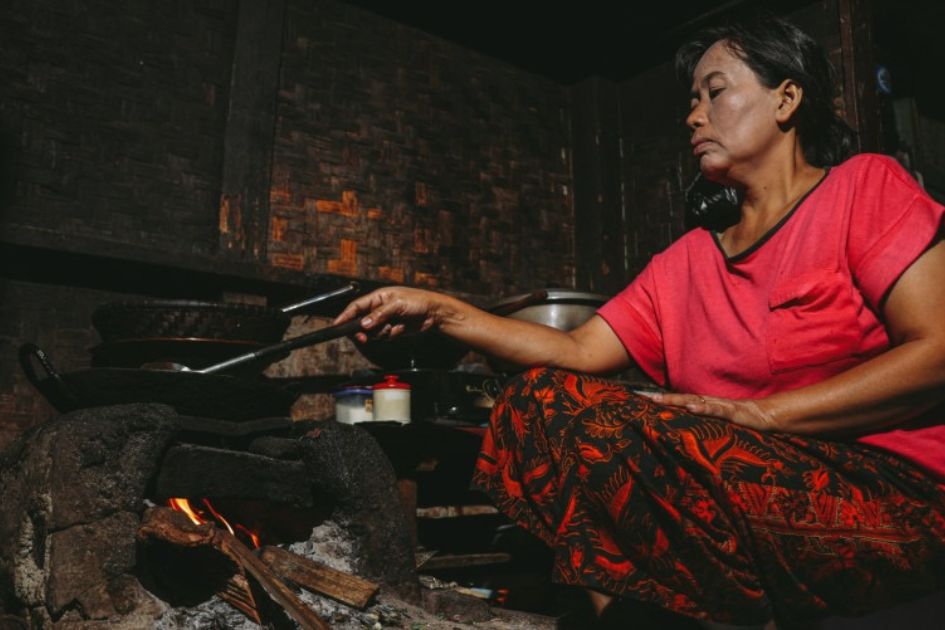
On Thursday, the first issuance comes from a clean cooking project in Myanmar that distributes efficient biomass cookstoves to households. The initiative reduces greenhouse gas emissions, lowers indoor air pollution and eases pressure on forests. It is implemented in coordination with authorised partners from the Republic of Korea.
Under the arrangement, a share of the credits will be transferred to South Korea for use in its national emissions trading system and to support its Nationally Determined Contribution under the Paris Agreement. The remaining credits will stay with Myanmar to help meet its own climate targets. The transaction operates under Article 6 of the Paris framework, which allows countries to cooperate through carbon markets while applying accounting rules intended to prevent double counting.
Article 6.4 establishes a UN-supervised crediting system designed to replace the earlier Clean Development Mechanism under the Kyoto Protocol. That earlier system faced sustained criticism for weak baselines, overstated emissions reductions and projects that failed to demonstrate genuine additional climate benefits, raising concerns about environmental integrity.
UN Climate Change Executive Secretary Simon Stiell said the project demonstrates how carbon markets can support development while cutting emissions.
“More than two billion people worldwide still lack access to clean cooking, and this crisis contributes to millions of premature deaths every year. Clean cooking improves health, protects forests, cuts emissions and empowers women and girls who face the worst impacts of household air pollution,” he said.
Critics argue that offsets risk delaying structural decarbonisation, particularly in high-emitting sectors that may choose to purchase credits rather than invest in deep emissions reductions. Analysts stress that carbon markets are intended to complement, not replace, domestic climate action and fossil fuel phase-out strategies.
The launch of the Article 6.4 mechanism signals that the Paris carbon market is finally operational. Whether it strengthens climate ambition or enables delay will depend not only on accounting rules, but on political will to prioritise deep domestic emissions cuts over offsetting strategies.
Stricter rules mean fewer credits
The UN climate body confirmed that emissions reductions issued under the new Paris mechanism are about 40 percent lower than those that would have been granted under the previous Clean Development Mechanism. The reduction reflects more conservative calculations, updated scientific baselines and tighter methods to strengthen credibility.
Article 6.4 Supervisory Body Chair Mkhuthazi Steleki said the lower credit volume reflects stronger safeguards.
“We applied updated values and more conservative calculations, and we reduced credited emissions by roughly 40 percent compared to older systems. We want to ensure that each credited tonne represents a real and verified emission cut,” he said.
Vice Chair Jacqui Ruesga said the mechanism strengthens trust through stricter oversight.
“We designed this mechanism with stronger safeguards, transparent governance, a registry system and a formal appeals process to build trust from the outset,” she said.
The Myanmar cookstove project is subject to a 14-day appeal period during which stakeholders and affected communities may file formal objections before credits are finalised.
More projects in the pipeline
The UN confirmed that more than 165 projects approved by host countries across Asia, Africa and Latin America are seeking transition from the old Clean Development Mechanism into the new Paris Agreement crediting system. The projects span renewable energy, waste management, agriculture and industrial sectors.
New rules were agreed at the UN’s COP29 climate summit in Azerbaijan in 2024 for the carbon market mechanism. At the time, Greenpeace said the agreement left loopholes that would allow fossil fuel companies to continue polluting. But other environmentalists said that while not perfect, it provided some clarity that was absent from global efforts to regulate carbon credits.
Policy observers describe the first issuance as an important operational step after years of politically sensitive negotiations over Article 6 rules. However, they caution that carbon markets alone cannot deliver the scale of transformation required to meet global climate targets.
Sohanur Rahman, Executive Coordinator of YouthNet Global, warned that policymakers must not confuse improved accounting with genuine climate action.
“A better-designed offset system does not equal structural transformation. If high-emitting countries use carbon credits as a substitute for cutting fossil fuels, they will turn this mechanism into a greenwashing tool rather than a climate solution. Governments must prioritise absolute emissions reductions, rapid fossil fuel phase-out and real domestic transition,” he concluded.




