


United International University’s Center for Energy Research is advancing renewable energy, smart grid technologies and climate solutions, bringing electricity to remote communities while earning international recognition for innovation.
A university-based research centre in Bangladesh that has completed more than 100 renewable energy and climate-related projects is helping drive the country’s clean energy transition while expanding innovative power solutions to underserved communities at home and abroad.
The Center for Energy Research (CER) at United International University has emerged as one of Bangladesh’s leading hubs for renewable energy research and innovation since its establishment in 2010. Its work spans solar energy, smart grids, energy access, climate resilience and sustainable development, contributing to efforts to address growing energy demands and climate challenges in one of the world’s most climate-vulnerable countries.
One of the centre’s landmark achievements came in 2017 when Bangladesh connected solar-generated electricity to the national grid for the first time. CER designed and served as consultant for the 3.28-megawatt solar power plant in Sarishabari, Jamalpur, marking a significant milestone in the country’s renewable energy journey.
The centre has since contributed to the design and development of several major solar energy projects across Bangladesh, including installations in Kaptai and other regions. Its research and technical expertise have supported efforts to expand clean energy generation while reducing dependence on fossil fuels.
CER Founder and Director Shahriar Ahmed Chowdhury said the centre’s work is focused not only on technological innovation but also on improving lives in communities that have historically lacked access to reliable electricity.
According to Chowdhury, CER-designed solar mini-grid systems have brought electricity to 17 remote riverine island communities, locally known as chars, where extending the national grid was once considered economically and technically difficult.
“Access to electricity has transformed daily life in many of these communities,” he said. “Reliable power creates opportunities for education, healthcare services, communication and local economic activities.”
The centre’s influence is extending beyond Bangladesh. Solar energy systems designed by Chowdhury and his team are being implemented in countries including Nigeria and Kenya, demonstrating the growing international relevance of locally developed renewable energy solutions.
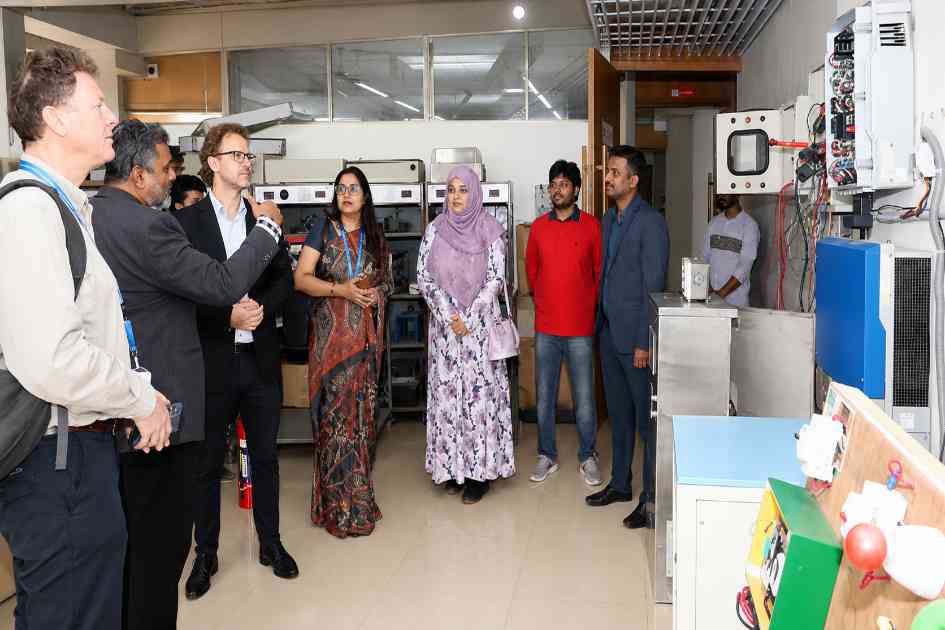
CER also serves as a practical example of sustainable energy use. Its facilities operate entirely on electricity generated from solar power. To strengthen research and hands-on learning opportunities, the centre established an advanced renewable energy laboratory with support from the World Bank. More recently, a Huawei-supported solar laboratory was launched at the university, providing renewable energy storage and testing facilities that are expected to support future research and workforce development.
The centre’s research achievements have received international recognition. In 2016, its “Peer-to-Peer Smart Village Grid” project received the prestigious UN Momentum for Change Award during the United Nations Climate Change Conference in Morocco. The award recognized innovative solutions that support climate action and sustainable development. The project also won the Intersolar Award in Munich, one of the renewable energy sector’s most respected international honours.
Another innovation developed by CER, the “Smart Solar Irrigation System”, received Bangladesh’s “Adommo Bangladesh 2016” award from the Ministry of Power, Energy and Mineral Resources for its contribution to sustainable agricultural and energy solutions.
In addition to renewable energy generation, CER has been developing smart grid technologies aimed at improving the efficiency and reliability of electricity distribution. In 2018, United International University won first place at Bangladesh’s National Electricity Week Inter-University Innovation Competition with its “Demand Response Enabled Smart Grid” project.
The system was designed to automatically manage electricity demand, detect potential power theft and allow consumers to monitor electricity services through mobile devices. The innovation later secured a research grant worth approximately 40 million Bangladeshi taka from the Bangladesh Energy and Power Research Council, reflecting growing interest in locally developed energy technologies.
Beyond research and technology development, CER is investing in the next generation of energy professionals. The centre has provided specialised solar energy training to nearly 1,500 engineers and technical professionals. In partnership with Huawei Technologies, it currently offers advanced training programmes on digital energy systems, smart energy solutions and emerging renewable energy technologies.
As Bangladesh seeks to increase renewable energy generation, strengthen energy security and meet its climate commitments, university-led research institutions such as CER are playing an increasingly important role in developing practical, locally driven solutions.
With a track record of innovation, international recognition and community impact, the centre’s work illustrates how research, technology and capacity building can contribute to a more sustainable and climate-resilient energy future in Bangladesh and beyond.




