

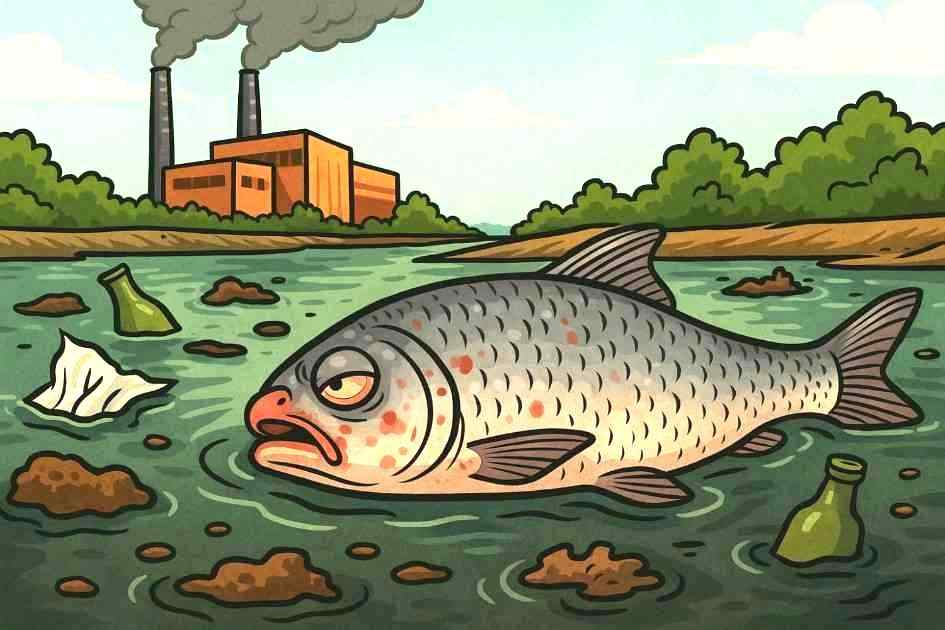

Experts suspect post-spawning stress, sacrificial waste, and heavy rainfall runoff led to eutrophication, weakening the fish and triggering Aeromonas-related deaths.
Two mature brood Katla fish were found dead in the Halda River on Sunday evening, renewing alarm among fisheries experts over rising pollution and bacterial infections threatening the country’s only natural carp breeding sanctuary.
The dead fish, each over three feet in length and weighing 12.85 kg and 8.35 kg respectively, were recovered near the Ramdas Munshir Hat area with the help of local residents and river police. They were immediately sent to the Halda River Research Laboratory at the University of Chittagong for analysis, with support from Raufzan Upazila fisheries officials.
Bacterial infections linked to spawning stress
Preliminary examinations suggest the cause of death was Aeromonas spp., a common but dangerous bacterium that targets weakened fish.
“These bacteria don’t normally harm healthy fish,” said Dr. Manzoorul Kibria, coordinator of the Halda Research Laboratory. “But brood fish—those that have just released eggs—are particularly vulnerable. Post-spawning, their immune systems crash due to hormonal stress, leaving them defenseless.”
Dr. Kibria noted that similar outbreaks occurred in June last year, when seven brood fish died under comparable circumstances.
Pollution adds to river stress
The recent deaths coincide with increased pollution in the river. Waste from sacrificial animals, including hides and internal organs, was reportedly dumped into the Halda following Eid-ul-Azha. Combined with runoff from heavy rainfall, the river experienced a surge in organic and industrial waste, visibly altering its color and chemical makeup.
“These conditions triggered eutrophication—a sudden spike in nutrient levels, especially ammonia—which promotes rapid bacterial growth,” explained Dr. Kibria.
Autopsies of the fish revealed classic symptoms of Aeromonas infection: ulcers, decaying fins, pale gills, bloated abdomens, and bulging eyes—all signs of severe bacterial distress.
A river in crisis
The Halda River is Bangladesh’s only natural breeding ground for major carp species like katla, rui, and mrigal. It plays a critical role in the country’s freshwater biodiversity and fishery economy. But unchecked pollution, river encroachments, and poor waste management are putting this fragile ecosystem at grave risk.
Fisheries officials and environmental scientists are now calling for urgent intervention to prevent further contamination, protect spawning fish, and safeguard the river’s ecological integrity.
“The Halda’s survival depends on our immediate action,” warned Dr. Kibria. “Without it, we risk losing a national treasure.”




