

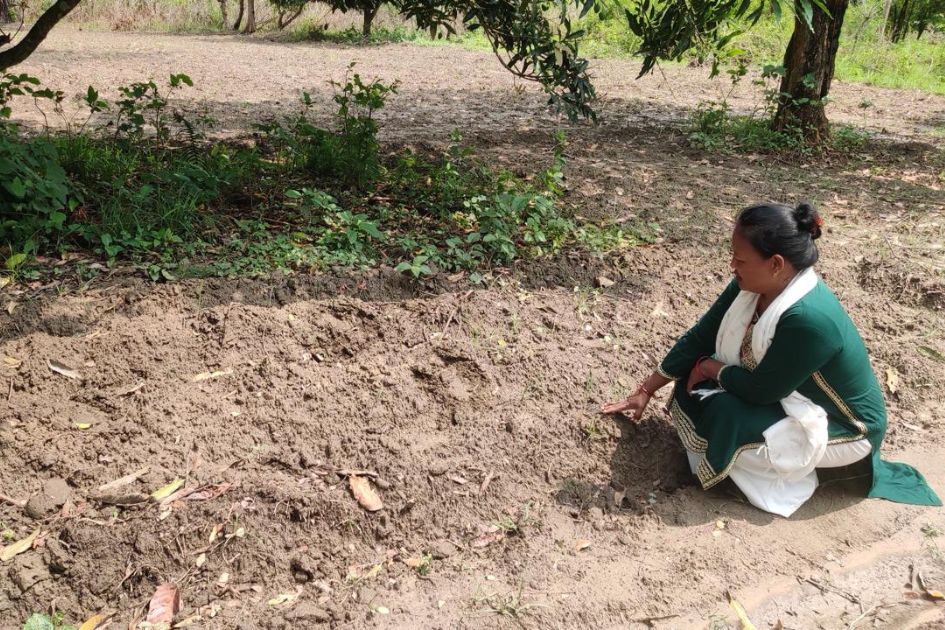



A community-led agroforestry initiative in Dhanusha is expanding income opportunities through turmeric cultivation, supported by FAO, while creating seasonal jobs and offering an alternative to overseas labour migration.
With their husbands working abroad, many women in Pushpalpur, Ward No. 4 of Mithila Municipality in Dhanusha district, Nepal, shoulder the responsibility of supporting their families on their own. While overseas employment has long been a necessity to sustain household incomes, these women are now beginning to see opportunities for earning a living within their own village. Turmeric cultivation, launched in the Bhatighari Community Forest, has become more than just an agricultural venture; it has given them renewed hope of reuniting their families by creating employment at home.
Meena Tamang, a resident of Pushpalpur, Ward No. 4, Mithila Municipality, says her husband is currently working overseas. Living apart from her family was never her choice but a necessity.
“My husband had to go abroad to support our family,” she says. “If we had a steady source of income here, I would want him to stay and work in the village instead.”
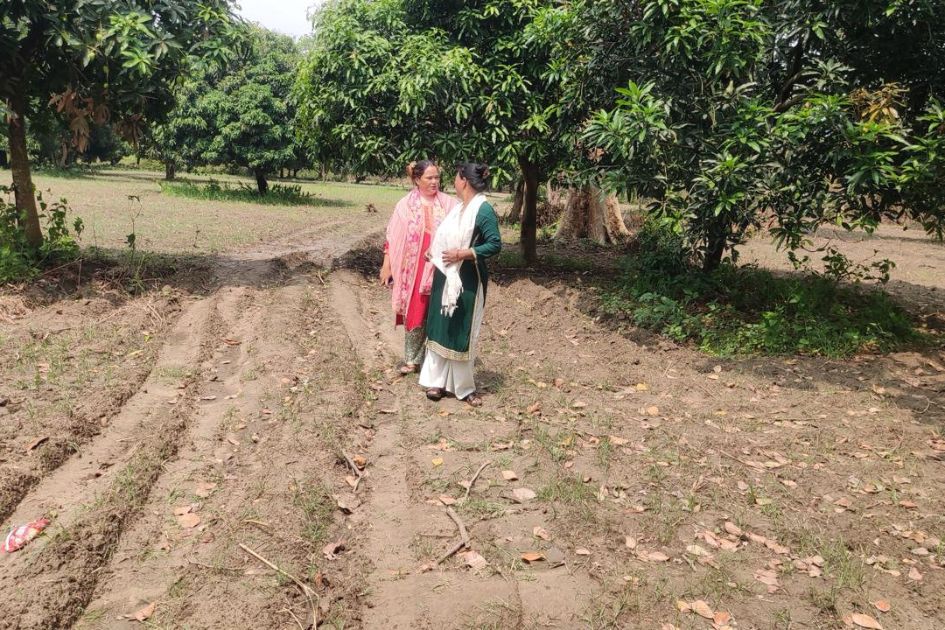
Most households in Pushpalpur have at least one male family member employed overseas. Buddhamaya Moktan, another resident of the village, also has a husband working abroad. Living with her two sons and one daughter, she dreams of having her family together again. For families forced to live apart due to the lack of local employment, the nearby Bhatighari Community Forest has become a source of hope.
The women believe that turmeric cultivation in the community forest will create employment opportunities in the coming years, allowing their husbands to return from overseas and find work in their own village. This year alone, they planted 5,400 kilograms of turmeric seed rhizomes in the community forest. According to Shyam Gole, chairperson of the Community Forest User Group, one quintal of turmeric seed can produce five to seven quintals of fresh turmeric. Based on this estimate, the group expects the 5,400 kg planted this year to yield approximately 32,400 kg of turmeric.
According to Meena Tamang, secretary of the Community Forest User Group, local people will be employed in activities such as cultivation, processing, packaging and marketing of turmeric.
“We plan to package and market the turmeric ourselves. Once that happens, many more people in the village will have employment opportunities,” she says.
In the Nepali market, ground turmeric powder currently sells for NPR 300 to NPR 600 per kilogram. Local initiatives have been supported by the Forest and Agriculture Facilitation Programme, implemented with assistance from the Food and Agriculture Organization of the United Nations (FAO). Through the programme, the community has received turmeric seed, agricultural tools for land preparation and support for the construction of a turmeric processing centre.
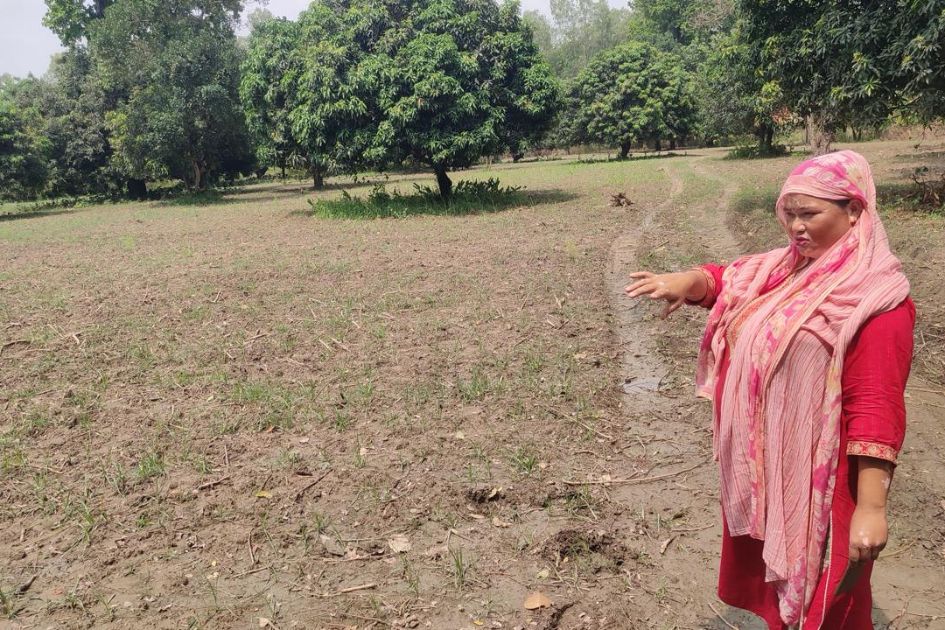
A model community forest
Located about one kilometre from the East-West Mahendra Highway, the Bhatighari Community Forest has been successfully protected and managed through the active participation of residents. It has also emerged as an exemplary model of agroforestry.
The forest is home to more than 500 mango trees. Every year, once the trees begin flowering, the Community Forest User Group sells the standing mango crop to traders through advance contracts worth NPR 1 million to NPR 1.5 million.
Beyond generating income from mango production, the forest also creates employment for local people. Villagers are hired to clear undergrowth, maintain the forest and cultivate turmeric. Around 40 households receive employment for approximately 30 days each year, earning NPR 700 per day, providing an important source of seasonal income for the community.




