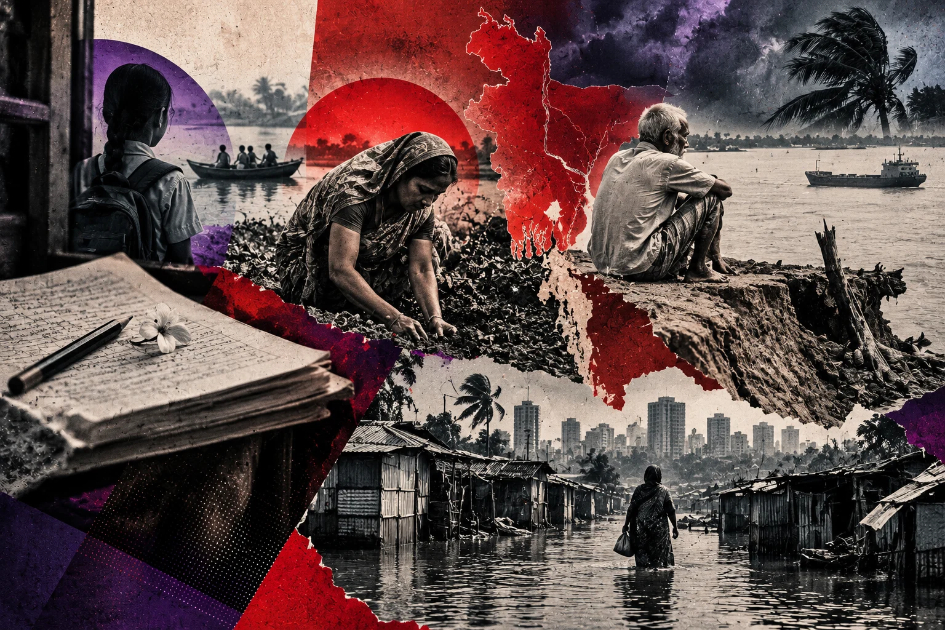



From river erosion in Barisal to school dropouts in Barguna and unpaid farm labour in Patuakhali, vulnerable communities face mounting losses while support remains out of reach.
Climate change is often measured in rising temperatures, damaged crops, eroded coastlines and billions of dollars in losses. But behind those figures are lives quietly falling apart. In coastal Bangladesh, a girl watches her classmates go to school, a woman works the fields without recognition, an elderly farmer watches the river swallow his land, and a mother struggles to survive decades after losing her home to erosion. Their stories reveal a deeper crisis, one that cannot be measured in money alone. It is the loss of education, dignity, security, opportunity and the freedom to imagine a better future. As climate disasters intensify, the people who have contributed least to the crisis are being forced to pay a devastating price, often with little support to rebuild their lives.
The Invisible Losses of Girls Leaving School
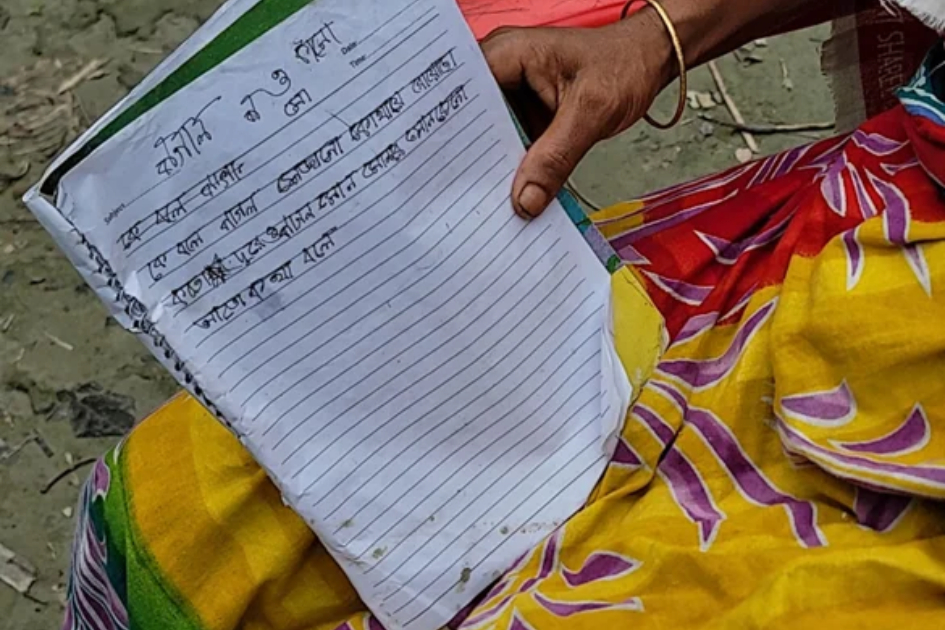
Here in remote Majher Char, there are no storybooks, no volumes of poetry, no comic books for Neelima to read. The only words available to her come from songs on the radio. Driven by an unyielding need to keep her writing habit alive, she carefully copies the lyrics onto page after page of her school notebook.
The handwriting is neat and careful. At thirteen, Neelima had completed class five but had been unable to enroll in class six. After she stopped going to school, the notebook stayed with her.
Her home is in Majher Char, beside the Bishkhali River, in Betagi, an upazila, or subdistrict, of Barguna in southern Bangladesh. She did not come out to speak with us. We did not press her to do so. Her mother spoke instead. Neelima is a pseudonym.
For several days after her schooling ended, her mother said, she barely ate. She spoke less. She does housework and sews. From time to time, she returns to her mother with the same question.
“Ma, my studies have stopped. I won’t be able to go to school anymore. What will happen to me now?” her mother recalled her saying. Then, she said, the crying would begin again.
The family’s immediate crisis followed her father’s accident. His treatment cost money; there was no longer enough to keep his daughter in school. No connection between the accident and climate change has been established. But when her mother described the family’s savings and its ability to recover, she kept returning to floods, storms, and water from the river. When the water rises, she said, they leave home for a shelter. Crops and livestock are lost. As the household struggles to get by, education becomes an expense beyond its reach.
When keeping everyone alive is already a struggle, she asked, “How can we pay for our children’s education?”
She had hoped that her daughter would study and eventually help support the family. Asked what she now imagined for the girl, she paused and wiped her eyes with the end of her sari.
“I’ll marry her off in a few years. What else can I do?”
The girl’s aunt, nearby, said it could happen sooner if a suitable proposal came. She worried about the safety of an adolescent girl staying at home. At an age when Neelima might have expected a new set of schoolbooks, the family was beginning to discuss the timing of her marriage.
The cost of schooling can be written down. What is lost when that cost cannot be met is harder to account for. There is the company of classmates, the identity of being a student, the space to decide what sort of person to become. Future earnings cannot describe all of it.
In climate discussions, a category of harm known as non-economic loss and damage, or NELD, provides a way to consider such losses. The United Nations climate change framework includes losses involving life and health, identity, culture, connections to home, and social ties. Their value cannot be fully captured by a market price.
In Neelima’s life, the boundaries between these losses, poverty, and inadequate services are difficult to separate. Medical bills were the immediate reason she left school. Her family’s account suggests that repeated disasters had weakened its capacity to absorb that expense. There is no basis here for calculating the share attributable to each cause. The interaction matters: climate risks reach households already short of money, safe transport and choices for their daughters.
The next grade is across the river
From Neelima’s home, we went to Gulishakhali Majherchar Government Primary School, where she had studied. Cows were tethered in the open space on the ground floor. The building also serves as a disaster shelter. The same place has to accommodate children’s lessons and the need for refuge.
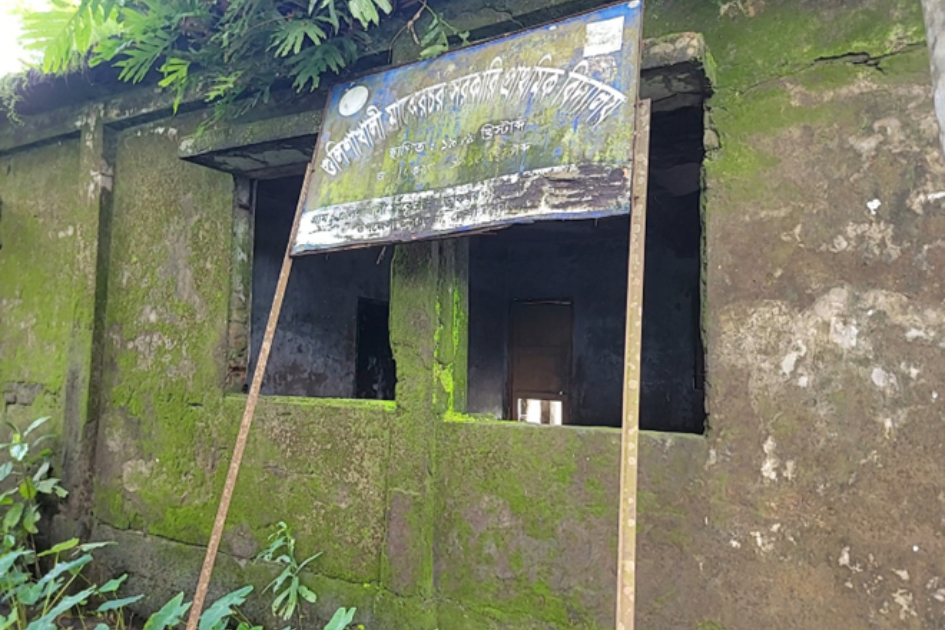
At the time of the interview, Abdur Rahim, a teacher, said that only two teachers were working there, responsible for more than a hundred pupils across five grades. Some children attended irregularly; others stopped coming. When teachers checked, they found children helping at home, fishing or doing other work to earn money. Rahim spoke of a lack of encouragement from some parents, but also acknowledged the poverty of the households.
After the last year of primary school, distance takes on a different meaning. According to Parveen Akter, a resident whose daughter is in class six, there is no secondary school on Majher Char. To continue her education, the girl must cross the Bishkhali.
Parveen was thirty-three when we met. Her husband fishes in the deep sea and is away for long stretches. She puts aside small amounts of money to keep their daughter in school. The girl wants to become a lawyer.
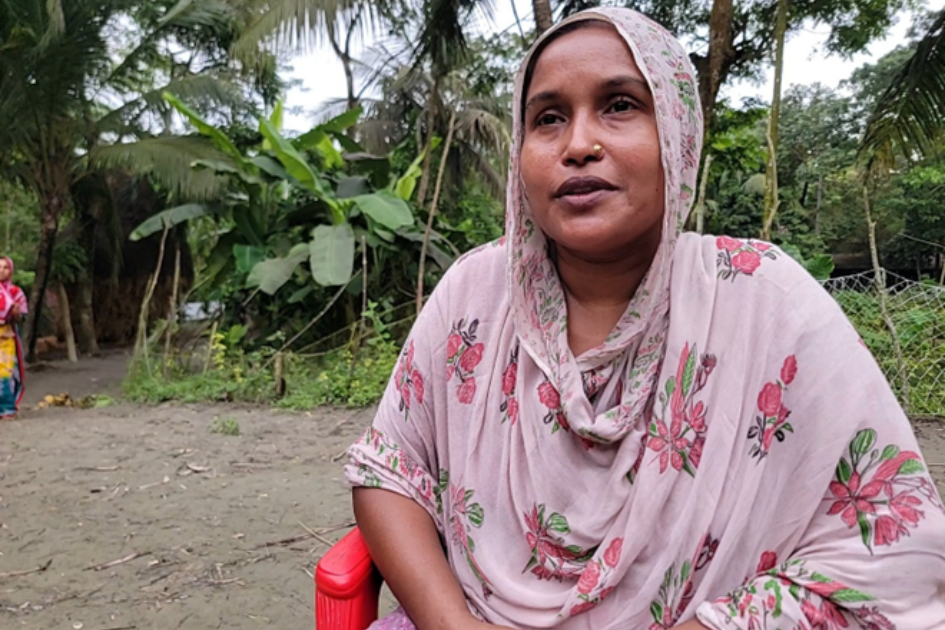
Then Parveen described a boat journey. About two weeks before the interview, she said, her daughter and several other pupils were in the middle of the river when a storm struck. The boat nearly capsized. The children returned alive. Since then, they have been reluctant to cross the river to school.
“After that incident, fear took hold of them,” she said.
This account came from Parveen; we had no separate scientific analysis of that day’s storm. The Intergovernmental Panel on Climate Change has assessed that human-induced warming increases heavy precipitation associated with tropical cyclones. That finding does not establish the cause of every local storm or boat incident.
Even within those limits, Parveen’s difficulty is plain. She can save money for her daughter’s education. She cannot make the memory of danger in midriver disappear. Keeping the girl’s ambition alive requires safe passage as well as savings.
Across Bangladesh, the scale of disrupted education is considerable. A UNICEF analysis published on January 24, 2025 found that extreme weather, including heatwaves, cyclones and floods, disrupted the schooling of about thirty-five million children in 2024. Some pupils in Sylhet lost up to eight weeks of classroom learning. These are figures for interrupted education, not the number of children who permanently left school.
When schools reopen, lessons resume. For a child such as Neelima to return, there must also be money, family support and a way into the next grade. For Parveen’s daughter, there is the fear of crossing the river. A school’s reopening and a child’s return to education need not happen together.
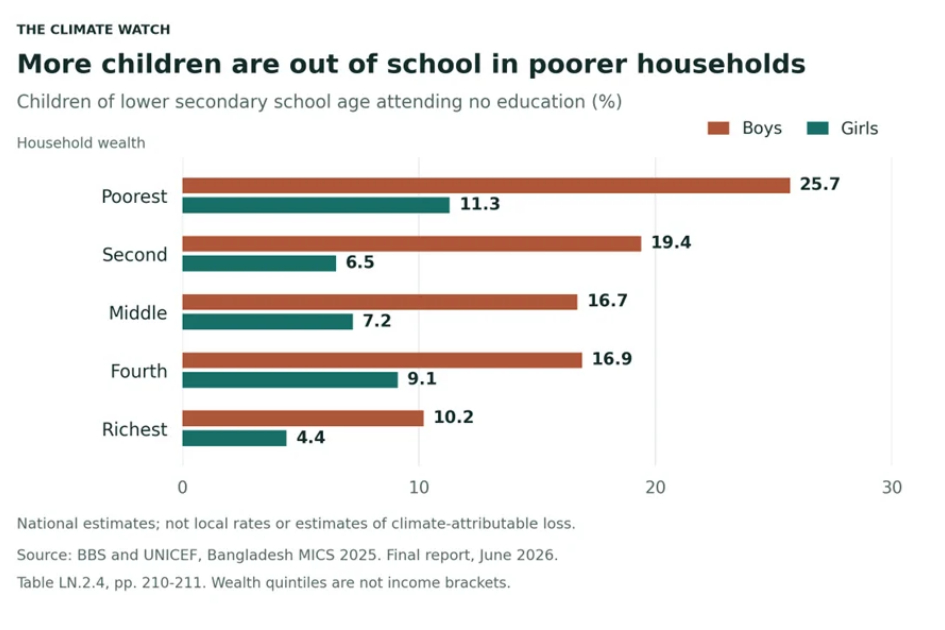
National data reveal another distinction. The Bangladesh Bureau of Statistics and UNICEF’s Multiple Indicator Cluster Survey, MICS 2025, shows that boys of lower secondary school age are more likely than girls to be out of education. Attention to the pressure on girls to marry must also leave room to understand the barriers facing boys.
The children Rahim described, drawn away from lessons by household work and earnings, do not all face the same circumstances. Gender, age, household resources, a parent’s presence and the side of the river on which a child lives combine to shape the route to school. Parveen’s savings are an effort to make that route possible. Families begin with very different means.
The man who did not return
By the time we crossed the Bishkhali and traveled through Kalmegha, in Patharghata, to the fishing community of Ruhita, it was afternoon. There, a mother described how two of her daughters had left school. Her husband was at sea. After meeting the household’s needs, his earnings had become insufficient to cover their education.
Her older daughter had studied through class ten. The family could not afford the fees and other costs of taking the Secondary School Certificate examination, the mother said. Later, the girl married. Another daughter stopped studying in class eight. Both had wanted to become teachers.
The younger of the two had told her mother that she did not want to marry yet. She wanted to keep studying. Her mother nevertheless saw marriage as the path available to her. In her account, inability and regret sat side by side.
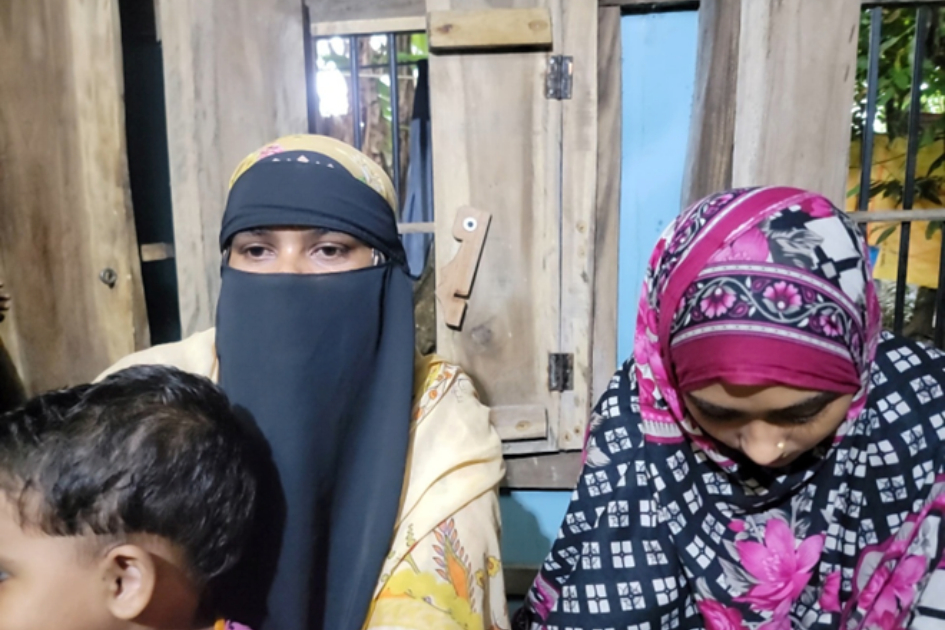
The distance between what the mother considered possible and what the daughter wanted reveals another loss: a diminishing say in the timing of one’s own life. How long to study, when to marry, and what work to pursue become decisions in which the girl has less room to express a preference. Financial pressure combines with concerns about safety and social expectations to narrow that room.
Nationally, MICS 2025 found that 47.2 percent of women aged twenty to twenty-four had first married before eighteen. Among women in the poorest household wealth group, the share was 62.5 percent; in the richest, 31.5 percent.
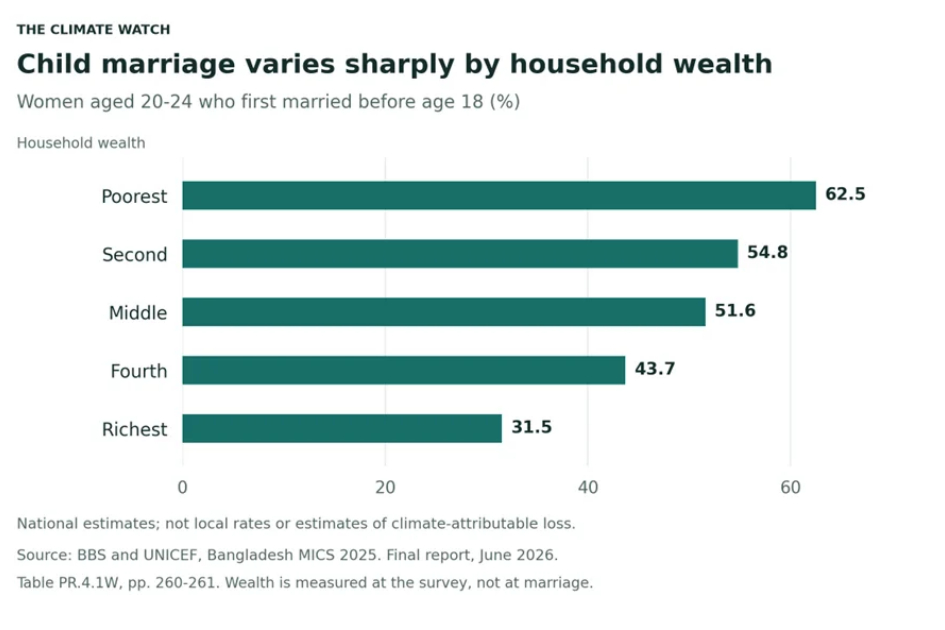
That difference cannot identify a single cause of any family’s decision. It does place the mothers’ worries about what they can afford within a wider pattern of inequality. Reporting only that a mother intends to marry off her daughter would leave the girl’s objection unheard. It would also leave unasked what help might allow the family to keep her in school.
In the same community, we spoke with another girl, aged twelve. Her father had gone missing while fishing at sea, about two years before the interview, according to her mother. He had not returned. The girl had finished class five but could not afford to enroll in class six.
“My classmates are going to school, and I cannot enroll in class six because we have no money. It hurts so much,” she said.
Her father’s absence had become entangled with the end of her education. “I thought I would study and ease my mother’s suffering,” she told us.
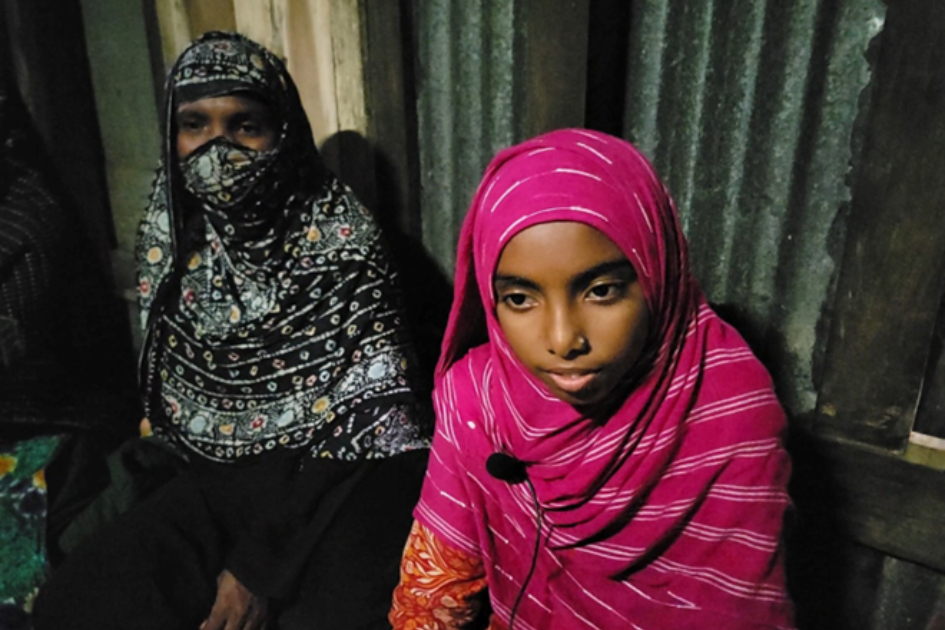
Her older brother now supports the household. Like their father, he goes fishing in the deep sea. Their mother said that he wants to pay for his sister’s education but cannot stretch his earnings far enough. Since her husband disappeared, she fears that her son, too, may not return from the sea.
Missing cannot be treated as confirmation of death. We had no records establishing the circumstances of the fisherman’s disappearance, nor evidence that it was a direct consequence of climate change. Yet the family’s experience raises a question essential to understanding losses on the coast: what support exists for the waiting, uncertainty and insecurity that gather around an absent breadwinner?
The girl sees her classmates continuing to school. For her mother, the sea carries the possibility of losing another person she loves. It also provides the family’s income. These relationships shape their daily lives alongside the cost of schooling and the earnings from fish.
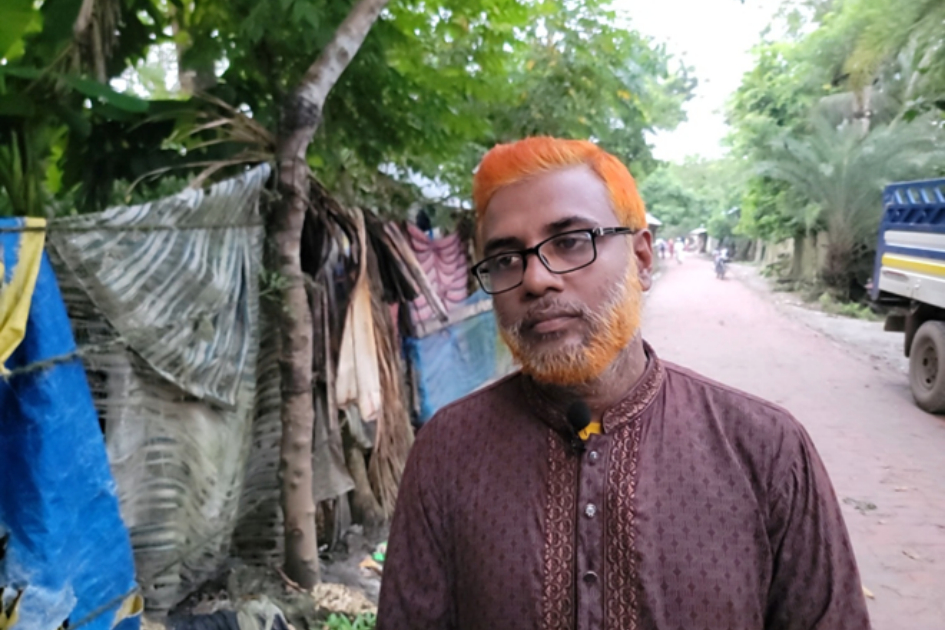
Shafiqul Islam Khokon, a social and environmental activist who works with families of missing fishermen, had brought us to the community. He described efforts to record the names of the missing and keep their memory present. Interrupted education, women’s vulnerability and prolonged emotional strain recurred in his account. He called for government action and long-term research into the educational, social and psychological difficulties facing coastal women and children.
Accounts of grief, fear, or withdrawal cannot diagnose a child’s mental health condition. The children in this story had not undergone a clinical assessment for this reporting. Their distress deserves attention without waiting for a diagnostic label. It is possible to listen to what has changed in their daily lives.
A study published in 2025, involving adolescents affected by disasters in Bangladesh, offers relevant context. Of 1,220 selected participants, 515 had migrated, and 705 had not. Using the PHQ-9 questionnaire, researchers identified depressive symptoms in 84 percent of the first group and 54.77 percent of the second.
The sample was purposively selected, and the study was cross-sectional, observing participants at one point in time. Its findings are not national prevalence estimates and do not prove that migration alone caused the symptoms. The screening results, reported in the published abstract, are not diagnoses of the children interviewed in Barguna. They do, however, underline why mental well-being belongs in questions about how life continues after disaster.
What it would take to return
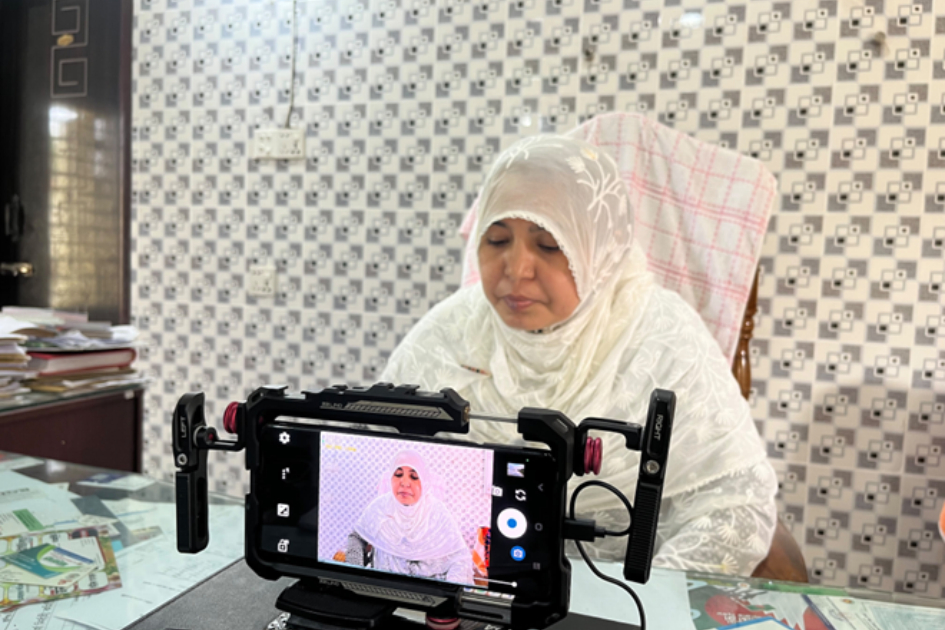
When families explained why children had left school, they spoke of costs, transport and safety. Helping a child return also depends on the people available at school. Zinat Jahan, interviewed as the primary education officer for Patharghata upazila, said teachers had instructions to visit the homes of pupils who attended irregularly and speak with their parents. Staffing shortages also limited the monitoring of that work, she said.
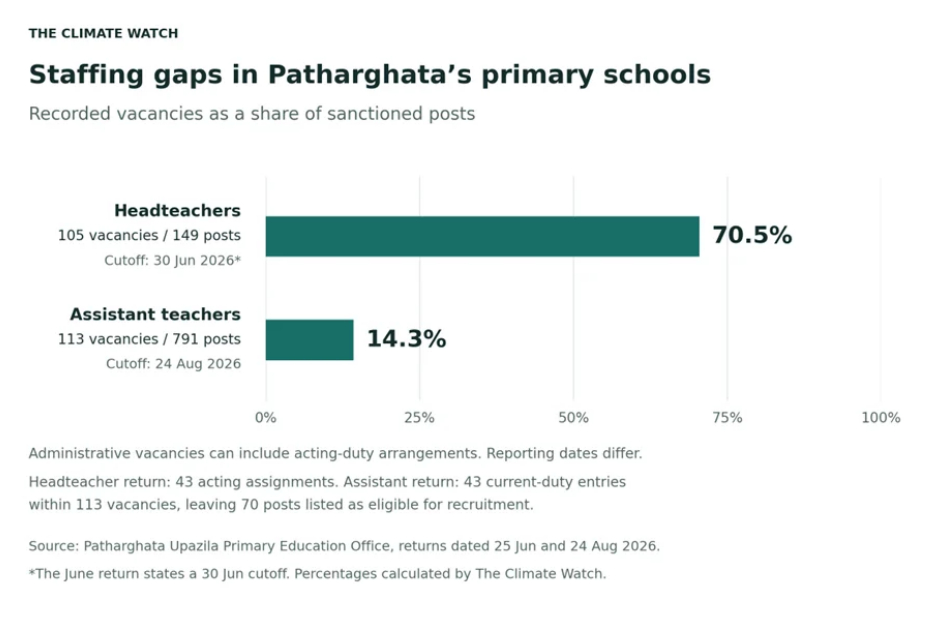
Official staffing returns put a scale on that shortage. In its June 2026 headteacher return, Patharghata’s primary education office listed 105 vacancies among 149 sanctioned posts: 70.5 percent, or about seven in ten. It recorded 44 headteachers in post and, in a separate column, 43 teachers carrying out headteacher duties in an acting capacity.
An assistant-teacher return dated August 24 recorded 678 serving posts against 791 sanctioned posts. Its 113 recorded vacancies amount to 14.3 percent. That vacancy count includes 43 current-duty assignments; the document lists 70 posts as eligible for recruitment.
These are administrative vacancy counts. Acting arrangements can provide cover even when a post is formally vacant. The returns give a measure of the staffing problem Jahan described, but do not identify the affected schools or show how vacancies changed attendance. They do not establish that climate change caused the vacancies.
Parents had described limited experience of teachers visiting in person. Asked about this, Jahan said action was taken when complaints were received. Her interview and these staffing returns concern Patharghata, where the fishing families were interviewed. They do not describe staffing or supervision at Neelima’s school in neighboring Betagi.
What happens after a child’s absence is noticed matters. A telephone call cannot make a frightening river crossing safe. If medical costs have ended a child’s schooling, instructions to attend regularly need financial support alongside them. When a marriage is being discussed, a girl needs a safe opportunity to say what she wants.
Abdul Halim, a Majher Char resident, described another gap. According to him, the char has no clinic even for basic care; residents must cross the river when they are ill. The river lies on the route to treatment as well as to school. One person’s illness can impose costs that reshape another family member’s life, as Neelima’s father’s treatment had done.
NELD encompasses more than emotional suffering. It concerns the practical opportunity to continue an education, to move about safely, to speak within a family and to sustain relationships with familiar people. Reducing these losses costs money, even when money cannot express their full value.
Research published in 2024, conducted in Shyamnagar and Durgapur, examined the ways people respond to non-economic loss and damage themselves. Without sufficient resources and support, some responses can further erode their capacity to cope in the future. The study emphasized financial security and support for local people’s own initiatives.
Parveen’s savings are one such initiative. Within the household, she is making room for her daughter’s wish to become a lawyer. Anyone planning assistance has questions to ask her: what transport would feel safe for her daughter, which educational expense is hardest to meet, who could speak with the girl about her frightening experience? Neelima’s family might answer the same questions differently.
The World Health Organization’s recommendations on climate change and mental health call for mental health and psychosocial support to be integrated into climate action, with community involvement and greater funding. Such support belongs in recovery planning from the beginning.
The mandate of the International Fund for responding to Loss and Damage includes both economic and non-economic losses. Recognition in that mandate is not evidence that assistance has reached any of these households. Connecting local needs to plans and funding remains a separate task.
The families’ accounts suggest concrete ways to judge that task. Alongside the number of homes repaired after a disaster, it is possible to ask how many children reached the next grade. Did they gain safe transport? Could a family find someone to talk to about grief or persistent fear? Did girls have a say in their education and marriage? Even when earnings recover, these questions remain.
By the time we left Kalmegha, evening had darkened the river. The sound of the trawler’s engine did not end the day’s conversations. There was the girl watching her classmates go to school. And there was the notebook Neelima had kept on Majher Char.
Her handwriting remained. A way back to school had yet to be found.
Now, let us turn to Patuakhali, another district along the cost of the Bay of Bengal. There, women farmers are engaged in an ongoing struggle against the effects of climate change.
Women farmers drive climate resilience in coastal Bangladesh yet remain invisible
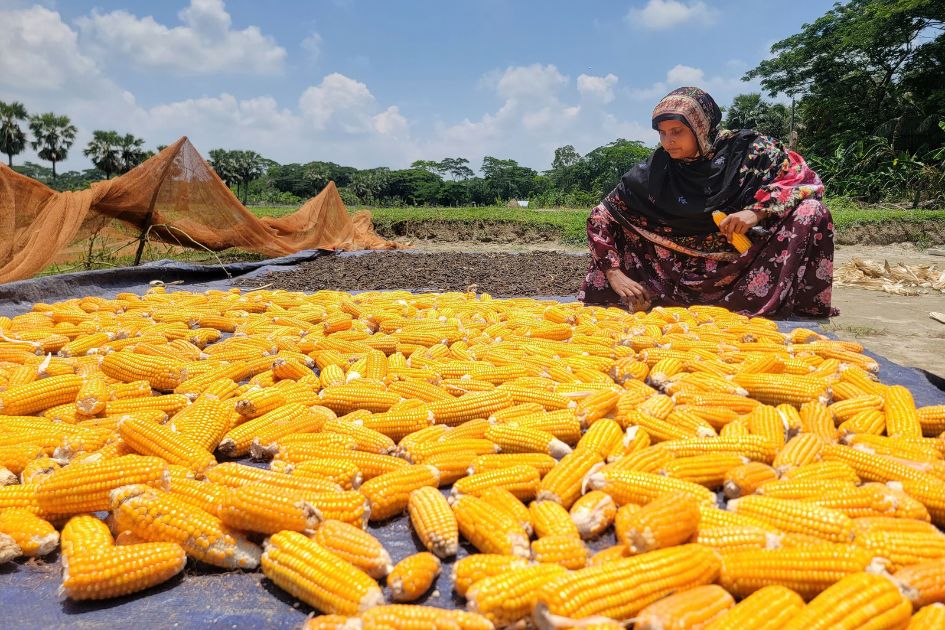
In the remote coastal upazila of Rangabali in Patuakhali, where farmland gradually gives way to the Bay of Bengal, Asma Begum spreads harvested corn under the scorching sun of Baishakh.
The 40-year-old farmer pauses, wipes sweat from her face, and asks a question shaped by years of unpaid work and quiet sacrifice.
“I have worked so hard for my family and the land for so many years,” she says. “What appreciation have I received?”
For decades, Asma has carried a double burden familiar to thousands of women across Bangladesh’s climate-vulnerable coastal belt. She cooks, cleans, washes clothes, raises children, and manages household responsibilities while also working long hours in the field.
Male farm labourers in her area can earn around Tk 600 a day. Women like Asma often receive little or nothing when their agricultural work is treated as part of household duty.
“This is justice?” she asks with quiet sarcasm.
Her story reflects a deeper governance failure in rural Bangladesh: women are central to agriculture and climate adaptation, but their labour remains largely invisible in official records, land ownership, agricultural support systems and resource distribution.
Women on the climate frontline
Rangabali is one of Bangladesh’s southernmost upazilas. Beyond its coastal land lies only the sea. The area faces frequent cyclones, tidal surges, salinity intrusion, river erosion, and increasingly erratic rainfall, threats that are being intensified by climate change.
For the past 25 to 30 years, agriculture has shaped Asma’s life. She first worked alongside her father. Now she farms with her husband, a retired Ansar member.
Sitting beneath a tree beside her field, she speaks about a lifetime of sacrifice.
“Women work extremely hard for their families and for agriculture, but nobody values that work properly,” she says. “If a husband understands a woman’s struggle, that is one thing. But society never does.”
Even when husbands acknowledge women’s labour, ownership and recognition rarely follow.
Asma owns no land. She cultivates under a local sharecropping and lease arrangement. This season, she paid Tk 3,000 to cultivate mung beans, locally known as mug dal. But poor yields linked to changing weather left her with only eight kilograms of harvest, which she sold for Tk 1,000.
“I am a poor woman farmer,” she says. “I cultivate on credit. Because of climate change, production is falling.”
Government agricultural support also remains mostly beyond her reach.
“When farming cards or benefits come, everything is issued in my husband’s name,” she says. “As a woman, I lose everywhere.”
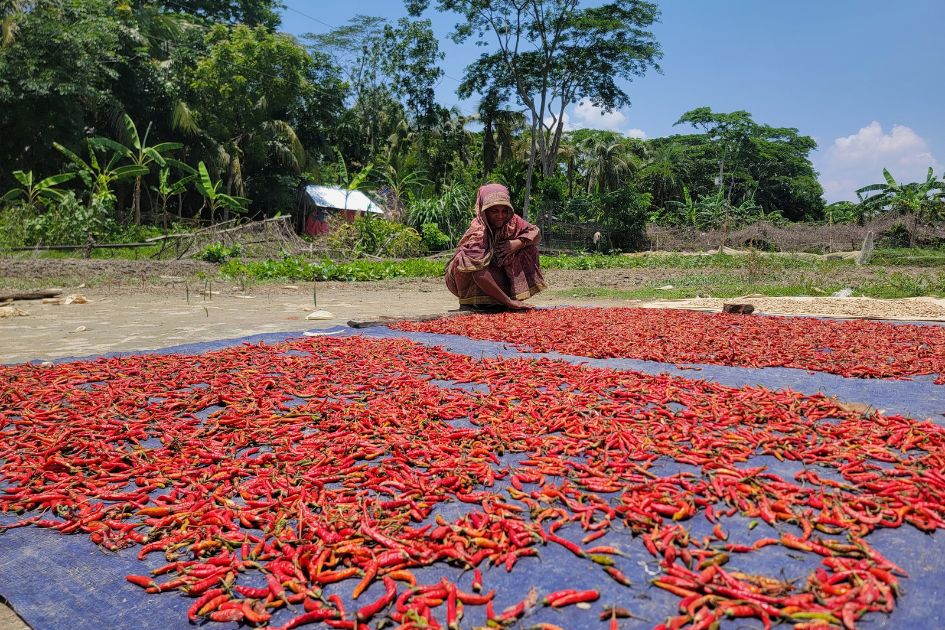
Nearby, 45-year-old Nurbanu joins the conversation. She has spent years cultivating corn, vegetables, chilies, and pulses while managing a household with four sons.
Through years of savings and hard labour, she helped buy additional land. But the property was registered in her husband’s name. Even her savings are kept in his bank account.
Asked why she never opened one in her own name, she hesitates.
“I will buy land in my own name in the future,” she says softly.
Asma responds with visible regret.
“We spend our whole lives caring for husbands and children without keeping anything in our own names,” she says. “That is why women suffer in old age.”
Their experiences expose structural inequalities deeply embedded in Bangladesh’s rural economy, where land ownership, financial control, extension services, and official farmer identities remain overwhelmingly male-dominated.
Bangladesh marks International Year of the Woman Farmer
Bangladesh has launched national activities marking the UN-declared International Year of the Woman Farmer 2026, creating a timely opportunity to formally recognise women’s contribution to agriculture and climate resilience.
Md Abdur Rahim, Director General of the Department of Agricultural Extension, said the government has begun taking steps to acknowledge women farmers and increase their access to support.
He said women are being given priority in the issuance of Farmer Cards, through which their identity as farmers and the value of their labour can be recognised.
Rahim said the Department of Agricultural Extension is also implementing projects to create women entrepreneurs and ensure their participation in agricultural development activities.
“We are working to ensure at least 30 percent participation of women farmers in different activities, including training under these projects,” he said.
But he acknowledged that many women, particularly in remote and digitally disconnected areas, still cannot access modern agricultural information services.
According to Rahim, coastal women farmers are being reached through mobile apps, radio and training materials from agricultural information services. Educated women farmers are also receiving information through apps such as Krishaker Janala and Krishaker Digital Thikana.
He said a separate digital database for women farmers could be created in the future to strengthen recognition and participation.
“Women are half of the population of this country. Development in agriculture and the economic sector is not possible by leaving half of the population behind,” he said.
The invisible economic engine
Women’s contribution to Bangladesh’s agriculture is enormous, though much of it remains economically invisible and institutionally unrecognised.
Across rural Bangladesh, women preserve seeds, prepare seedlings, transplant crops, process harvests, raise livestock, maintain homestead gardens, collect water and fuel, store food, and manage household survival during cyclones and floods.
Yet much of this work is still classified as household assistance rather than productive economic activity.
Globally, the same invisibility sustains the wider care economy. According to a 2026 article published in Defending Peasants’ Rights, citing International Labour Organization data, the world relies on 16.4 billion hours of unpaid care work every day. If valued at minimum wage, that labour would equal nearly 9 percent of global GDP, or about $11 trillion, with women and girls performing 76.2 percent of it.
Closer to home, the Unpaid Household Production Satellite Account 2023 report by the Bangladesh Bureau of Statistics and UN Women estimates that unpaid household production generates value equivalent to 21 percent to 30 percent of Bangladesh’s GDP. The BBS Time Use Survey 2022 shows that women spend five to seven times more hours on unpaid domestic chores than men.
A 2024 case study by America’s Test Kitchen on electric cooking echoed this gender gap, showing Bangladeshi women spend an average of 5.9 hours a day on domestic care, compared with just 0.8 hours for men.
Climate change further intensifies this unpaid workload. In coastal villages, water scarcity, fuel shortages, and family illnesses caused or worsened by climate stresses can add hours to women’s daily responsibilities. Salinity intrusion and freshwater scarcity often force women to travel long distances to collect drinking water, while many also gather fuelwood, care for livestock, prepare food, and support agricultural production at the same time.
Despite this contribution, women remain significantly excluded from formal economic participation, ownership, and decision-making.
A policy brief by Manusher Jonno Foundation on women’s role in agriculture notes that rural women carry an intense “triple burden”: unpaid domestic work, caregiving responsibilities, and agricultural labour.
Wage discrimination remains another major challenge. In many rural areas, women agricultural workers receive lower wages than men for similar work, while women working on family farms often receive no direct payment at all.
Climate change deepens inequality
Climate change has made women’s burdens significantly heavier across coastal Bangladesh.
Rising sea levels, cyclones, salinity intrusion, and irregular rainfall are damaging farmland, reducing crop yields, contaminating freshwater sources, and increasing food insecurity.
Women often absorb the impacts first and longest.
International climate activist Harjeet Singh said salinity and freshwater scarcity are among the greatest challenges facing coastal women farmers.
“Rising sea levels and frequent cyclones are turning agricultural land and drinking water salty,” he said. “For women farmers, this creates a devastating double burden.”
Women are increasingly forced to walk farther to collect water, manage shrinking food supplies, care for sick family members during climate-related disease outbreaks and maintain household survival during disasters.
At the same time, they continue to preserve traditional salt-tolerant seeds, maintain homestead gardens, and protect livestock during emergencies.
“This invisible labour keeps families fed and alive during and immediately after climate disasters,” Singh said. “Without this unpaid safety net, local food systems would collapse.”
Despite their central role in climate adaptation, women are rarely recognised as farmers because they usually lack land ownership documents. As a result, many are excluded from Farmer Cards, agricultural subsidies, climate finance opportunities, formal loans, crop insurance, climate-smart agriculture training and access to improved seeds and technology.
Most agricultural resources and local decision-making structures continue to favour men.
Policy recognition has not reached the field
Roufa Khanum, Assistant Director–Operations at the Centre for Climate Change and Environmental Research of BRAC University, said Bangladesh’s National Adaptation Plan recognises women as key contributors to agriculture and climate resilience, particularly in coastal areas affected by salinity intrusion, cyclones, and waterlogging.
She said the plan promotes gender-sensitive vulnerability assessments, women-friendly farm tools, salt-tolerant crop varieties, improved irrigation, women’s farming groups, and early warning systems that can reach women directly.
But Khanum warned that policy recognition has not yet fully changed field-level realities.
“Strong gender traditions and powerful local leaders can still keep women out of decision-making and away from resources,” she said.
She said women need formal recognition as farmers to access loans, subsidies, training, and government support.
Building resilience despite limited support
Despite these barriers, some women are gradually transforming their lives through training and community-based support programmes.
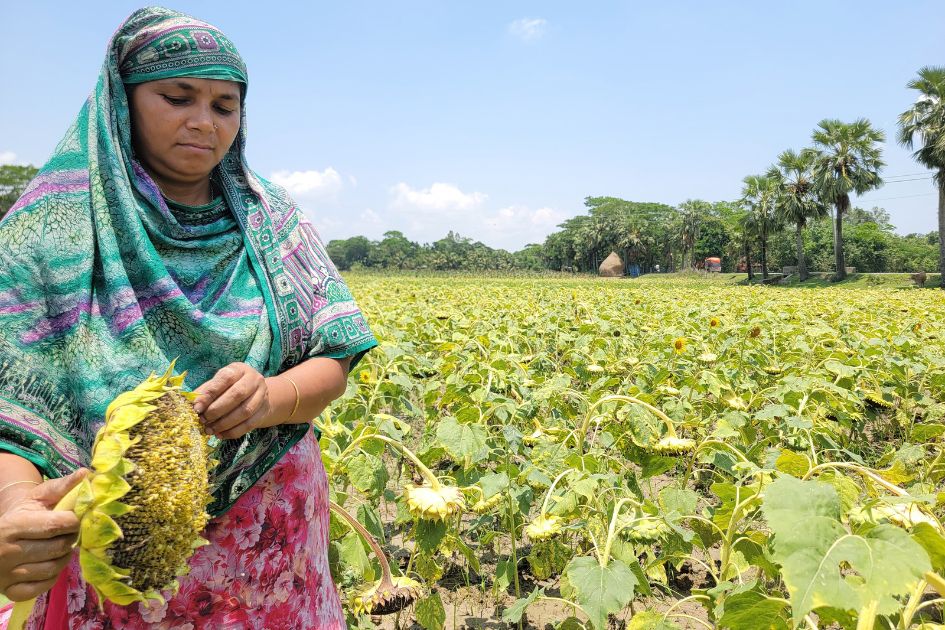
Shakuri Begum, who studied up to the SSC level, faced severe uncertainty after separating from her husband while raising her daughter alone.
With support from a local NGO, she received advanced agricultural training, an interest-free loan, and practical lessons in mulching, sack gardening, and pot cultivation. She also received sewing training and chickens from the Department of Livestock Services.
Today, she is financially independent and grows sunflowers and vegetables.
“People in the village now invite us to local arbitration meetings,” she says proudly. “They value our opinions.”
Her daughter Hena is preparing for this year’s HSC examinations, and Shakuri is determined to ensure her education continues.
Another farmer, Mosammat Asma from Rangabali village, earned around Tk 70,000 last year by growing cucumber, bitter gourd, and ridge gourd using mulching techniques learned through NGO training.
But challenges remain severe.
In winter, saline water contaminates local wells. Farmers struggle to access irrigation pumps and often cannot obtain quality seeds from government offices.
Khanum said practical steps are needed to overcome discrimination at the field level. These include reserved places for women in training programmes, women-only training where necessary, instruction in local languages, access to mobile banking and special loans, support for women’s group-based marketing, and help in obtaining legal documents and formal recognition as farmers.
“These steps are crucial because without formal recognition, women cannot properly access loans, subsidies, or government support,” she said.
Women-led adaptation offers a path forward
Experts say Bangladesh cannot build effective climate resilience while ignoring women farmers.
Khanum said climate adaptation in Bangladesh will not be sustainable unless women are fully included.
“Women are key to food production, nutrition, and managing family resources,” she said. “If women are left out, solutions are incomplete, and communities stay vulnerable.”
She cited women-led salt-tolerant rice cultivation in Satkhira and Khulna as one example of successful adaptation, where women’s groups have received training on saline-resilient rice and vegetable varieties and shared seeds and knowledge within their communities.
She also pointed to women’s participation in cyclone preparedness committees, fish and crab farming cooperatives, and homestead gardening as examples of how women are already leading adaptation in coastal areas.
In several coastal villages, women’s cooperatives have helped families earn income from small-scale fish and crab farming, while homestead gardens have provided nutrition and acted as a safety net when main crops fail due to floods, droughts or salinity.
“These examples show that women are not only victims of climate change,” Khanum said. “They are also innovators and leaders in adaptation.”
Harjeet Singh said women must move from being treated as passive beneficiaries to becoming leaders in climate adaptation.
“Women-led solutions already exist,” he said. “Floating agriculture, community seed banks and mulching systems have proven effective. These initiatives now need direct funding and institutional support.”
Local organisations fill gaps
Bangladesh has several progressive policies supporting women’s rights in agriculture.
The National Women Development Policy 2011 calls for equal wages and recognition of women’s labour. The National Agricultural Extension Policy 2012 also stresses the need to integrate women into agricultural services and training.
International commitments under CEDAW, the Beijing Platform for Action and the Sustainable Development Goals further reinforce women’s rights to land, training and economic participation.
But implementation remains weak.
Agricultural training, subsidies, climate adaptation resources and extension services continue to reach men far more often than women. Many women also face mobility restrictions, limited financial control and overwhelming domestic workloads that prevent them from participating in training or decision-making forums.
In many cases, women’s names are absent from land documents, farmer databases, irrigation groups and local agricultural committees, leaving them excluded from official support.
Local organisations have stepped in where government support remains limited.
The Village Education Resource Center, which has worked in Rangabali since 2017, provides group-based training, interest-free loans, and health awareness programmes for women.
Mohsin Talukder, who works with the organisation, said women in the area once had very limited access to agricultural knowledge and healthcare.
“Things have improved slowly through training and group support,” he said. “But government services are still inadequate.”
Climate resilience and women’s rights
Banasree Mitra Neogi, Director of Rights and Governance Programmes at Manusher Jonno Foundation, said, “We are witnessing growing awareness among rural women. When women receive accessible information, they turn knowledge into action. As a result, many are now participating in local government elections, serving on Union Parishad standing committees, and taking active roles in local arbitration processes. These are visible signs of empowerment and leadership.”
The Manusher Jonno Foundation is implementing the Community-based Resilience, Women’s Empowerment and Action project, known as CREA, in climate-vulnerable regions, including Rangabali Upazila of Patuakhali.
The project, supported by the Embassy of Sweden, works in the hilly, char, coastal, and hill areas across 13 districts. It aims to build women’s leadership, increase community resilience, strengthen public accountability, and address the social impacts of climate change.
The Village Education Resource Center (VERC) is implementing the project in Patukhali, partnering with Manusher Jonno Foundation.
But women are still facing new and difficult challenges in their rights. Banasree Mitra Neogi said, “However, significant challenges remain. Unequal unpaid care responsibilities continue to limit women’s opportunities and increase their vulnerability, including exposure to domestic violence”.
In the coastal area, these challenges are more complicated. “In climate-vulnerable coastal areas, these burdens are compounded by food insecurity, disasters, and safety risks. Women contribute substantially to agriculture alongside household work, yet their labour remains largely invisible and unrecognized,” Banasree Mitra Neogi mentioned.
The Manusher Jonno Foundation project supports training on climate-adaptive livelihoods, income-generating activities, fund management, human rights, social accountability, gender-based violence prevention, and child marriage prevention.
For women farmers in places like Rangabali, this approach is important because climate resilience cannot be separated from safety, dignity, recognition, and access to public services.
Banasree Mitra Neogi specially mentioned the Bangladesh government’s recent initiatives for farmers, “Farmer Card”. She said, “One critical issue is the lack of official recognition of women as farmers. Without farmer cards, women are often excluded from government services, subsidies, and support mechanisms”.
Women are half of this population. Without the contribution of women, the economy cannot run. Banasree Mitra Neogi also said, “Achieving sustainable social and economic progress requires collective action to recognize women’s contributions and ensure a fairer distribution of unpaid care work.”
Her remarks show that women’s climate resilience is not only about seeds, crops, or irrigation. It is also about governance, accountability, protection from violence, control over resources, and recognition of women as decision-makers.
Why recognition matters
As climate pressures increase and more men migrate for work, women are increasingly becoming the primary managers of farms across vulnerable coastal regions.
Yet many still lack land rights, financial access, official farmer recognition, climate finance opportunities, training access, and representation in local decision-making.
Policy experts argue that women’s unpaid agricultural and care labour must be formally recognised in national economic statistics and climate policy frameworks.
They also stress the need for gender-responsive agricultural governance, including issuing Farmer Cards in women’s names, ensuring direct access to subsidies and climate finance, expanding childcare and healthcare services, improving water access, and strengthening women’s land and tenancy rights.
Md Abdur Rahim said the government is determined to increase women’s participation and recognition in agriculture.
“The government is determined to meet the challenge of women’s participation and recognition in agriculture,” he said. “All possible cooperation is being provided to increase women’s participation in agricultural development activities and in the creation of agricultural entrepreneurs.”
But for women like Asma Begum, recognition must reach the field, not remain only in policy documents.
Back in Rangabali, as evening light fades across the fields, women farmers continue their work quietly and without recognition.
They grow food under worsening climate conditions, preserve seeds, protect families during disasters and hold fragile rural economies together.
Yet many remain invisible in the systems meant to support them.
Bangladesh’s climate resilience depends heavily on these women. Without recognising them as farmers, economic contributors, decision-makers and leaders in adaptation, the country’s response to the climate crisis will remain incomplete.
Now, we will learn the story of a farmer from Barishal, a district in the southwetern part of Bangladesh, who has lost everything he owned to repeated river erosion.
Ships Sail on Dulu Aladar’s Land

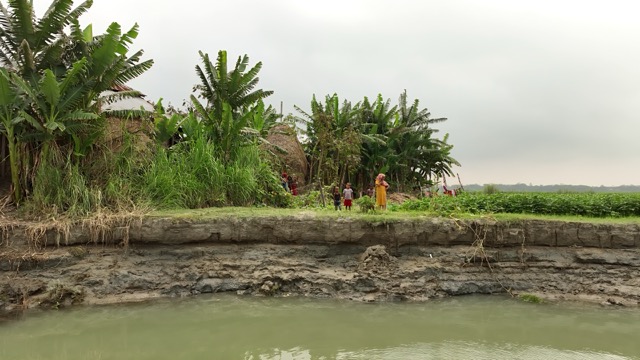
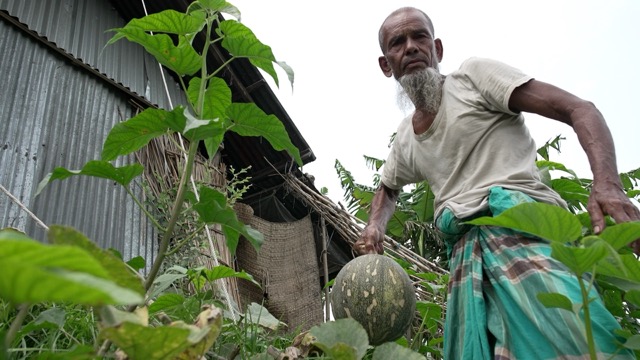
Another large piece of soil broke from the riverbank and disappeared into the Meghna. Dulu Aladar watched it go without a word. He sat on the bank, worry working across his face. The Chaitra sun, the last month of the Bengali year, hung overhead, but its heat had thinned. Dulu’s only thatched house stood fifteen feet from the water. Erosion had already eaten the distance down to almost nothing. One more strong cut and the house would be in the river too.

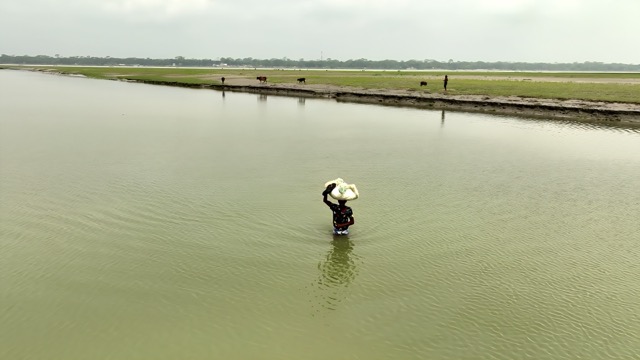
Dulu stretched out his arm and pointed about two hundred meters into the middle of the Meghna. “Four years ago, I had my own house there,” he said. “A cowshed, a courtyard, a graveyard. Now there is nothing. The Meghna swallowed everything. Now there is only endless water. Cargo ships pass over the place where I lived.” I looked from the river back to his eyes. I saw nothing in them but emptiness.
Dulu lives in Hijla Upazila of Barisal district, in southeastern Bangladesh. In Dakshin Baushya, a village of Barajalia union, he once held land, a house, and rice fields. Now he holds river water.
“Every morning, people wake and think about food,” Dulu said. “We wake and think about how close the water is to the wall. Every night before sleep, I pray the river does not take the house while we are inside. If it takes the house in daylight, at least we can run. At night we cannot.” He sighed.
Hope of a normal life does not live in this part of the global south. The struggle here for survival is too plain to fit inside words.
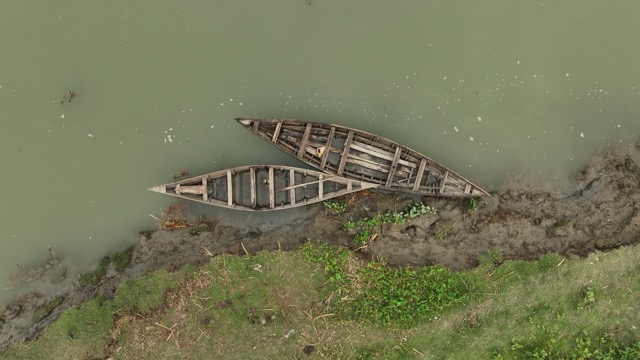
Dulu’s straw house
“Seven of us live in this house,” Dulu told me, sitting on the open veranda in front. “My wife, my younger son Siddiq, my other son Rubel, his wife, and their two children.” The walls are rice straw. The roof is old corrugated iron. There is no government electricity in this stretch of riverbank. A small solar panel was the only source of light, and it has been broken for several days. The house has one bedroom. The veranda doubles as a kitchen on its other half.
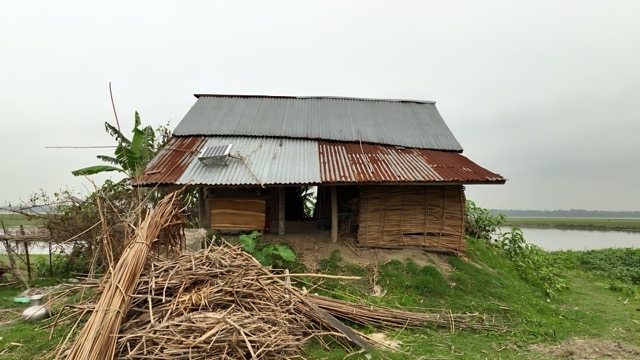
How do seven of you live in one room? I asked. “I hang a sheet across the middle like a curtain,” he said. “On one side, my wife and younger son sleep. On the other side, Rubel sleeps with his wife and the two children.” For families like Dulu’s on the riverbank, this kind of arrangement is daily life. The house holds no furniture, only two large blue plastic oil drums. One holds a few clothes. The other holds cooking utensils, pots, pans. In the eastern corner sit a broken chowki (small wooden bed) and two oily pillows.
The drums are not for storage alone. “When the bank breaks and the house sinks into the river, these drums float,” Dulu said, showing them to me. “What is inside sinks, but the drums themselves rise. I can grab them and carry them to higher ground. Even if the house and the land go under, I can save something.” He told this story of saving lives without any heat in his voice.
Livelihood and economic hardship
Extreme poverty has never lifted from Dulu’s family. “I have never had rice, fish, vegetables, and pulses on the same plate,” he said. “We live by the river so we sometimes catch fish. The thing we lack most is rice.” We walked together on the strip of land in front of his house. Dulu has farmed all his life. The river has taken the rice fields. What remains is sandy soil, fit only for pulses. To eat rice, the family has to buy it. With seven mouths, the math does not work.
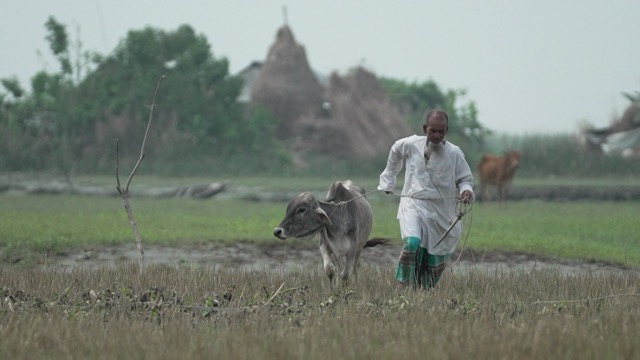
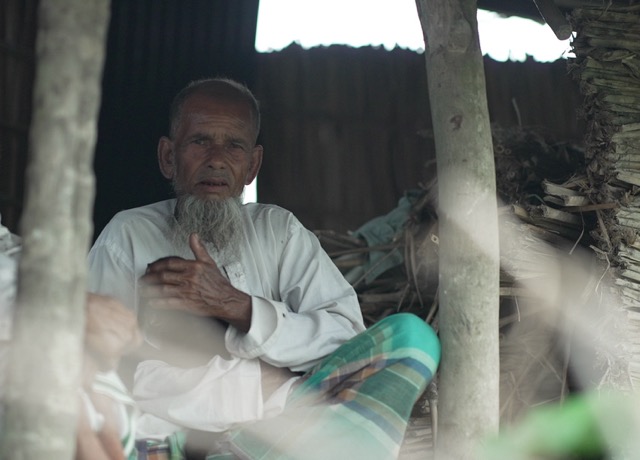
Dulu Aladar is sixty-five now. His body no longer holds the strength for the field. His younger son Siddiq, sixteen, did not go to school for lack of money and now works in a betel garden. The other son, Rubel, takes daily labor where he can find it. “Whatever we earn goes to rice,” Dulu said. “What is left for medicine, for school, for the house?” He asked the question and did not answer it.
Childhood and youth
Dulu spent his childhood and youth on the banks of the Meghna. The river that gave him much also took back many times more. His parents were poor, and he could not study or play. As a small boy he worked as a helper on a fishing boat. The river then was kinder. “When I was a child, I did not fear the river would take everything,” he said. “Now erosion, floods, and tidal surges keep growing year by year. They have taken everything from us.”
Marriage, family, children
In his youth, Dulu farmed rather than fished, even though the river was at hand. After marriage, his wife bore three sons and four daughters in turn. Pressed by money and custom, Dulu married off all four daughters as children. “So many daughters. As a father, it was my responsibility to marry them all. When someone asked, I gave them. How long could I feed so many faces?” He looked at me. I did not answer. For two of the weddings, he had to pay the groom’s family a dowry. He raised the dowry by borrowing from a moneylender at high interest. The thought of the loan made him fall silent.
The children’s lives
Dulu and I sat in front of the house. His wife was roasting dried chilies. The smell reached us. Lunch today would be simple: dried chili vorta (a paste of mashed chilies and salt), rice, and dal. None of his seven children had been able to study properly. Each one had to leave school early to keep the family going. Four did not finish primary. The four daughters married young and went to their in-laws’ houses. The eldest son, Hasan, lives with his wife in the Kalyanpur slum in Dhaka. He has three sons and two daughters. He cleans for very low wages. The middle son, Rubel, and the younger son, Siddiq, live here with their father. None of them can spare much for him. “They cannot feed themselves properly,” Dulu said. “How will they feed me? Let them live well with their families. I have no demands. How long do I have to live?”
Tax on water
Dulu offered me a piece of information that shook me. “We were five brothers and two sisters,” he said. “My father left us one kani, about four-tenths of an acre. My share came to two and a half kathas, around eighteen hundred square feet. All of it has gone into the Meghna. The water there is deep enough now for ships. And every year I still walk to the government land office and pay the land tax on it.”
I asked why. The land does not exist. “If I do not pay,” he said, “it becomes government khas land. I lose any claim.” But what does that change, I said. The land is gone. The river is not anyone’s private property. Dulu answered, “If a char, a sandbar, ever rises again at this stretch of the river, my receipt will let me legally take back two and a half kathas there.”
Do you think a char will rise in your lifetime? “No,” he said. “But if one rises one day, my children or their children can go and claim the family’s specific piece of land at that time.” He said it with a small sigh.
Waiting for the fifth break
The afternoon went. The sun had already moved low in the west. Its light had thinned further. Fishermen of the Meghna had begun to return in their small boats. Their day’s catch was over. Some would sell to the market, some to a household. Dulu set out to bring his cow back from the field. I went with him. Malnutrition has thinned his body. Long walking comes hard. The grazing field lies far. If this house collapses, I asked, where will you go? He did not look at me. He looked at the road. “My house has collapsed four times,” he said as he walked. “Every time I have run west. If it goes this time, there is no more room to stay here. This time I will have to leave the area.” Where will you go? I asked. He did not answer. After a silence he said, “I do not know.”
The first need is to stay alive
Dulu does not know where he will go if the river takes the house again. Even at his age, life carries no promise. He lives every day in the fear of losing his roof. “People think about food, about treatment, about education. We think first about saving our lives,” he said. “Every night I think about whether I will be alive in the morning. Whether the house will be.” He drew a long breath. “We have not a single penny saved. We do not know if there will be a meal tomorrow. We have no money for medicine, no money for school. To think about those things is a luxury for us. We only think that the river will not take our lives, that the river will not drown our land.”
I asked whether the village had ever received help. “What help? We have not received any,” Dulu said at once. “Not for a house, not for food, not for treatment, not for land. None of it.” Have you received help from any private organization? I asked. “No,” he said. “No NGO has ever helped us.”
What about the days ahead, I asked. How will you live, where will you go, what will you do, how will you earn? He did not answer the question directly. He said, “If I die, they will have to drown me in the water. There is no place left for a grave.” Tears were falling silently from his eyes. His voice was heavy. The orange light of the western sun was on his cheeks and on the tears. His sad face caught the orange. Seeing him cry, his pet goat climbed restless into his lap. He patted the goat’s head. Time passed. Evening came down on the Meghna. The water was calm. In my mind it was time to begin the road back to Dhaka.
Why no help has reached him
Bangladesh’s main national fund for climate work is the Bangladesh Climate Change Trust (BCCT), set up in 2009 and 2010. Some money also comes from international sources, including the Green Climate Fund and the Bangladesh Climate Change Resilience Fund. Government estimates put the country’s annual climate adaptation needs at about $12.5 billion, around 150,000 crore taka. Yet between 2015 and 2023 the climate share of the national budget averaged only 0.7 percent, around $86 million per year.
Through the BCCT, $458.5 million was allocated to 891 projects between 2010 and 2024. Of that, 54 percent, about $248 million, was lost to corruption, misuse, and irregularities. Transparency International Bangladesh (TIB) laid out these figures in its November 2025 report.
Where the money goes
The TIB report describes corruption at three stages of the project cycle. The first is bribery during project approval. Projects pass under the influence of ministers, the board chairman who is the minister of the environment, and political leaders. One board chairman, who served from 2010 to 2013, allocated 1473 percent more money than the average to projects in his own constituency. Proposals were submitted at the last minute and approval was settled in advance.
The second stage is the appointment of contractors. Tenders are rigged through contractors aligned with the ruling party. In the solar streetlight programme, 216 of 373 projects between 2019 and 2023 listed equipment prices 47 to 57 percent above the going rate. The loss came to between $17 million and $20.7 million.
The third stage is implementation. Some are “signboard projects,” where state money is drawn down by simply putting up a board. In other cases the work is poor or unfinished. A solar panel might fail in a year while paperwork claims a five-year warranty. As a result, 61.6 percent of projects are delayed, and some by more than two thousand days. Monitoring is thin. Outside audits are almost absent.
Why the Meghna’s erosion victims are missed
A deeper look raises further problems. Project allocations do not match the actual climate risk. The Spearman correlation between risk and money sent is only 0.2. Districts at high risk, such as Barisal, Bhola, and Patuakhali, receive less. Districts at lower risk receive more. Visible projects, like solar streetlights and eco-parks, attract money. Slow-onset problems, like river erosion, do not. In the Hijla and Meghna stretch, erosion takes 8,700 hectares of land each year and affects more than 200,000 people. Targeted projects for this area are very few.
Marginal communities are largely shut out of project design. Riverbank poor and landless families like Dulu’s have no place at the planning table. No policy carves out a separate target for the “ultra-poor” or for “river erosion victims.” Shelter projects and cash assistance exist on paper, but bureaucracy, political pull, and corruption keep them from reaching the people who need them. Decisions made in Dhaka rarely move into the field, and monitoring on the ground is missing as well. Shelter and rehabilitation projects for erosion victims do exist, but many people like Dulu have never received anything from them, because lists are drawn up irregularly and political preference shapes who appears on them.
This is more than wasted money, TIB writes. It is a betrayal of the people most exposed to the climate.
What could be done
TIB and other groups recommend several changes. The BCCT Act needs amendment to bring in an independent board, clauses against corruption, and stronger transparency. Project selection should be weighted to actual risk on the ground. Local communities should take part in monitoring, with grievance mechanisms at the field level. Cash and housing assistance should go directly to the marginal, as grants rather than microfinance. Corruption cases should be investigated by the Anti-Corruption Commission free of political interference, and the guilty punished as a matter of example.
Climate experts argue that the funds exist. Governance failure, corruption, and political interest keep them from reaching the people who need them. Millions like Dulu Aladar are the result. This is not only a climate problem. It is a governance problem. Without transparency and accountability, they say, the cycle will continue.
The final story is about a climate migrant in Dhaka city, whose family arrived from Bhola district nearly 50 years ago after losing everything to river erosion. Yet, their fortunes have not improved since coming to Dhaka; instead, they continue to endure an even more arduous struggle.
Suffering that begets suffering
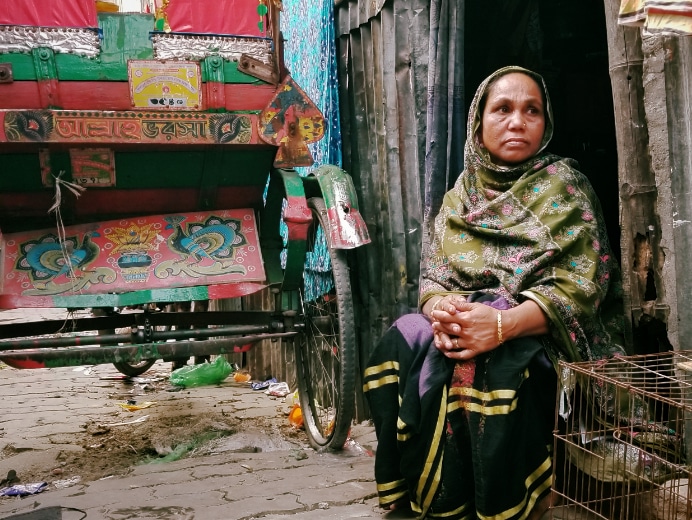
It was noon when I reached the Kalyanpur slum. Nilufar Begum had finished cooking, taken a bath, and sat at the door of her single room house. No one else was home, though her family of six all share that room. Her son (36), who has cancer, had gone to the Mohakhali National Cancer Hospital. His wife and their three children had gone to her parents’ house in Comilla.
What did she cook today? I asked. Only kalmi shak bhaji (stirred greens) and lentils, she said.
Nilufar Begum is 53 years old. In 1973, when she was two, the Meghna River swallowed their home in Bhola. She came to Dhaka holding her mother’s hand, together with her two sisters.
She spoke fondly of her early days in Dhaka. They lived in a slum next to the Mohammadpur embankment. “When I came to Dhaka in 1973, we struggled for food. We knew no one. My mother and my two sisters were in danger. I was the youngest. My mother started working as a domestic helper in people’s houses. We ate whatever food the householders gave us. Sometimes we would ask people for food. When I grew up, my mother enrolled me in a school. But I could not continue because of money.”
Career at seven
Nilufar started her career at seven. Even as a child, she worked as a domestic helper because the family had no money. “But at that age, I did not like working. I told my mother, I won’t stay here, take me away. Then my mother said, if you don’t stay here, what will you eat? How will I feed you?”
The householder had another child the same age as Nilufar. “I worked and took care of that child. I played with her. They were both husband and wife doing jobs.”
First victim of harassment
Nilufar worked in that house in Mohammadpur for a year. She was eight at the time. When the owner left Dhaka with his family, she lost that job. Her mother found her a new position as a domestic helper in the Asadgate area. That was where Nilufar first suffered abuse. “They gave me hard tasks: sweeping the house and washing dishes. But I was young, so I could not do them well.” The owner dismissed her.
A construction worker’s life
When Nilufar was nine, her mother pulled her from domestic work and took her to break bricks at a construction site. Her mother also worked as a bricklayer. Together they broke bricks to earn money for the family. She told us about an accident during the construction of a road near the agricultural market in the Mohammadpur area. “One day, I was breaking bricks when a hammer fell and crushed my hand. I cried. Then my mother told me, ‘You don’t have to work here anymore. You just sit here.’” Later, Nilufar took another domestic helper position in the Adabor area.
Child marriage
When Nilufar was twelve, she started selling pitha (rice cakes) on the sidewalk: bhapa pitha (steamed), patishapta pitha (rolled), and chitai pitha (thin, crisp). She fell silent when she came to the hardest days. She stood, drank a glass of water from the dark room, and returned to the door.
Her eyes were wet. “Our life is difficult. We have suffered so much that we cannot tell anyone. And even if we tell, no one will believe us.”
At twelve, she was forced into marriage. Her husband, Anwar Hossain, worked in a small food shop. He had seen her selling pitha and liked her. He took her away without telling her family, then married her. Nilufar’s family searched everywhere. They went to the Mohammadpur police station and prepared to file a missing person’s case. After a week, Anwar brought her back. “I cried. I told my husband, why did you kidnap me and force me to marry you? Take me to my mother.” Her mother was relieved to see her daughter. She had never consented to the marriage. But they had no choice.

The hardest days
Nilufar’s husband did not want to work. They had no place to stay. Her mother gave them a small space next to her house in the Mohammadpur slum. Nilufar worked as a domestic helper and held the family together with great difficulty. Their first child died a few months after birth.
Her eyes grew wet again as she spoke. She wiped them with the hem of her saree. “If the Meghna River had not destroyed everything for us, we would not have come to Dhaka. We would not have suffered like refugees.”
“When I think of my history, I cannot hold back my tears. How difficult our lives have been. I could never buy a fish to eat. I could never wear a new dress. I cried behind my mother. She would say, where will I get new clothes for you? Your father does not work. Where will we get the money?”
Nilufar’s voice choked with tears.
The 1988 flood
As she spoke, her mother Anwara and younger sister Shahana joined her. Nilufar’s other sister was born after the family came to Dhaka. They live in the next lane in the Kalyanpur slum and had come to see their sister.
During the 1988 flood, the family fell into great hardship. Nilufar was pregnant with her second child. She, her husband, mother, father, three sisters, and her elder sister’s daughter (eight people) took shelter at a center on Iqbal Road in Dhaka. “In the flood, all the houses in our slum went under water. My parents, sisters, and my husband, the whole family, stayed there for two months. I had my second child there. His name is Roni.”
After the flood: Kalyanpur slum
When the water receded, Nilufar’s family crossed to the empty land opposite Government Bangla College in the Kalyanpur area and built a house. They put together a few flimsy shelters from scraps of wood.
Nilufar said the slum caught fire in 1989, the year after the flood. Everything in their house burned to ashes. Her family barely escaped. Nine residents died in that fire.
“When everything was gone, we started living here again with a polythene roof. We did not have the money to build a house with tin.”
After the fire, Nilufar had no money to move. She sighed. “Our economic situation had become bad. We did not have the money to go to the market. I would go to the market in the morning and bring abandoned raw vegetables from the street. Then I would cook the cauliflower leaves and eat them. We would go without food for two meals.”
Her mother and sister shed tears. Memories of suffering passed before their eyes.
They have lived in this Kalyanpur slum for 36 years since 1988. The slum has burned four times and been demolished six times by miscreants. Over the years, Nilufar saved enough to buy tin for her house.
Garment work
When her husband did not earn, Nilufar took a job at a garment factory through a relative. She cut cloth yarn. The salary was 12 takas. “At that time, garment factories did not pay salaries on schedule. If they paid for one month, they would keep three months in arrears.” Since the income was not regular, she returned to domestic work.
The cycle of child marriage
Nilufar has three daughters and one son. After educating the eldest daughter to class five, she could not afford more schooling. She married her off at twelve.
The middle daughter passed the SSC examination. Then she could not continue. Nilufar married her off at sixteen.
The youngest daughter completed class ten and married at fourteen. Her husband is paying for her to continue studying.
When I asked why all three daughters married young, Nilufar gave a frank answer. In slums, parents marry off their daughters early for safety. She spoke in a cautious whisper: “All kinds of scoundrels disturb them. Unmarried girls cannot be kept in slums for long. Even if young men are warned, it makes no difference. They threaten to kidnap the girls.”

The endless suffering
Nilufar said they never wanted to come to Dhaka. But when the Meghna River took everything, they had no choice. “Our difficult life sank into more difficulty after coming here. We gained nothing. Our lives did not improve. We burdened ourselves with new suffering.”
Her mother nodded.
Now Nilufar has six people in her family: herself, her son, his wife, and their three children. Her son has cancer. Her husband died last month from a heart attack after hearing about the diagnosis. The family has no other income. She borrows at steep interest to treat her son. “I am 53 years old. At this age, people live a secure life. I still walk the streets selling clothes to earn handfuls of rice. If I stay at home for a day, the food will be gone.”
“We have been in Dhaka for 51 years. But there has been no improvement. We still work hard to earn two meals a day. We don’t even have a place to bury ourselves if we die.”
Nilufar was sitting at the door of the house, crying, as she said these words. Her mother and sister had tears in their eyes too. By then, evening had fallen. Nilufar went to light a lamp. But there is no light in the lives of these climate migrants.
Climate migrants in Bangladesh
Bangladesh is one of the most climate vulnerable countries in the world. In 2022, over 7.1 million Bangladeshis were displaced by climate change, according to the World Health Organization. A World Bank report projects Bangladesh could have 13.3 million internal climate migrants by 2050. Atiqul Islam, then mayor of Dhaka North City Corporation, said around 2,000 people move to Dhaka each day, 70% because of natural disasters and climate change.
COPs and neglected climate migrants
I asked Nilufar whether she had heard of COP (Conference of the Parties, the annual UN climate summit where world leaders negotiate action on climate change). She looked at me in surprise. She does not know what COP is. This is the first time she has heard the word. She knows nothing about any conference.
She does not need to know what a COP is, because no one cares about poor climate migrants like her. WHO materials around COP29 mention migration, displacement, and migrant health, but no standalone COP29 declaration or funding package has emerged for climate migrants alone.
Experts’ opinion
Harjeet Singh, a climate activist and Global Engagement Director at the Fossil Fuel Non-Proliferation Treaty Initiative, said: “Bangladesh or India or Nepal and many other countries are endangered because of sea level rise or because of glacial melt. Certain places are going to be uninhabitable. In that situation, people have to move, and we must respect their right to move, but then we need to provide them with support when they are migrating. There are also challenges with the host community, because cities in our part of the world are not ready to receive migrants.”
Singh added: “Insufficient support has come to climate migrants in the form of adaptation. We are looking at a challenging situation, and we do not have a proper policy framework in developing countries to deal with it. There is no support coming from developed countries to help them develop that framework and help people forced to migrate. The situation is getting worse with increasing climate impacts.”
Md Shamsuddoha, Chief Executive of the Center for Participatory Research and Development (CPRD), said: “Migration from rural to urban areas is growing. Urban areas should welcome migrants. They should develop the capacity to hold people and to provide essentials: water, education, health, and livelihood opportunities.”
He added: “Developed countries should take responsibility for migrant people. But it is difficult, because developed countries will not accept responsibility for migrants in the name of climate change. They may consider labor migration, but they will not take responsibility for climate migrants. That is why we need to accommodate our people who migrate within the country, ensure their job security and food security, and provide essential services.”
For Neelima, the future remains uncertain. For women farmers like Asma Begum, hard work still does not guarantee recognition or security. For Dulu Aladar, the river has swallowed not only his land but also the certainty of having a place to call home. And for Nilufar Begum, displacement has become a lifetime of hardship passed from one generation to the next. These are not simply stories of natural disasters. They are stories of inequality, neglected rights and the human cost of inadequate support. Climate resilience must mean more than rebuilding homes, restoring farmland or counting the money spent on recovery. It must mean protecting a child’s right to learn, recognising women’s labour, ensuring displaced families can live with dignity and helping vulnerable communities rebuild their futures. Because when climate change takes away a person’s home, livelihood, education or sense of security, the loss does not end when the floodwaters recede or the river falls quiet. For many, that is when the struggle truly begins.