


A new policy brief presented at COP31 highlights the need to document cultural, psychological and ecological losses while strengthening community-based evidence and rights-based relocation policies in Bangladesh.
Bangladesh has called for coordinated efforts to address non-economic losses and climate-induced displacement, emphasising the need to protect the rights, dignity, livelihoods and cultural heritage of communities affected by climate change.
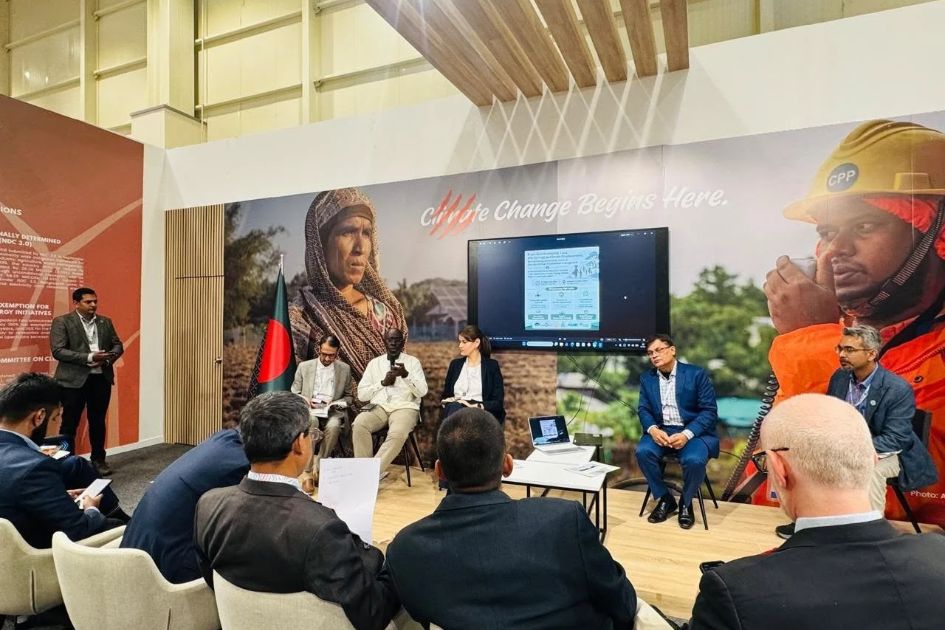
The issue was discussed at a special session held on November 10 at the Bangladesh Pavilion during the 31st United Nations Climate Change Conference (COP31) in Antalya, Türkiye.
Participants stressed the importance of identifying and addressing social, cultural, environmental and psychological losses caused by climate change, alongside economic damage.
The session also saw the launch of a policy brief titled “Beyond Economic Losses: Strengthening Bangladesh’s National Mechanism on Loss and Damage through NELD Evidences”.
The document examined how climate change affects people’s lives and livelihoods, cultural identities, traditional knowledge, social cohesion and ecosystems, highlighting impacts that cannot be adequately measured in monetary terms.
It also underscored the importance of incorporating community experiences and evidence into Bangladesh’s National Mechanism on Loss and Damage (NMLD) to strengthen its effectiveness.
The session was jointly organised by Bangladesh’s Ministry of Disaster Management and Relief, the Department of Environment, the International Centre for Climate Change and Development (ICCCAD), the ADAMS Foundation and the Refugee and Migratory Movements Research Unit (RMMRU).
Germanwatch, Canada’s International Development Research Centre (IDRC) and the Royal Norwegian Embassy in Dhaka supported the event.
Researchers presented findings on non-economic climate losses in Bangladesh’s coastal regions, alongside accounts of the experiences of affected communities.
The programme also included a documentary screening and panel discussions examining the consequences of climate change beyond financial damage.
A standard guideline on planned relocation in the context of climate-induced displacement was presented and discussed during the session.
Speakers called for stronger data systems to assess non-economic losses and improved coordination among government ministries responsible for addressing climate impacts.
They also emphasised the need for inclusive, rights-based relocation and rehabilitation programmes that safeguard the rights, dignity, livelihoods and cultural heritage of people displaced by climate change.
Government representatives, international experts, climate negotiators, researchers and development partners attended the session.