

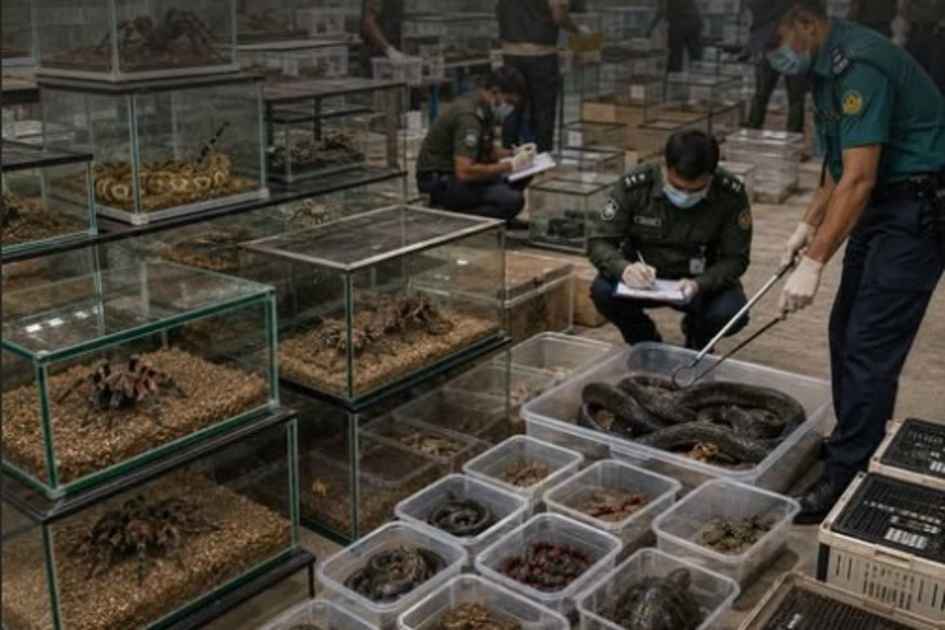



The Rupnagar seizure has exposed gaps in wildlife import monitoring, with experts warning exotic pets can carry diseases, disrupt native ecosystems and fuel cross-border trafficking.
Bangladeshi authorities have seized 1,104 exotic animals, including venomous tarantulas and Mexican black kingsnakes, from a property in the capital Dhaka and are searching for two suspects allegedly linked to an illegal wildlife trade network, police said.
The animals were recovered from a property in Rupnagar, a neighbourhood in Mirpur, where officials said they were being kept illegally for commercial sale. The raid was carried out by the Wildlife Crime Control Unit.
Wildlife experts said the illegal import and sale of such species threaten Bangladesh’s biodiversity and ecosystems and could introduce new diseases.
Because the animals are considered venomous, hazardous and potentially harmful to native wildlife, their import into Bangladesh is prohibited without proper authorization. The seizure has raised concerns over how such species continue to enter the country and reach the domestic market.
Rupnagar Police Station Officer-in-Charge Md Noman Hossain told Dhaka Tribune on Tuesday night that two suspects connected to the case were still at large and that police operations were continuing to arrest them.
“If any foreign spiders, snakes, or other prohibited venomous animals are found, legal action will be taken immediately,” he said.
The recovered animals, including venomous tarantulas and Mexican black kingsnakes, had been kept illegally for sale, the police officer said.
“We are investigating why these prohibited animals were brought into the country. Besides financial motives, we are examining whether there are other factors involved. Police are also searching for the masterminds behind the operation,” he added.
According to the Bangladesh Forest Department, the animals were found in aquariums on the rooftop of a residential building in Rupnagar and were being kept for commercial sale.
Although 1,104 animals were seized during the operation, officials believe nearly 6,000 exotic animals had been kept at the site. Around 5,000 animals, including snakes, spiders, frogs and turtles, had reportedly been sold before the raid.
The seized species included venomous tarantulas, corn snakes, dumpy frogs, leopard geckos, side-neck turtles and several other exotic animals.
Bangladesh’s Chief Conservator of Forests Md Amir Hossain Chowdhury told Dhaka Tribune on Wednesday night that legal import of such animals requires approval from a scientific committee.
“They may have been brought in as exotic pets, but these wildlife species can have devastating impacts on the environment,” he said.
“Without scientific assessment, we cannot determine what diseases they may carry or how they will affect native ecosystems. If these animals escape into the wild, the consequences may only become evident after 20 to 25 years.”
He said preliminary information suggested the animals entered Bangladesh through the airport and were later intended to be smuggled into India.
“There needs to be stronger monitoring at airports as well as in the domestic market to prevent the illegal trade and keeping of exotic animals. There are clear shortcomings in the oversight of imported pets,” he said.
Adnan Azad, convener of the Bangladesh Animal Welfare Association, said such animals are generally imported for two purposes: to be kept as exotic pets and to be smuggled to other countries.
“Bangladesh has become an important transit route for wildlife trafficking,” he told Dhaka Tribune. “Animals are brought from countries such as Thailand into Bangladesh and are later smuggled into India through land borders.”
He said a domestic market for exotic wildlife was also growing.
“Many people keep exotic turtles in aquariums as pets. However, once they grow too large, owners often release them into nearby lakes or other water bodies, from where they eventually reach rivers. These invasive species are extremely destructive to local ecosystems.”
Azad said the animals prey on small fish, fish eggs and aquatic vegetation, disrupting ecosystems. Their rapid breeding makes them a greater conservation concern, he added.
The seizure has also renewed scrutiny of Bangladesh’s wildlife import rules.
Senior Supreme Court lawyer Sayeed Ahmed Raja told Dhaka Tribune on Wednesday that no foreign wild animal can be legally imported into Bangladesh without a No Objection Certificate from the Wildlife Crime Control Unit, required government approvals and a valid certificate under the Convention on International Trade in Endangered Species of Wild Fauna and Flora, known as CITES.
He said bringing venomous snakes, spiders or other wildlife into the country in luggage or concealed among other goods without proper permits and quarantine procedures amounts to wildlife smuggling.
Under Bangladeshi law, anyone convicted of illegally importing, exporting, possessing or trading foreign wildlife or venomous species may face up to three years in prison, a fine, or both. Repeat offenders face harsher penalties, including longer jail terms and higher fines.
Source: Dhaka Tribune




