

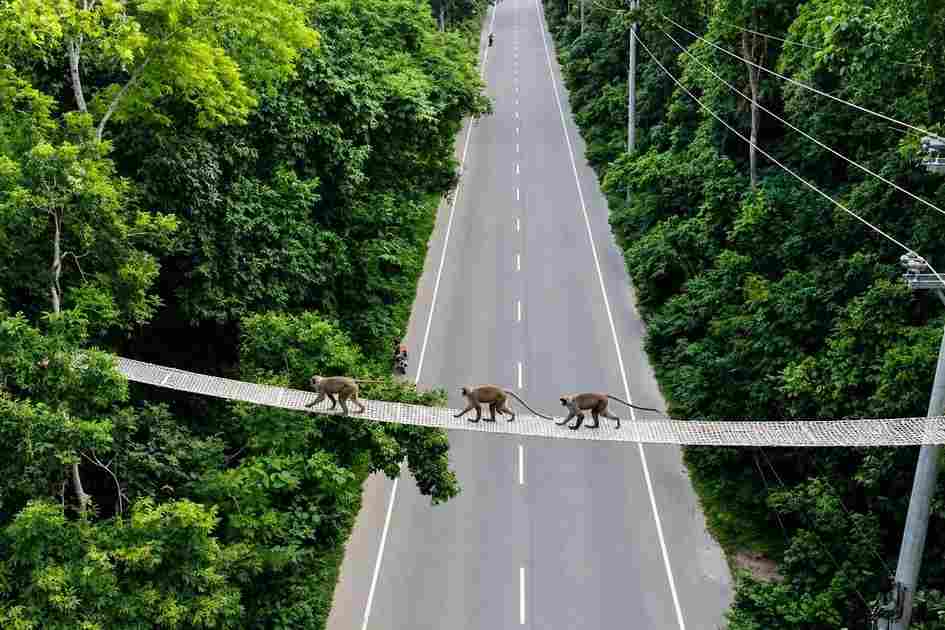



Installed by the Forest Department, five canopy ropeways aim to reduce road risks for monkeys and other tree-dwelling wildlife in Madhupur forest’s National Park Range.
High above the roar of traffic on Bangladesh’s Tangail-Mymensingh Highway, a troop of monkeys moves silently through the trees, crossing a rope bridge built not for humans, but for wildlife.
The ropeways have become a safer pathway for wild animals living in and around Madhupur forest, one of Bangladesh’s important remaining forest landscapes. As the highway cuts through the forest, it creates a dangerous barrier for wildlife that depends on movement between different parts of the habitat for food, shelter and survival.
For years, monkeys and other wild animals have faced the risk of injury and death while descending to the ground and attempting to cross the busy road. The increasing pressure from roads, settlements and human activities has made it more difficult for wildlife to move freely through their natural environment.
To reduce these risks, the Bangladesh Forest Department has installed five wildlife ropeways within Madhupur forest’s National Park Range. These elevated crossings allow monkeys and other tree-dwelling animals to travel safely through the forest canopy without coming down to the highway level.
The initiative represents a simple but effective approach to wildlife conservation, creating safe corridors that support coexistence between human development and nature. Across the world, wildlife corridors are becoming increasingly important as habitats become fragmented by expanding infrastructure.
In Madhupur, these small bridges above the highway carry a bigger message: protecting biodiversity does not always require separating people from nature. With thoughtful solutions, roads and wildlife can share the same landscape.




