

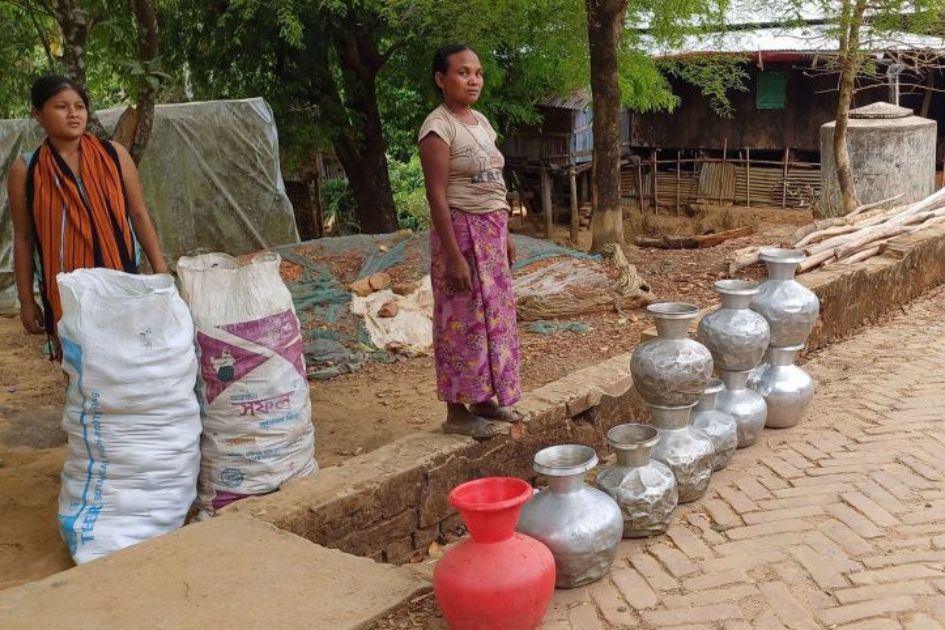



A donor-funded solar water project in Bandarban has collapsed within months, raising corruption and construction quality concerns while forcing indigenous residents back to unsafe, distant natural water sources.
A solar-powered water treatment plant built in the remote Empupara area of Tangkabati Union under Lama upazila has fallen into disrepair within months of its inauguration amid allegations of corruption, poor construction and weak oversight during implementation.
The facility, constructed by the Local Government Engineering Department (LGED) under the LoGIC climate resilience programme, was funded by the United Nations Development Programme (UNDP) and the European Union (EU). It was designed to provide safe drinking water using solar energy for indigenous communities in one of Bangladesh’s most climate-vulnerable and remote regions.
Local residents say the system, which cost around Tk 7.7 million (approximately Tk 77 lakh), began deteriorating only months after completion and is now largely inoperative. Damaged solar panels and weakened structural components have left the facility unusable, forcing dozens of indigenous households to return to collecting water from distant streams and hill springs.
Allegations of irregularities and construction flaws
Residents and community members allege that construction standards were not properly followed during implementation. The contracted firm, reportedly Ripon and Brothers, is said to have engaged in multiple layers of subcontracting, which locals believe contributed to inflated costs and reduced construction quality because of intermediary commissions.
They further claim that substandard materials were used in key structural components. Instead of reinforced steel supports, weaker cement-based structures were reportedly installed. Residents also alleged that the solar panels were not mounted with adequate structural support or stability while the site selection on a vulnerable hillside edge exposed the installation to erosion and wind damage.
A resident of Ripuipara, Mensoroi Mro, said the system showed signs of weakness from the beginning.
“It was not built to withstand the conditions here,” he said, adding that even moderate weather conditions contributed to the structural failure.
Return to water hardship
The collapse has left dozens of indigenous families without access to treated drinking water. Many have now returned to travelling long distances to collect water from natural sources, significantly increasing daily hardship in an already water-stressed region.
Community members say the situation highlights a persistent gap between climate adaptation promises and actual delivery in remote hill areas where infrastructure challenges remain severe.
Project oversight and response
The initiative was part of broader climate adaptation efforts aimed at strengthening resilience in vulnerable regions of Bangladesh through renewable energy-based infrastructure. However, its rapid deterioration has raised concerns about project monitoring, procurement transparency and quality assurance in donor-supported development programmes.
Officials from the Local Government Engineering Department (LGED) were not immediately available for comment on the allegations or the current condition of the facility.
Broader accountability concerns
Development observers say the case reflects wider structural challenges in implementing infrastructure projects in remote and ecologically fragile areas, particularly where multiple contractors and intermediaries are involved in procurement and execution chains.
For the indigenous communities of Empupara, however, the impact is immediate and severe: a return to unsafe water sources and continued uncertainty over when a reliable solution to their drinking water crisis will be restored.




