

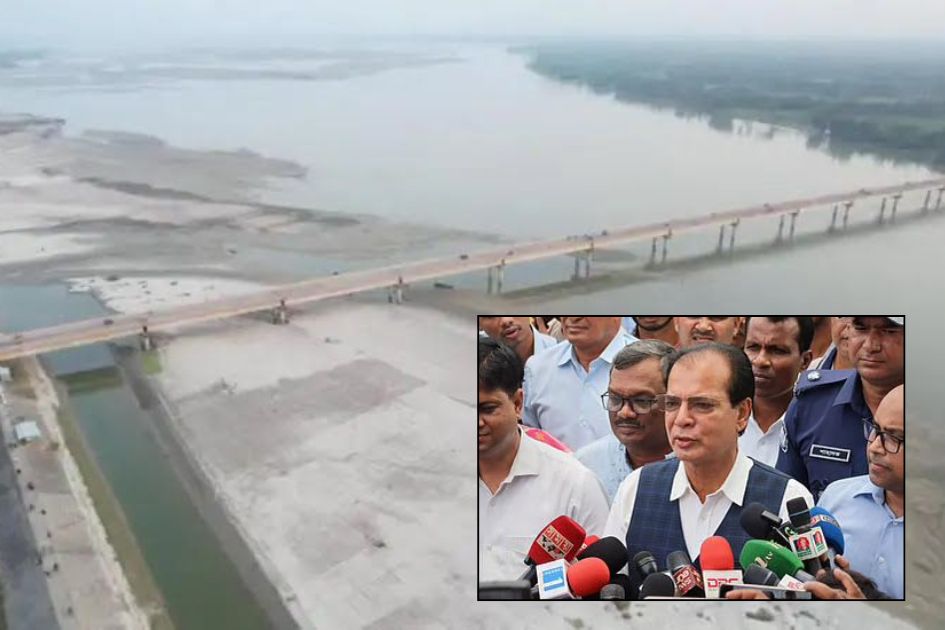

Bangladesh moves ahead with Teesta River restoration project, backed by possible Chinese financing, as long-stalled water-sharing talks with India continue amid rising climate pressures and regional geopolitical sensitivities regionally complex.
Bangladesh has signaled renewed momentum to begin implementation of the long-discussed Teesta River management and restoration initiative as officials say foreign financing and technical support arrangements are advancing and groundwork for execution may begin soon.
Disaster Management and Relief Minister Asadul Habib Dulu said that China is expected to provide financing and technical cooperation for the Teesta River Comprehensive Management Project. He added that the Prime Minister is expected to visit China shortly, expressing optimism that implementation could begin in the near term under the elected government.
Bangladesh will not wait for a Teesta water-sharing deal with India, calling it a matter of “life and death” for river communities. It is instead turning to China to discuss development projects in the region, said Foreign Minister Khalilur Rahman.
The announcement comes at a time when the Teesta basin in northern Bangladesh continues to face severe seasonal water stress affecting agriculture, fisheries and livelihoods across districts such as Rangpur, Kurigram, Lalmonirhat, Nilphamari and Gaibandha.
Longstanding transboundary dispute
The Teesta River flows from the eastern Himalayas through India’s Sikkim and West Bengal before entering Bangladesh. It remains one of the most sensitive unresolved water-sharing issues between Dhaka and New Delhi for over a decade.
A draft agreement reportedly prepared in 2011 after years of negotiation was never finalized due to objections from West Bengal state authorities under Chief Minister Mamata Banerjee who raised concerns over downstream impacts in northern India. Despite repeated diplomatic engagements between Bangladesh and India including discussions at the Prime Minister level the agreement has remained stalled.
Domestic politics shaping water diplomacy
Analysts note that domestic political considerations in India particularly in West Bengal continue to influence progress on the agreement. Political figures such as opposition leader Suvendu Adhikari in West Bengal have maintained strong positions on regional water and border-related issues reflecting broader sensitivities in eastern India.
While the Indian constitution allows the central government to conclude international agreements state-level political resistance has historically complicated implementation of water-sharing arrangements.
Shift toward alternative development framework
In response to prolonged delays Bangladesh has pursued an alternative approach through the Teesta River Comprehensive Management and Restoration Project (TRCMRP). It includes river dredging embankment strengthening flood control systems and irrigation improvements.
The project framework has increasingly involved cooperation with China particularly after renewed engagement following Bangladesh’s political transition after the July 2024 mass uprising and the formation of an interim administration led by Muhammad Yunus.
In 2025 Bangladesh and China issued a joint statement confirming cooperation on the Teesta project formally opening the way for Chinese companies to participate in planning and implementation.
Growing geopolitical dimension
The Teesta issue has gained renewed regional attention amid shifting geopolitical dynamics in South Asia.
A recent report by NDTV described the Teesta as one of the most sensitive river disputes in the region highlighting how water management has become intertwined with broader diplomatic and strategic considerations.
China’s involvement in infrastructure development in Bangladesh has added a new dimension to the longstanding India–Bangladesh water-sharing challenge turning the Teesta into a multi-stakeholder issue involving development finance and regional influence.
Climate pressure in northern Bangladesh
Communities along the Teesta basin continue to experience alternating extremes of drought-like conditions during the dry season and severe flooding during the monsoon.
Experts say the absence of a coordinated and enforceable water management mechanism has intensified vulnerability in one of Bangladesh’s most climate-sensitive regions with direct impacts on agriculture-dependent households.
Financing and implementation debate
While the government is exploring external financing including Chinese support experts and river activists have urged a more diversified funding model involving multilateral institutions and potential participation from partners such as the World Bank Asian Development Bank and European development agencies.
Some analysts also argue that phased domestic financing could allow partial implementation even in the absence of full external funding agreements.
Outlook
Officials in Dhaka maintain that preparatory steps for the Teesta project are advancing while diplomatic discussions continue with both China and India.
Climate justice advocate Sohanur Rahman Executive Coordinator of YouthNet Global said the project must go beyond infrastructure and address long-term equity concerns. He noted, “Teesta is no longer only a river management issue. It is a question of climate justice regional equity and intergenerational survival. Any solution must prioritize the communities who have carried the burden of both flood and drought for decades.”
However observers caution that the project’s progress will ultimately depend on alignment between development priorities and regional political realities across Dhaka New Delhi and Kolkata.
For now the Teesta remains both a development priority for Bangladesh and a continuing test case of South Asia’s complex water diplomacy where climate stress domestic politics and geopolitics remain tightly interlinked.




