

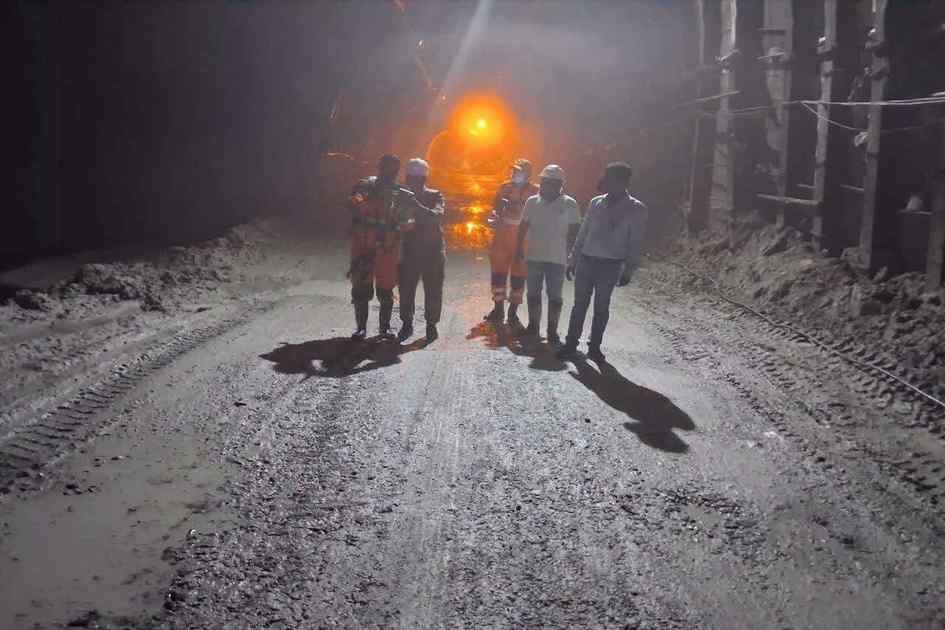



Rescue teams, including specialised underground experts, continue searching the collapsed tunnel as investigators examine the cause of the accident and safety concerns surrounding major Himalayan infrastructure projects.
The death toll from the collapse of an under-construction tunnel at the Teesta hydropower project in India’s northeastern state of Sikkim has risen to 22 after rescuers recovered the bodies of nine more workers from the site.
The latest recoveries were made from the collapsed tunnel at Samardung in Namchi district, where rescue teams are continuing operations to locate workers who remain trapped. Namchi Superintendent of Police Sonam Dolma confirmed the updated death toll to news agency ANI, warning that the number of casualties could rise further.
The accident occurred on Monday afternoon when a section of the construction tunnel suddenly collapsed, trapping several workers inside. Two workers managed to escape, while 25 others were reportedly trapped underground.
A major rescue operation was launched involving the Sikkim Police, Fire and Emergency Services, the National Disaster Response Force (NDRF), the State Disaster Response Force (SDRF), and experts with experience in underground mining operations.
The National Hydroelectric Power Corporation (NHPC), which is developing the project, said the incident was linked to a sudden release of methane gas inside the tunnel. The gas leak reportedly caused thick smoke and toxic fumes, creating additional challenges for rescue teams working in the confined underground space.
The collapsed tunnel is part of NHPC’s Teesta hydropower project, one of India’s major energy infrastructure initiatives in the ecologically sensitive Himalayan region. The area’s complex geology has often raised concerns over safety challenges linked to large-scale construction activities.
The disaster has renewed questions about occupational safety standards and risk management in major Himalayan infrastructure projects, where workers often operate in difficult and hazardous conditions.
Authorities are continuing search and rescue efforts at the site, while an investigation is underway to determine the exact cause of the collapse. Families of the trapped workers remain anxious as rescue teams race against time to reach anyone who may still be inside the tunnel.




