

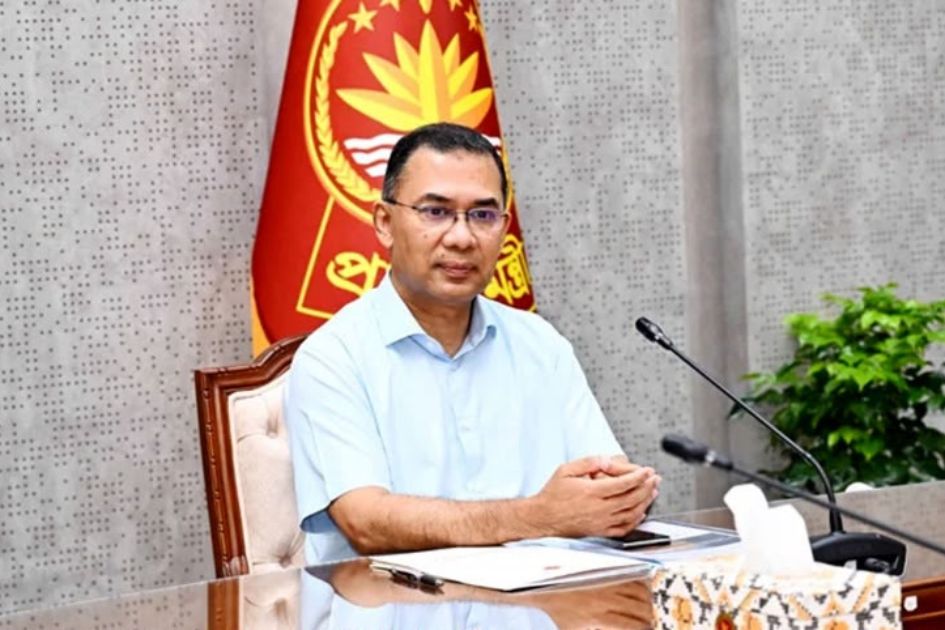



Senior officials reviewed the worsening condition of rivers around Dhaka, with the government announcing stronger enforcement, inter-agency coordination and stricter oversight to curb industrial pollution and improve urban waterways.
Bangladesh Prime Minister Tarique Rahman has issued a stark warning over the country’s escalating river pollution crisis, saying failure to act immediately could leave the nation accountable to future generations.
“River pollution has reached an unbearable stage. If effective measures are not taken now, we will have to answer to future generations,” the Prime Minister said at a high-level meeting on the “Water and Environmental Improvement of the Buriganga River” at the Bangladesh Secretariat, the country’s central government administrative complex in Dhaka, on Thursday.
The warning comes as Bangladesh’s major rivers face growing pressure from industrial waste, untreated sewage, plastic pollution and unplanned urban expansion, threatening ecosystems, public health and the livelihoods of millions of people who depend on waterways.
The Prime Minister directed the relevant authorities to adopt a strict, coordinated and time-bound action plan to restore the environmental health of the Buriganga, Turag, Balu, Shitalakkhya and other rivers surrounding the capital.
He stressed that there can be no negligence in tackling river pollution and instructed agencies to ensure not only the preparation of plans but also their effective implementation.
During the meeting, officials reviewed the deteriorating ecological condition of rivers around Dhaka and identified major sources of pollution, including untreated industrial discharge, inadequate sewage networks, poor drainage systems, declining canal capacity and weak solid waste management.
Experts and officials highlighted the need for stronger enforcement of environmental regulations, ensuring the proper operation of industrial effluent treatment plants (ETPs), restoring canals and improving waste management systems.
The government also called for regular monitoring and legal action against polluters, alongside greater public participation in protecting rivers and restoring urban waterways.
As part of the new initiative, an inter-agency coordination committee under the supervision of the Prime Minister’s Office will be formed to oversee river protection efforts. The committee will coordinate activities among relevant ministries and agencies, review progress periodically and submit reports to the Prime Minister’s Office.
Environmental experts have long warned that the pollution of Bangladesh’s rivers is not only an ecological crisis but also a climate and development challenge. Healthy rivers are essential for water security, biodiversity protection, climate resilience and sustainable urban development.
The meeting was attended by senior government officials and representatives from relevant ministries and departments, including Local Government, Rural Development and Cooperatives Minister Mirza Fakhrul Islam Alamgir, Commerce Minister Khandaker Abdul Muktadir and Environment, Forest and Climate Change Minister Sheikh Faridul Islam.




