

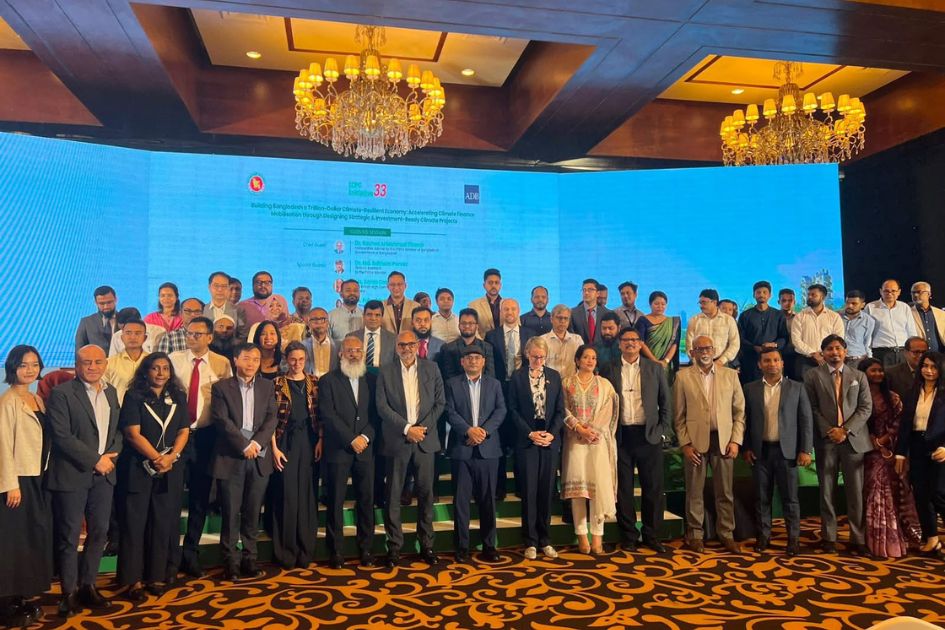



Policymakers, development partners and financial institutions stressed stronger climate literacy, investment-ready project design and coordinated partnerships as essential to improve Bangladesh’s access to international climate finance and strengthen long-term resilience.
Bangladesh is stepping up efforts to unlock global climate finance by strengthening climate literacy, developing investment-ready projects and building partnerships with international financial institutions to transform climate vulnerability into long-term resilience, experts said at a high-level policy dialogue in Dhaka.
Despite contributing less than one percent of global greenhouse gas emissions, Bangladesh remains among the countries most vulnerable to climate change impacts, facing rising sea levels, extreme weather events, floods, river erosion, salinity intrusion and increasing pressure on livelihoods.
For millions of people living in coastal, riverine and climate-exposed areas, climate finance is not only an economic issue but also a matter of survival, dignity, resilience and protecting future communities.
Experts said the success of climate finance should not be measured only by the amount of funding mobilised, but also by whether resources are accessible, transparent, accountable and directly benefit communities facing the impacts of climate change.
A high-level policy dialogue titled “Building Bangladesh as a Trillion-Dollar Climate-Resilient Economy: Accelerating Climate Finance Mobilization Through Strategic and Investment-Ready Climate Project Designs” was held in Dhaka on Thursday, bringing together senior policymakers, international development partners, financial institutions, private sector representatives, academics and civil society leaders.
Organised by the International Climate Finance Cell (ICFC) of the Economic Relations Division (ERD) under the Ministry of Finance through the Bangladesh Climate Development Partnership (BCDP), the event marked the 33rd initiative of ICFC and was technically supported by the Asian Development Bank (ADB).
The discussion highlighted that improving climate literacy among government officials, development professionals, financial institutions, private sector actors and future climate leaders is essential to develop scalable solutions capable of attracting international investment.
Climate literacy: The foundation of climate finance readiness
Speakers emphasised that limited understanding of climate science, financing mechanisms and project preparation remains a major barrier to accessing global climate funds.
They said climate literacy enables institutions to translate scientific evidence, climate risks and community realities into strategic plans, theories of change and finance-ready proposals that demonstrate resilience, economic benefits and measurable impacts.
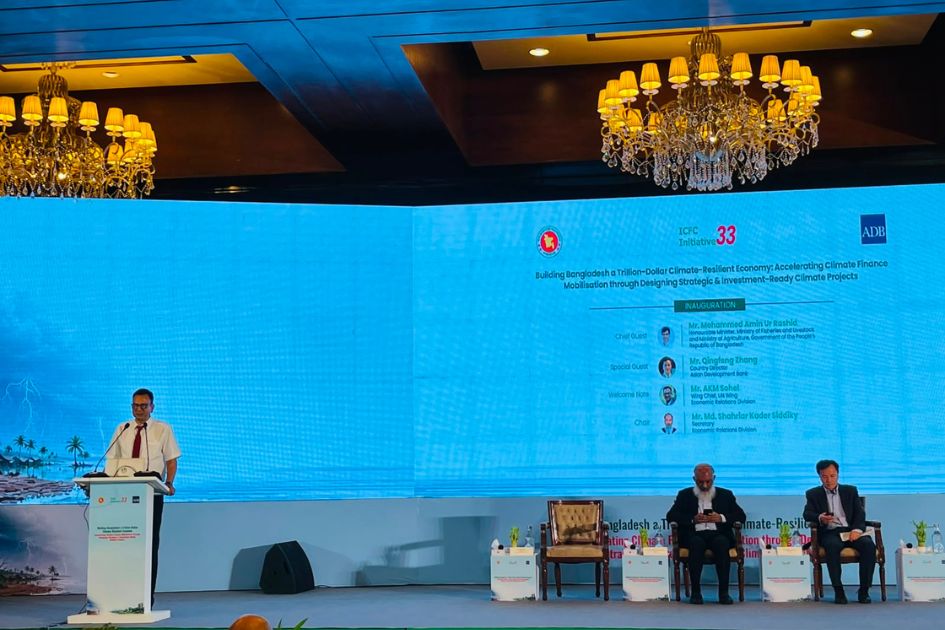
In his keynote speech, AKM Sohel, Wing Chief of the UN Wing at the Economic Relations Division (ERD) under the Ministry of Finance, said climate literacy is the vital connection between climate realities and financial feasibility.
He highlighted the importance of developing strategic approaches that help stakeholders design projects capable of meeting the requirements of international climate finance mechanisms, including the Green Climate Fund (GCF).
“Climate finance must be supported by strong knowledge, innovation and effective project design. Without climate literacy, even critical ideas may fail to become successful investments,” AKM Sohel said during the dialogue.
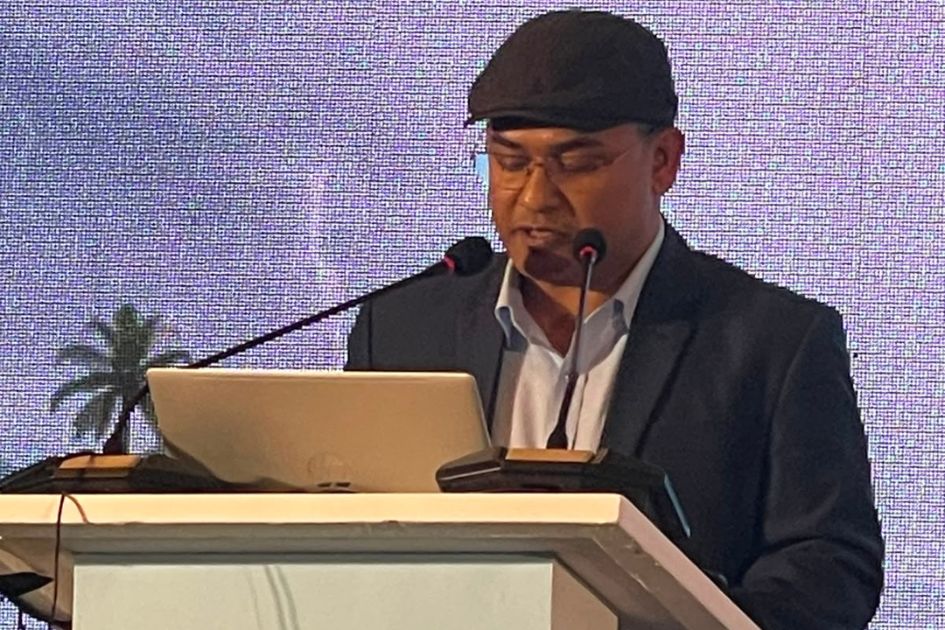
Dr. Saimum Parvez, Special Assistant to the Prime Minister for Environment, Forest and Climate Change Affairs, highlighted the importance of strategic planning, effective partnerships and investment-ready initiatives in supporting Bangladesh’s transition towards a sustainable and resilient economy.
Experts explore pathways for climate investment
The dialogue examined practical strategies for strengthening Bangladesh’s climate finance ecosystem and transforming climate priorities into actionable, investment-ready solutions.
Mohammad Navid Safiullah, Additional Secretary and Wing Chief of the Climate Change Wing at the Ministry of Environment, Forest and Climate Change, emphasised that climate change is no longer a future threat but a present reality and one of the defining development challenges of our time.
He highlighted progress in implementing the National Adaptation Plan (NAP 2023-2050) and updated Nationally Determined Contributions (NDCs), stressing the need for regular stocktaking to accelerate implementation.
Safiullah identified climate finance and data gaps, inadequate coordination and limited information sharing as key barriers to effective climate action.
He outlined Bangladesh’s efforts to strengthen climate finance through the Bangladesh Climate Change Trust Fund (BCCT), blended finance, the Bangladesh Climate Development Partnership (BCDP) and readiness for carbon markets under Article 6 of the Paris Agreement.
He called for stronger collaboration, strategic partnerships, collective action and an inclusive approach to translate climate commitments into concrete actions for a greener, cleaner and more resilient Bangladesh.
Panel discussion focuses on actionable strategies
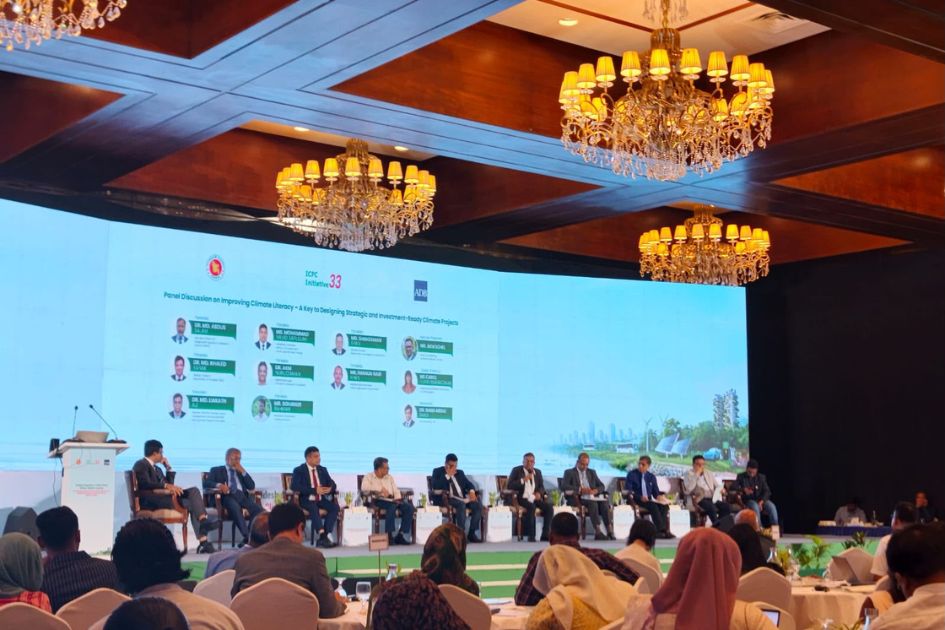
The dialogue featured a panel discussion on “Improving Climate Literacy: A Key to Designing Strategic and Investment-Ready Climate Projects.”
The session brought together administrative heads and senior representatives from key sectoral institutions, including the Bangladesh Agricultural Research Council (BARC), Department of Livestock Services (DLS), Department of Fisheries (DoF), Palli Karma-Sahayak Foundation (PKSF), Food and Agriculture Organization (FAO), BRAC and YouthNet Global.
The event was moderated by Dr. Shah Abdul Saadi, Joint Secretary at the Economic Relations Division (ERD) under the Ministry of Finance.
The programme was attended by ERD Secretary Md. Shahriar Kader Siddiky, Prime Minister’s Adviser Dr. Rashed Al Mahmud Titumir, ADB Country Director Qingfeng Zhang, British High Commissioner to Bangladesh Sarah Cooke, UN Resident Coordinator ad interim Carol Flore-Smereczniak and Sohanur Rahman, Executive Coordinator of YouthNet Global, among other policymakers, development partners, financial institutions, researchers, private sector representatives and civil society actors.
The event also featured other panel discussions.




