

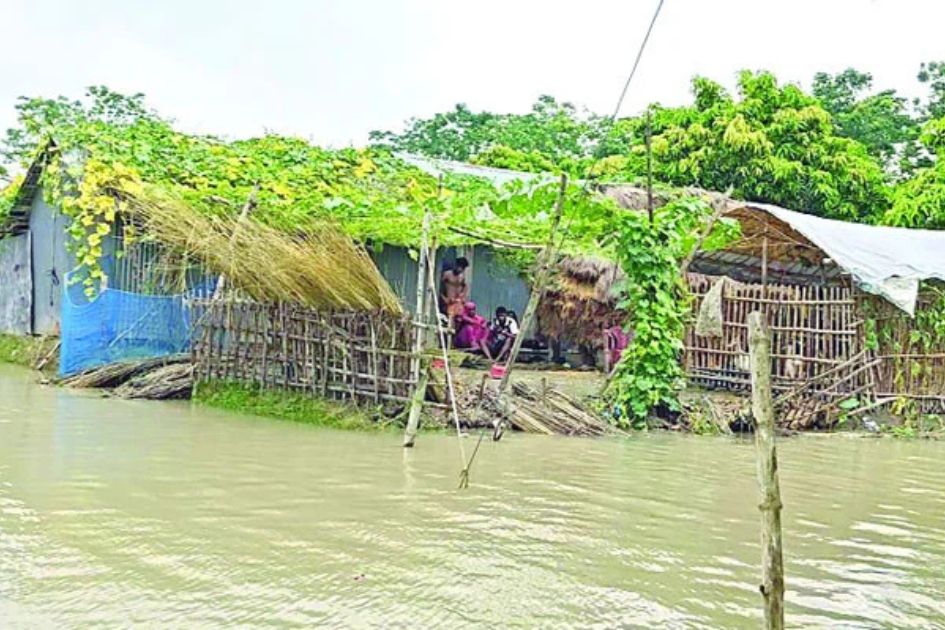



Flood-hit communities face shortages of drinking water, food and livestock feed as erosion, crop losses and school closures add to hardship across Padma riverine areas.
Rising water levels in the Padma River have flooded parts of Rajshahi, Chapainawabganj and Kushtia districts, leaving more than 100,000 people in low-lying areas stranded over the past two days and inundating cropland, homes, roads and educational institutions.
Riverbank erosion has also begun in some areas as floodwaters continue to spread.
People in the affected areas are facing shortages of safe drinking water, food and livestock feed following the sudden flooding.
Local residents alleged that the situation worsened after India opened gates of the Farakka Barrage, sending a surge of upstream water downstream. They said rainwater had added to the flow and further deteriorated conditions.
Officials from the Bangladesh Water Development Board, however, said the Padma was rising because of upstream runoff and excessive rainfall.
In Kushtia district’s Daulatpur upazila, more than 80,000 people in low-lying areas of Chilmarhi and Ramkrishnapur unions have been stranded by floodwaters.
Around 350 hectares of cropland have been inundated. With roads under water, residents are having to move through waist-deep water in some places and knee-deep water in others. Boats have become the main means of transport in many areas.
Local residents said the Padma had been rising rapidly for about a week.
The water level at the Hardinge Bridge point stood at 12.88 metres on Thursday afternoon. By 3:00 pm on Friday, it had climbed to 13.02 metres, an increase of 14 centimetres in 24 hours.
Daulatpur Upazila Agriculture Officer Rehena Parvin said around 350 hectares of cropland in low-lying areas had been affected.
In Rajshahi district, the entire Char Ashariadaha union of Godagari upazila has been submerged by floodwaters.
Riverbank erosion has also begun in several areas, including Char Boyarmari and Kanapara.
Floodwaters have also reached Char Khidirpur, Madhyachar, Charkhanpur and Majhardiar in Paba upazila as well as parts of Chakrajapur union in Bagha upazila.
More than 3,000 families have been stranded in those areas.
Rice, dry food and medicines are being distributed in the flood-affected areas. Three medical teams are also working in the riverine char areas.
In Chapainawabganj district, rising Padma waters have flooded low-lying areas of Sadar and Shibganj upazilas.
Around 2,500 families in the two upazilas have been stranded while 56 hectares of cropland have been damaged. Several educational institutions have been closed because of the flooding.
Affected communities are facing shortages of food and safe drinking water while local residents are also struggling to access medical services.
Residents fear the flood situation in low-lying areas of the three districts could worsen if the Padma continues to rise.
Those involved in the response expect the suffering of affected communities to ease once water levels begin to recede.
Source: Bd pratidin




