




Climate-displaced people, including their children, in hazardous labour, must be rehabilitated, made resilient to ease urban pressure
At a Chattogram roundtable, speakers warned that cities are overstretched, urging local rehabilitation, resilient livelihoods and child-centred adaptation to protect climate-displaced families and eliminate hazardous child labour across Bangladesh nationwide urgently.
People displaced by climate change and natural disasters, including children forced into hazardous forms of labour, must be rehabilitated and made resilient in their own localities instead of being pushed into major cities, Chattogram City Corporation Mayor Dr Shahadat Hossain said on Tuesday, warning that cities like Chattogram have already reached their limits.
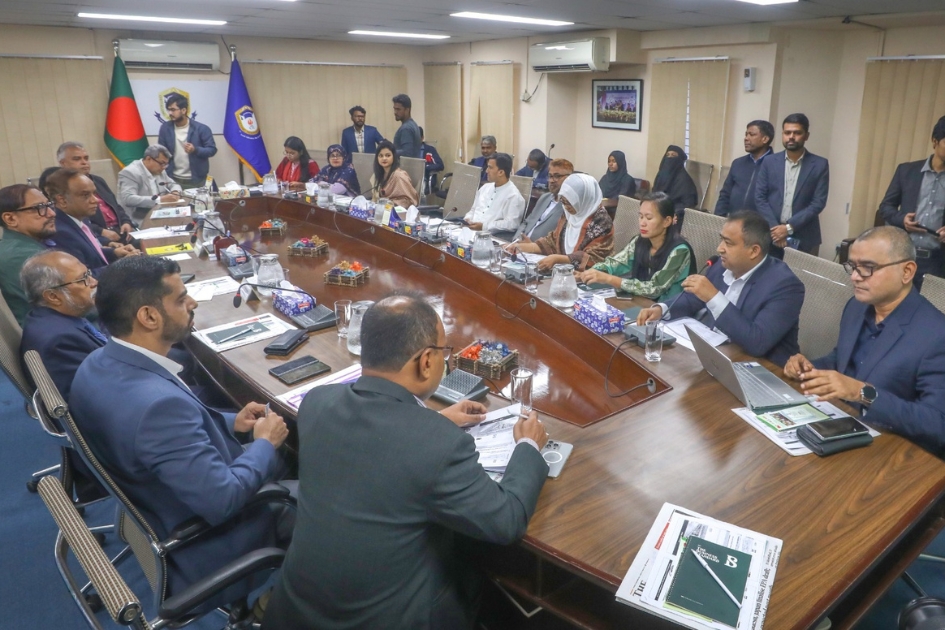
“Chattogram currently accommodates around 6 million people. This city simply does not have the capacity to absorb another one million,” the mayor said while addressing a roundtable titled Climate-displaced families and elimination of hazardous child labour, jointly organised by Young Power in Social Action (YPSA) and The Business Standard at Chittagong Independent University. The programme was supported by Solidar Suisse and the Climate Action at Local Level (CALL).
The roundtable focused on freeing children engaged in hazardous work from child labour, ensuring their protection and building a sustainable and resilient future for families displaced by the impacts of climate change.
The session was chaired by YPSA Chief Executive Officer Md Arifur Rahman and moderated by The Business Standard Chattogram bureau chief Shamsuddin Ilias.
YPSA Head of Advocacy, Md Ali Shaheen, presented a paper outlining ongoing initiatives to eliminate child labour among climate-displaced families and children engaged in risky occupations, along with key challenges and policy gaps.
Addressing the event as the chief guest, Dr Shahadat said people displaced by cyclones, floods and river erosion are migrating to Chattogram not only from the coastal belt but also from different parts of the country. “They should be rehabilitated where they were affected. That is the only way to reduce pressure on cities,” he said.
He noted that many climate-displaced families, including children, are now living on pavements and in informal settlements across the city. “These children eventually get involved in crime and juvenile gangs. We must address the root causes of this crisis,” he said.
The mayor also questioned why Bangladesh has failed to secure adequate compensation from developed countries responsible for global greenhouse gas emissions. “Either we are failing in advocacy, or when funds do come, corruption prevents them from reaching the affected people,” he said.
Dr Shahadat stressed that planned urbanisation is impossible without a functional city government system. He pointed out that service-providing agencies in Chattogram operate under different ministries and are not accountable to the city corporation. “Without coordination and integrated management, planned cities cannot be built. That is why I have been calling for a city government model since my first day in office,” he said, citing examples from cities such as London and Toronto.
Presenting the keynote paper, Md Ali Shaheen said Bangladesh is among the world’s top 10 countries most affected by climate disasters. Floods, cyclones and river erosion displace nearly 700,000 people every year, forcing families to migrate to cities and take up informal and risky jobs, where child labour is rapidly increasing.
According to the paper, climate-displaced communities are losing homes, land and crops, leading to the collapse of agriculture-based livelihoods, the breakdown of social networks and rising mental stress. Around 75% of displaced families experience more than a 50% decline in income after migration. In Chattogram, over 60% of climate migrants live in informal slums with limited access to basic services.
Shaheen said Bangladesh has around 40 million children aged 5 to 17, of whom about 3.5 million are engaged in child labour and 1 to 1.2 million in hazardous work. Over the past decade, hazardous child labour has increased by nearly 200,000. In coastal slums, 18% of children aged 10 to 17 are involved in risky work. Children account for around 20% of workers in the dry fish sector, 74% of them girls, while about 80% of child workers in metal factories are boys. Nearly 75% of these children are out of school.
Climate expert and Executive Director of the Centre for Participatory Research and Development, Md Shamsuddoha, said national adaptation plans have historically failed to put people at the centre, particularly women, children and ethnic minorities. “The focus has remained on infrastructure and procurement. People must be the priority,” he said.
He warned that climate-induced disruption of child development leads to intergenerational loss. Proposing satellite cities for climate-displaced populations, he said such arrangements would allow people to work in urban centres while living in nearby settlements, easing pressure on core cities. He also called for child-centred climate adaptation plans that prioritise quality of life over GDP growth.
Deputy Inspector General of the Department of Inspection for Factories and Establishments in Chattogram, Mohammad Mahbubul Hasan, said planning efforts often focus only on Chattogram despite its heavy industrial concentration. “There are crores of taka in corporate social responsibility funds within these industries. Proper utilisation of these funds can significantly reduce the problem,” he said.
Professor Dr Md Al-Amin, dean of the Faculty of Science at the University of Chittagong, said children who dropped out of school due to climate impacts must be brought back into education. “Awareness is important, but removing children from hazardous work ultimately requires political will,” he said.
Other speakers included CIU Vice-Chancellor Professor Dr MM Nurul Absar, Prothom Alo joint editor Omar Kaysar, Chattogram Metropolitan Journalists Union General Secretary Saleh Noman, District Child Affairs Officer Mosleh Uddin, BRAC Chattogram manager Md Nazrul Islam and representatives from World Vision, the SDG Youth Forum and other development organisations.
Speakers emphasised the need for stronger support from the global community to make climate-displaced populations resilient. They said integrating education, skills training and social protection can help displaced families move away from hazardous labour towards safer and sustainable livelihoods, while sector-specific initiatives are essential to eliminate child labour and ensure a just and inclusive climate transition.




