

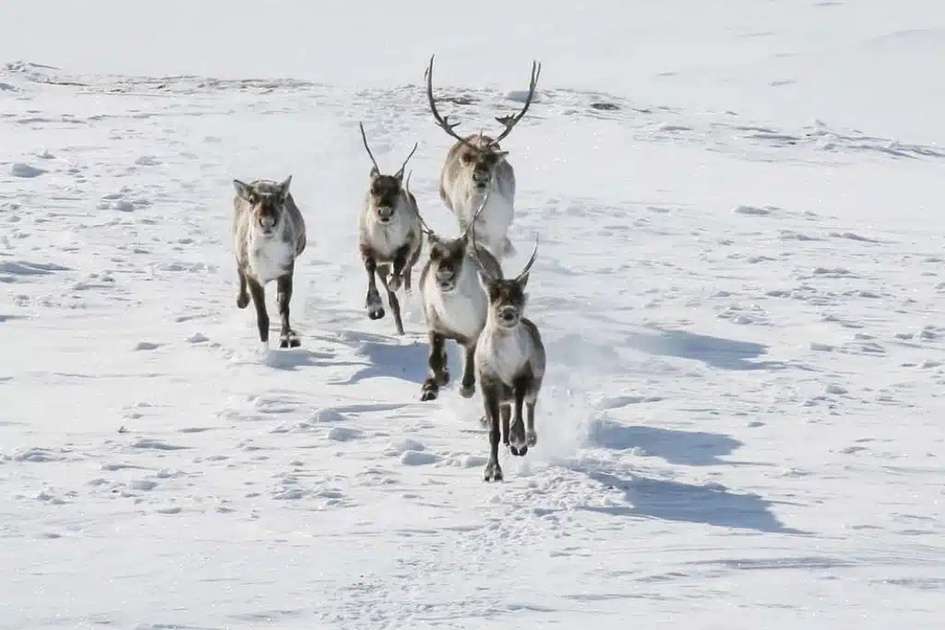



Climate change is reshaping wildlife migration and distribution patterns across the globe, forcing species to move in search of suitable habitats and raising new challenges for conservation efforts aimed at protecting biodiversity.
Scientists say the redistribution of wildlife is becoming increasingly complex and difficult to predict because species respond differently to environmental changes and move at varying speeds. As a result, traditional conservation strategies centered on fixed protected areas may no longer be sufficient in a rapidly warming world.
As temperatures rise, many species are shifting their ranges toward the poles, higher elevations and cooler regions in an effort to maintain favorable living conditions. Seasonal migrations are also being disrupted as environmental cues such as snowmelt and temperature changes become increasingly disconnected from biological cycles that govern breeding and feeding.
Research published in 2023 found that fewer than half of documented range shifts followed predictable patterns in direction or speed. A separate assessment of migratory species released the same year reached similar conclusions, highlighting significant uncertainties in how wildlife responds to climate change.
Although scientists acknowledge major gaps in monitoring data for many regions and species groups, evidence shows that climate-driven changes are already altering the ecological maps used to understand and protect biodiversity. Experts argue that conservation must become more flexible and adaptive to keep pace with these shifts.
Climate Pressures Reshape Ancient Movements
In the Arctic and Sub-Arctic regions, caribou are facing mounting pressures linked to climate change. Earlier spring snowmelt and increasingly frequent rain-on-ice events are creating hard ice crusts that block access to vegetation essential for rebuilding fat reserves after winter.
Rising summer temperatures are also intensifying insect swarms, forcing caribou to remain constantly on the move to escape harassment. This continuous movement increases energy expenditure and reduces opportunities for weight gain and successful reproduction.
Scientists warn that these conditions are contributing to a growing phenological mismatch. Spring vegetation is reaching peak growth before many herds can arrive at their seasonal grazing grounds, while traditional migration routes connecting winter and summer habitats are being altered, shortened or abandoned altogether.
The impacts extend beyond wildlife. Indigenous communities across the Arctic rely on caribou for food, clothing, tools and shelter. While changing migration routes can disrupt these long-standing relationships, Indigenous knowledge remains an important source of information for researchers seeking to understand how herds are responding and where they may move in the future.
Researchers note that caribou have survived previous climatic shifts, but the current pace of warming may leave insufficient time for natural adaptation.
Similar patterns are emerging in other ecosystems.
Bengal tigers have been recorded at unusually high elevations in Nepal, Bhutan and India. Some scientific models suggest the species could increasingly shift from lowland forests toward high-altitude habitats in the Eastern Himalayas.
In the Sundarban mangrove delta shared by Bangladesh and India, rising sea levels and increasing saltwater intrusion are gradually reducing available habitat. With limited opportunities to move to higher ground, tigers are being pushed inland, increasing the likelihood of encounters with farming and fishing communities along the delta’s margins.
Conservationists say identifying and protecting wildlife corridors is critical for reducing conflict between people and wildlife while maintaining habitat connectivity.
In northern Europe and North America, the expansion of the red fox into areas traditionally occupied by the Arctic fox has become a well-known example of climate-related ecological change.
Warmer winters reduce the physiological challenges associated with living at high latitudes, making it easier for red foxes to establish themselves farther north. Human activity may also be contributing to the expansion, as food sources associated with settlements and waste disposal sites can support fox populations moving into new territories.
Scientists say separating the effects of climate change from other environmental pressures remains a significant challenge, particularly when trying to predict how Arctic food webs may evolve in coming decades.
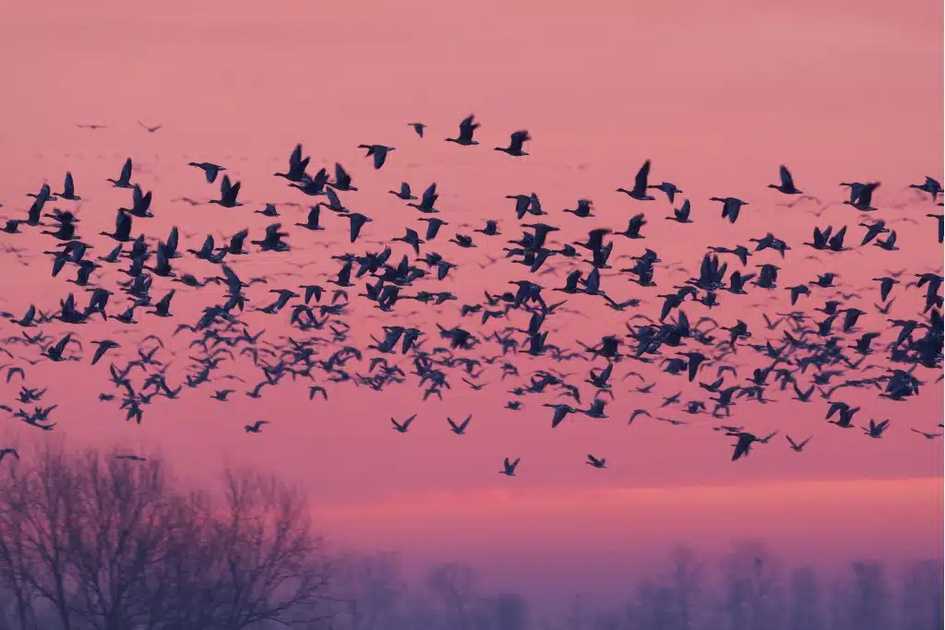
For barnacle geese that breed in Svalbard, climate change has transformed migration routes stretching from Scotland to the High Arctic.
These birds traditionally stop along the Norwegian coast during spring migration to replenish energy reserves before continuing northward. However, warmer spring temperatures have caused vegetation to emerge earlier at northern locations such as the Vesterålen archipelago, making them more attractive stopover sites than long-established areas farther south, including Helgeland.
Researchers found that younger geese played a leading role in adopting the new route. Through experimentation and social learning, the altered migration pattern spread rapidly through the wider population.
While this shift may initially improve breeding success by helping birds align with earlier spring conditions, scientists warn that climate change is progressing faster than biological evolution. Even with altered routes, geese may still experience phenological mismatches if breeding schedules fail to remain synchronized with changing seasonal conditions.
Changes Beneath the Ocean Surface
Climate-driven redistribution is also occurring in marine ecosystems.
As ocean temperatures rise in the North and Barents Seas, several demersal fish species that live and feed near the seabed are moving northward into deeper and cooler waters.
At the same time, warm-adapted boreal and temperate fish are increasingly appearing in regions historically dominated by Arctic species, including polar cod.
Scientists describe polar cod as a cornerstone of Arctic marine ecosystems. The species transfers more than 70 percent of energy flowing from zooplankton to higher levels of the food web, providing a critical link between microscopic organisms and larger predators such as whales, seals and seabirds.
Researchers warn that accelerating borealization, the northward spread of boreal species into Arctic waters as temperatures rise, threatens not only individual species but also the stability of entire food webs and long-established ecological relationships.
Rethinking Conservation in a Warming World
Experts say these examples demonstrate both the resilience of nature and the limits of adaptation.
As climate change accelerates, there is growing concern that biological responses may no longer keep pace with environmental change. When that threshold is crossed, conventional conservation approaches aimed at preserving ecosystems in their historical state become increasingly ineffective.
In response, scientists and policymakers are exploring new strategies. These include assisted migration for species unable to move quickly enough on their own, the creation of dynamic wildlife corridors that can accommodate shifting habitats and management approaches designed to reduce additional human pressures on ecosystems.
International efforts are also expanding.
In 2022, 196 countries adopted the Kunming-Montreal Global Biodiversity Framework, committing to reduce biodiversity loss through measures including climate mitigation, adaptation and improved ecosystem connectivity. The agreement seeks to halt and reverse nature loss by 2030.
Scientists stress that achieving these goals requires stronger biodiversity monitoring and a deeper understanding of ecological change.
Several innovations are already improving knowledge collection. Citizen science platforms such as iNaturalist enable people to record wildlife observations using smartphones, with species identifications reviewed by a global community of naturalists. The use of these data in peer-reviewed scientific research has increased tenfold during the past five years.
In the United Kingdom, the first national survey using airborne environmental DNA identified more than 1,100 taxa simultaneously across the country. Meanwhile, digital twin technologies are allowing researchers to combine large datasets in near real time and generate daily ecological forecasts that improve predictions of species movements.
However, experts emphasize that technology alone is insufficient.
Of the 365 indicators included in the Global Biodiversity Framework, 110 could directly involve Indigenous Peoples, local communities and citizen scientists in monitoring efforts, while another 185 could benefit from broader public participation in data collection.
A 2024 expert workshop organized by UNEP-WCMC concluded that respecting Indigenous knowledge systems and ensuring meaningful participation by Indigenous Peoples are essential for achieving the framework’s objectives and its vision of living in harmony with nature.
Researchers say Indigenous and local knowledge can complement scientific data by providing long-term observations and ecological insights that are often invisible to remote sensing technologies.
The emerging vision is one of collaborative biodiversity science, bringing together ecologists, biologists, Indigenous communities, citizen scientists and policymakers to create continuous dialogue and produce biodiversity assessments that are locally grounded yet globally relevant.
Whether caribou, Bengal tigers, barnacle geese, polar cod or foxes, species are responding to climate change in the way nature always has: by moving, adapting and seeking survival. Scientists say humanity must now adapt as well, developing strategies that keep pace with a changing planet while helping safeguard both biodiversity and human well-being.
This news is republished from The Earth.org




