




Vocational training is helping climate-displaced children in Chattogram and Cox’s Bazar leave hazardous labour, return to education and support their families through safer work opportunities.
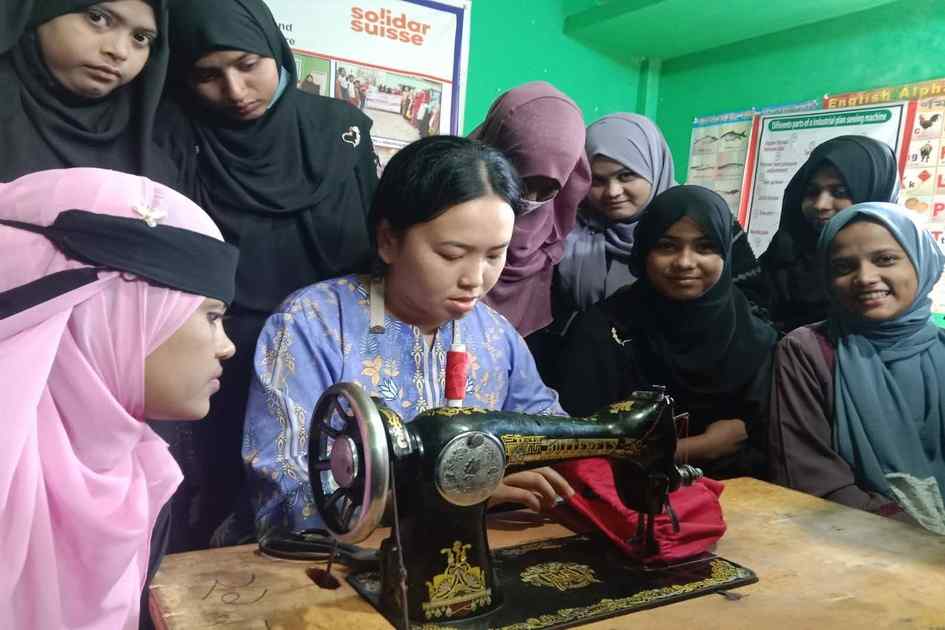
Fourteen-year-old Sumaiya Akter sits quietly in a vocational training centre in Chattogram’s Chaktai area, carefully guiding a piece of fabric beneath a sewing machine as she stitches a kamiz.
Each stitch brings her closer to a dream that once seemed impossible.
“I want to earn well and support my mother,” she says softly.
For Sumaiya, sewing is more than a trade. It represents a chance to escape the dangerous labour that shaped much of her childhood after climate disasters uprooted her family from their coastal home.
Across Bangladesh, floods, cyclones and river erosion displace hundreds of thousands of people every year, forcing families from vulnerable coastal and riverbank communities to migrate to cities such as Chattogram in search of survival. With little money, few assets and limited employment opportunities, many settle in urban slums where children often enter the workforce to help support their families.
According to the National Child Labour Survey 2022, around 3.5 million children aged between five and 17 are engaged in work across Bangladesh, including more than one million involved in hazardous occupations.
Sumaiya was one of them.
From climate displacement to child labour
Sumaiya’s family once lived on Kutubdia Island in Cox’s Bazar, a coastal area frequently exposed to cyclones and tidal surges.
Eight years ago, coastal erosion and rising sea levels destroyed their home, forcing the family to move to Chattogram when she was only six years old.
They eventually settled in a crowded informal settlement near Bhera Market along the Karnaphuli River, where narrow alleyways weave through makeshift homes and access to basic services remains limited.
The family’s hardships deepened when Sumaiya’s father left in search of work and never returned.
Her mother, Nur Jahan, found employment at a dry fish processing factory but struggled to support the household.
“I earned only Tk300 a day, which was not enough to feed us,” she says.
Unable to make ends meet, Nur Jahan brought her daughter to work alongside her.
Sumaiya spent long hours sorting fish and laying them out to dry under the scorching sun. The work exposed her to sharp fish bones, salt and frequent injuries.
“I never wanted my daughter to work there,” Nur Jahan said. “But I had no choice.”
To earn extra income, Sumaiya also collected plastic waste from canals and the Karnaphuli River.
Her circumstances began to improve after she enrolled in a vocational training programme operated by Young Power in Social Action (YPSA), which works with children involved in hazardous labour. The initiative provides vocational training, stipends and support for alternative family livelihoods.
Safer work and brighter prospects
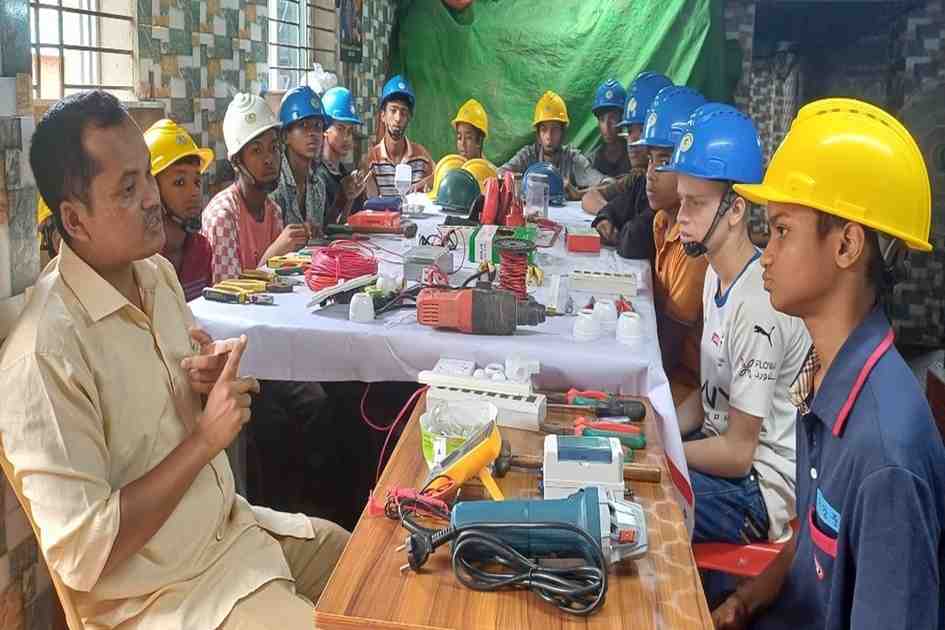
Another beneficiary of the programme is 14-year-old Mohammad Shihab.
Until recently, he worked in a motor workshop, handling machinery and tools while earning Tk3,000 a month.
Two months ago, a YPSA field officer encouraged him to join a vocational training course.
He decided to take the opportunity.
This month, Shihab secured employment at an electrical shop in Pahartali, where he now earns Tk5,000 a month along with a daily food allowance of Tk100.
His family’s story mirrors that of many climate-displaced households.
About 12 years ago, the Meghna River consumed their home in Ramganj, Noakhali, forcing the family to relocate.
“Before training, my son had to do risky work because we had no alternative. Now he works in a safer place and earns better. It gives us hope,” says his mother, Parvin Akter.
Child labour rises with urban migration
Researchers and child rights advocates say climate-driven migration is increasingly contributing to child labour in Bangladesh’s growing urban centres.
A 2022 study conducted by the NGO Ghashful found that around 15,000 children are engaged in hazardous work in Chattogram’s road transport sector alone, serving as vehicle helpers and even operating vehicles without authorisation. Many experience exploitation, physical abuse, unsafe working conditions and limited access to education.
Children are also commonly employed in coastal industrial areas, including scrap yards, metal workshops, automobile garages and dry fish processing facilities.
According to estimates from YPSA, approximately 2,800 children are involved in the dry fish sector in Cox’s Bazar Sadar alone.
Madhuri Banerjee, chief field officer of UNICEF in Chattogram, said child labour continues to undermine children’s rights, education, health and protection.
“Despite progress over the past two decades in reducing child labour, responses remain fragmented,” she said.
She noted that at least 15 ministries and government agencies share responsibility for addressing child labour, often with insufficient coordination among them.
Rehabilitation efforts face wider policy challenges
In response to the growing problem, YPSA launched a pilot rehabilitation initiative in late 2023.
The organisation has since established four vocational training centres, including two in Chattogram and two in Cox’s Bazar, serving around 400 children aged between 14 and 17, according to YPSA programme officer Tofayelur Rahman.
Children participating in the programme receive stipends during training. Upon completion, each participant receives a toolkit valued at Tk10,000 and support in finding employment.
The programme also targets younger children.
Around 600 children aged between eight and 14 have been re-enrolled in school with educational assistance.
Bangladesh has introduced several policy measures to combat child labour, including the National Child Labour Elimination Policy 2010, and has identified hazardous occupations that are prohibited for children.
However, experts say implementation remains weak, particularly in sectors outside export-oriented industries.
Chattogram Divisional Commissioner Dr Zia Uddin said stronger cooperation between government institutions and civil society organisations is essential.
Apart from policy support, he said, the government plays a facilitating role by coordinating the activities of NGOs working to address the issue.
Experts argue that stronger social protection programmes, improved educational access and better coordination among responsible agencies are necessary to stop vulnerable children from returning to hazardous work.
Holding on to a better future
Back at the training centre in Chaktai, Sumaiya finishes sewing a sleeve and carefully examines her work.
A brief smile appears on her face.
“I want a better life,” she says.
For children displaced by climate disasters and pushed into dangerous work, that hope is increasingly being stitched together one skill at a time.
This article is republished from The Business Standard.




