

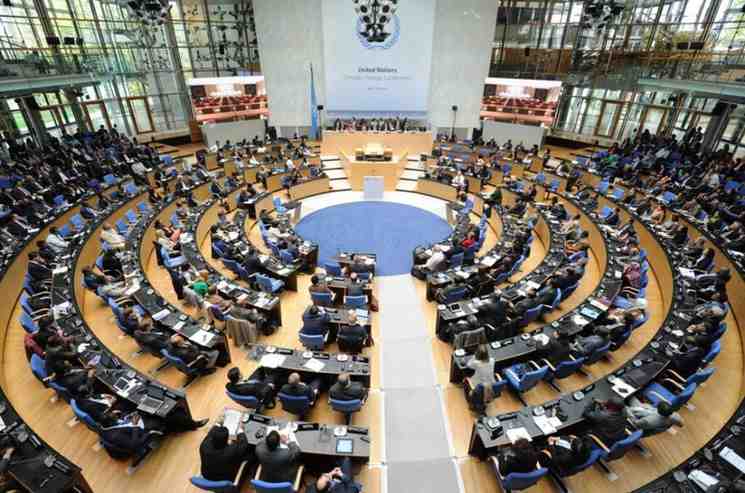



SB64 climate talks in Bonn ended in a finance deadlock, with Bangladesh demanding grant-based funding for vulnerable nations. Despite slow negotiations, Presidency-led initiatives signalled a shift from promises to implementation ahead of COP31 in Antalya, Türkiye.
The June UN climate negotiations in Bonn closed with frustration over slow-moving talks and a deepening climate finance deadlock, but also with a stronger signal that the global climate agenda is beginning to shift from negotiation to implementation.
The mid-year talks, known as SB64, ended without breakthroughs on several core issues, including funding arrangements, the operationalisation of the Loss and Damage Fund, adaptation finance, deeper emissions cuts and the future of fossil fuel transition.
For climate-vulnerable countries such as Bangladesh, the stalemate sharpened a long-standing concern: countries facing the worst impacts of climate change are still struggling to secure predictable, accessible and grant-based finance, even as pressure grows to turn climate promises into practical action.
The talks also showed a changing centre of gravity in the climate process. Alongside formal negotiations, COP30 Presidency-led initiatives dominated discussions, including work on transitioning away from fossil fuels, ending deforestation and forest degradation, unlocking finance and turning national climate plans into delivery.
Brazil’s revamped Action Agenda helped sharpen that shift, while the COP31 Presidency’s proposed global electrification goal further supported efforts to amplify real-world solutions through the Action Agenda.
Negotiations remained vital for consensus, legitimacy and legal clarity. But Bonn showed that the formal process can no longer move separately from implementation. The challenge now is to make both tracks work together, with clear governance, finance and accountability.
Finance deadlock dominates negotiations
Climate finance remained the central fault line throughout SB64, with developing countries demanding support that does not push them deeper into debt.
Bangladesh took a firm position in Bonn, aligning with the Least Developed Countries and the G77 and China negotiating blocs to push for predictable, accessible and grant-based climate funding.
Leading the Bangladesh delegation, Dr Md Saimum Parvez, Special Assistant to the Prime Minister on environment affairs, said vulnerable countries are paying the price for a crisis they did not create.
“Bangladesh and other vulnerable countries are facing the worst impacts of climate change despite contributing the least. Therefore, grant-based climate finance is not optional but a fundamental requirement of climate justice,” he said in a video message.
He added that this position reflects not only a moral imperative but also a strategic shift in strengthening the negotiating power of climate-vulnerable nations.
The demand for grant-based finance became one of the clearest messages from Bangladesh at the talks. For countries already facing climate risks, loans are not seen as a fair solution when they add pressure to already stretched public resources.
While limited progress was recorded on the Just Transition framework, the wider finance package remained unresolved. Funding arrangements, adaptation finance and the operationalisation of the Loss and Damage Fund were left largely unsettled, increasing pressure on COP31 in Antalya, Türkiye.
WWF International said the talks showed a clear shift from promises to delivery, but warned that delivery cannot happen without real money and accountability.
“Negotiations remain the backbone of the global climate process but they cannot become a waiting room for implementation. Bonn showed the climate agenda is shifting from promises to delivery. That shift is welcome, but it is still slow, uneven and fragile,” said Fernanda de Carvalho, Global Climate and Energy Policy Head at WWF International.
She said Presidency-led initiatives on fossil fuels, forests, finance and national climate plans now need hard edges: clear governance, real money and strong accountability.
“Governments must arrive at COP31 ready to turn this momentum into a credible delivery package – one that accelerates the transition away from fossil fuels, halts and reverses deforestation and degradation and puts finance behind the countries and communities already on the frontlines,” she said.
Trust deficit deepens among parties
The Bonn talks were marked by a widening trust deficit over the delivery of earlier financial pledges, particularly for adaptation and loss and damage support.
Developing countries argued that climate commitments must be matched by finance that is predictable and accessible. Without that, many of the promises made under the global climate process risk remaining on paper.
Observers said geopolitical tensions and the absence of the United States from key dynamics influenced the pace and balance of discussions.
Climate policy analysts warned that the gap between commitments and delivery is widening, increasing risks for frontline communities already facing escalating climate impacts.
ActionAid International climate policy lead Teresa Anderson said the disparity between promises and delivery is becoming increasingly evident, leaving vulnerable countries more exposed to climate risks.
For Bangladesh and other vulnerable countries, this trust gap is not only about diplomacy. It is about whether communities already living with climate risks will receive support in time, and whether that support will come as grants rather than debt-creating loans.
WWF-Brazil Climate Change Leader Alexandre Prado said the Brazilian COP30 Presidency played an important role in bringing difficult issues into the centre of the climate conversation.
“Their courage to bring burning issues into the climate conversation set the scene for what we saw in Bonn. The success or not of these initiatives may only be evident by the next Global Stocktake. But they got us talking about real-world implementation, every day, in every way, in every meeting in Bonn, and this is something,” he said.
Limited movement on Just Transition
Despite the broader impasse, negotiators recorded modest progress on the Just Transition framework, which seeks to ensure that the shift away from fossil fuels protects workers, local communities and vulnerable populations.
Just Transition, once treated as a side issue in climate negotiations, has now moved closer to the centre of the agenda. The issue has become increasingly important as countries discuss how to move away from fossil fuels without leaving workers and communities behind.
Climate Action Network Europe expert James Trinder said Just Transition is now firmly at the heart of the climate agenda and cannot be treated as a side issue.
But the progress remained limited. The framework still needs stronger direction to ensure that the transition is not only fast, but also fair.
For vulnerable countries, the Just Transition debate is closely linked to finance. Without adequate support, the shift to cleaner systems could remain difficult for countries that are already facing climate impacts and development pressures.
Emissions divide and fossil fuel impasse persist
Efforts to advance agreement on fossil fuel phase-down and deeper emissions reductions remained stalled due to continuing divisions between fossil-fuel-dependent countries and those advocating rapid decarbonisation.
The Bonn talks showed that the fossil fuel debate remains one of the most politically difficult issues in the global climate process.
Scientists continue to warn that limiting global warming to 1.5°C requires immediate and steep emissions cuts, while current trajectories remain insufficient.
As the workplan for the Intergovernmental Panel on Climate Change’s Seventh Assessment Report is finalised, WWF said countries must keep climate negotiations anchored in the pathway science points to.
“Climate science underpins the Paris Agreement. Defending the 1.5°C temperature goal is essential to protect people and nature. Countries must keep climate negotiations grounded in science and not let politics blunt its edge,” said Shirley Matheson, WWF’s Global NDC Enhancement Lead.
Experts, including Erika Lennon of the Center for International Environmental Law, warned that existing global frameworks remain insufficient to deliver climate justice at the required pace.
Back in the negotiating rooms, progress was also limited on mitigation, adaptation finance and the continuity of the Mitigation Work Programme.
Mark Lutes, WWF UNFCCC Global Lead, said the unresolved issues would make COP31 more difficult.
“That means more work to be done at COP31. The COP cannot be a clean-up job for unfinished business. Countries will have to arrive in Antalya ready to land decisions that keep 1.5°C, adaptation finance, mitigation and a just transition on track,” he said.
Civil society calls for urgent action
Outside the negotiation rooms, civil society groups increased pressure on governments to move faster.
More than ninety civil society organisations from Türkiye and Australia urged COP31 to become a decisive turning point towards phasing out fossil fuels and ensuring a just transition.
They criticised procedural delays, corporate influence and the consensus-based decision-making structure of the UN climate process, saying these continue to delay urgent global action.
Their call reflected a wider frustration surrounding the Bonn talks: while implementation is becoming a stronger part of the climate agenda, formal negotiations are still moving too slowly on issues that matter most to vulnerable countries and communities.
The civil society message echoed the broader demand heard throughout SB64: climate action can no longer be measured only by declarations, pledges or future promises. It must be judged by whether finance reaches those who need it, whether fossil fuel transition advances, and whether communities already on the frontlines receive protection.
Focus shifts to COP31 in Antalya
With SB64 ending without major breakthroughs, attention now turns to COP31 in Antalya, where the credibility of global climate commitments will face a critical test.
The Bonn outcome left two realities side by side. On one track, negotiations remain slow, divided and burdened by unresolved questions on finance, mitigation, adaptation and fossil fuels. On the other, Presidency-led initiatives are pushing countries to talk more directly about delivery, implementation and real-world solutions.
For Bangladesh, the priority heading into COP31 is clear: climate finance must be grant-based, accessible and rooted in justice.
In a reaction, Sohanur Rahman, Executive Coordinator of YouthNet Global, said implementation must now replace promises.
“Implementation, not promises, will define the future of climate action. For vulnerable countries like Bangladesh, grant-based finance is not an option it is a condition for survival,” he said.
As SB64 concluded, unresolved divisions over finance, emissions and fossil fuel transition highlighted the widening gap between climate ambition and implementation.
COP31 in Türkiye will now test whether governments can turn the momentum from Bonn into a credible delivery package, one that supports the transition away from fossil fuels, halts and reverses deforestation and forest degradation, protects workers and vulnerable communities, and puts finance behind those already living with the consequences of climate change.




