




New findings highlight the financial case for restoring rangelands, while worsening soil degradation and inefficient agricultural subsidies threaten food security, particularly in South Asia.
Restoring degraded rangelands could generate USD 4 to USD 6 in economic benefits for every dollar invested, according to a new report unveiled on 24 August at the UN desertification summit in Ulaanbaatar, Mongolia, highlighting the potential economic value of restoring degraded land.
The report, titled Rangelands Rising: Investing in Sustainable Management and Restoration, was jointly produced by the International Livestock Research Institute (ILRI), GIZ, the Economics of Land Degradation Initiative, the UN Convention to Combat Desertification (UNCCD) and the International Union for Conservation of Nature (IUCN).
Restoration makes economic sense
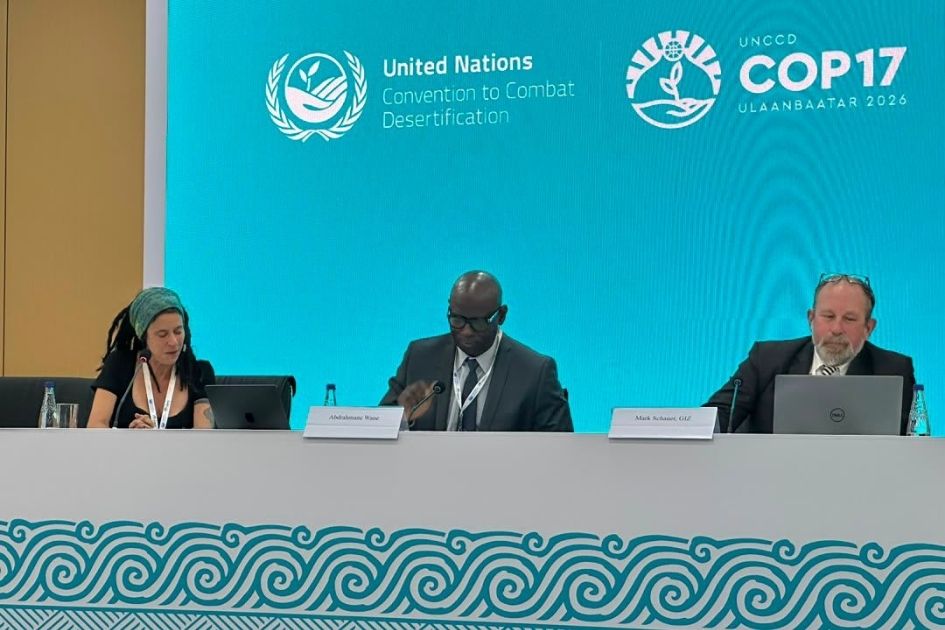
Speaking on the sidelines of the 17th session of the UNCCD Conference of Parties (COP17), Abdrahmane Wane, ILRI Regional Director for West and Central Africa, said the findings show that rangeland restoration can make economic sense for investors.
Mark Schauer, Senior Programme Officer at GIZ, said the report draws on case studies from Brazil, West Africa and Mongolia, showing that rangeland restoration can deliver environmental and economic benefits.
The experts said businesses that depend on rangelands, including livestock, dairy and leather industries, could benefit from healthier and more productive land and reduced risks to their operations.
Pastoralists key to restoration
The report calls for pastoralists to be recognised as key partners in rangeland management rather than simply as beneficiaries of development programmes.
Wane said pastoral communities have a central role in rangeland management and that investment plans should take their livelihoods and mobility into account.
He said policies that restrict pastoral mobility or undermine access to land could weaken efforts to restore and sustainably manage rangelands.
Public finance needed to attract investors
Private investment alone, however, will not be enough to address the scale of land degradation, experts said.
Weak land rights, poor governance and high costs of doing business continue to discourage investors from putting money into rangeland restoration.
Governments can help reduce investment risks by using public funds to attract private capital through blended finance and other mechanisms.
The investment shift would also need to support a just transition so that pastoralists, farmers and other land-dependent communities do not bear the costs of changing production systems.
Access to finance, technology, training and markets can help communities adopt more sustainable practices while protecting their livelihoods.
Soil degradation threatens food security
The investment case comes as scientists at the same summit warn that broader soil degradation is threatening food and nutrition security worldwide.
UNCCD Chief Scientist Barron Joseph Orr told delegates during Food Systems and Soil Health Day about schoolchildren who were asked to draw a chicken. Most sketched one wrapped in supermarket plastic, illustrating how distant food production has become from consumers.
A new Food and Agriculture Organization (FAO) report launched at the summit found that soil degradation is worsening across much of the world despite the availability of proven conservation practices.
The report found that 58 per cent of regions surveyed had deteriorated since 2015, while only around 10 per cent had improved.
Erosion was identified as the most serious problem. Some 81 per cent of assessments rated erosion management as poor, while 65 per cent reported that the situation was worsening.
South Asia emerges as a hotspot
South Asia, home to about 1.9 billion people, was identified as a major hotspot for land degradation.
India accounts for the largest share of degraded land in the region. Estimates suggest that 30 to 37 per cent of its land is degraded, while about 83 million hectares are affected by water erosion.
India also loses an estimated 4.8 to 5.3 billion tonnes of soil annually, taking with it about 8 million tonnes of plant nutrients.
The FAO report found that Bangladesh, India and Pakistan have unsustainably high nitrogen surpluses.
Indian farms use only about 30 to 45 per cent of applied nitrogen effectively, compared with a global average of 59 per cent, pointing to major inefficiencies in fertiliser use.
Subsidies under scrutiny
Experts pointed to agricultural subsidies as a major policy problem.
The report said fertiliser subsidies across South Asia overwhelmingly favour nitrogen-based urea, encouraging farmers to use it even when soils require other nutrients.
Orr said such subsidies were originally introduced for legitimate reasons, particularly to increase food production and feed growing populations.
But governments now find it politically difficult to reform them, even as some subsidies contribute to long-term soil degradation.
Emeline Fellus of the World Business Council for Sustainable Development, citing World Bank estimates, said more than 80 per cent of the USD 600 billion to USD 900 billion spent globally each year on agricultural support works against people or the environment.
Redirecting even part of that money, she said, could significantly improve environmental and social outcomes.
Soil health linked to nutrition
Experts also highlighted a less-recognised link between soil health and human nutrition.
Asked whether soil health is scientifically connected to malnutrition and anaemia, Orr said evidence exists but rarely influences nutrition policy.
He said land management and nutrition are generally treated as separate fields, handled by different ministries and experts.
Orr suggested that the FAO could examine the relationship in a future dedicated report.
Sohanur Rahman, Executive Coordinator of YouthNet Global, said the issue should be viewed through its impact on people, livelihoods and food security, particularly in climate-vulnerable countries.
“Restoring land means restoring lives, livelihoods and hope,” Rahman said.
He said Bangladesh was advocating a people-centred approach to land restoration, with science, youth leadership and women’s empowerment at the heart of global action. He also called for predictable finance, technology transfer and meaningful participation for vulnerable countries seeking to restore degraded ecosystems and protect dependent communities.
Global initiative targets investment
The summit also saw the launch of a long-term partnership between the UNCCD and the Crop Trust to host the secretariat of the Global Flagship Initiative on Food Security.
The initiative now brings together more than 140 governments and organisations and has set a target of mobilising more than USD 10 billion in investment while improving land management across 100 million acres of farmland.
Former Costa Rican president Carlos Alvarado Quesada said the broader challenge was to reform how the world finances land use over the long term.
Alvarado said agricultural finance needs to shift towards practices that protect land and strengthen the resilience of food systems.
Focus shifts to climate talks
The discussions come ahead of COP31 in Antalya, Türkiye, in November, where countries will continue wider talks on climate finance, food systems and a just transition.
The climate summit will provide another forum for countries to discuss how public finance can support resilient food systems and sustainable land management while protecting farmers, pastoralists and other vulnerable communities.
The discussions at COP17 highlighted calls for governments to link land restoration, soil health, food security and nutrition more closely in future policy decisions.




