

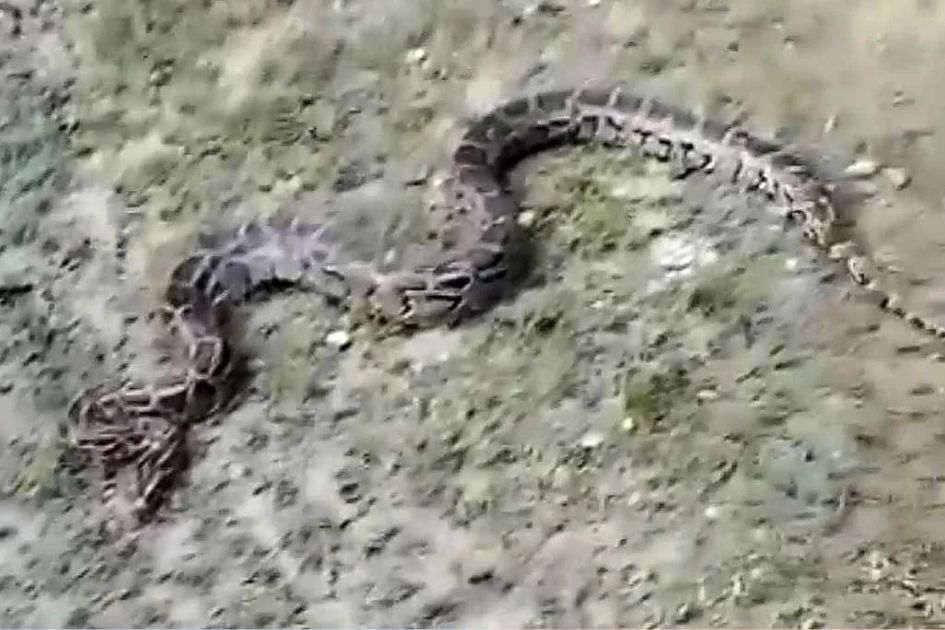



A protected Burmese python rescued from a fishing net in Panchagarh highlights the species’ presence in northern Bangladesh and the importance of wildlife conservation efforts.
Rescuers saved a Burmese python weighing around 13 kilograms after it became trapped in a fishing net in the Mahananda River in Banglabandha village, Tetulia upazila, in Bangladesh’s northern Panchagarh district.
The rescued python measured around 10 to 12 feet in length and was later handed over by local residents to the Forest Department.
Rescuers rescued the snake on Tuesday morning, September 29, from the Mahananda River in Banglabandha Union of Tetulia upazila.
According to local residents and Forest Department officials, several people were fishing in the river when the python became caught in their net. After rescuing the snake, locals informed the Forest Department, whose officials later arrived and took it into their custody.
Local resident Monir said the python was trapped in a fishing net while they were catching fish in the Mahananda River in the morning. Many people gathered to see the snake after it was found. Later, after the Forest Department was informed, forest officials rescued it and took it to the Tetulia Forest Department office.
Nurul Huda, acting Beat Officer of the Tetulia Forest Department, said a python had been rescued from Banglabandha Union. “The python weighs approximately 13 to 15 kilograms and is about 10 to 12 feet long. We have rescued the snake and kept it under observation. It will be released later,” he said.
Over the past two to three years, Burmese pythons have been spotted five to six times in Panchagarh Sadar and Tetulia upazilas. Of these, the Panchagarh Forest Department has rescued five pythons with the help of local residents.
Zohra Mila, a wildlife and biodiversity conservation officer at the Bangladesh Forest Department and a young wildlife researcher, said the Burmese python is a non-venomous snake. “It is nocturnal and very lazy in nature, and it does not move unless necessary,” she said.
She said the species lives alone in trees but forms pairs only during the breeding season. Their breeding period generally occurs between March and June. The snakes are found in the country’s mangrove forests, grassy areas and the evergreen hill forests of Chattogram and Sylhet.
“The snake generally does not harm humans,” Zohra Mila said, adding that it feeds on rats, turtle eggs, snakes, jungle fowl, birds and small wild animals. The python can easily swallow animals much larger than its own size, she added.
She said the snake has become a target for smugglers because of its skin, causing its numbers to decline in forest areas. Under Schedule 2 of the Wildlife (Conservation and Security) Act, 2012, the species is protected and killing or causing any harm to it is a punishable offence.
The Bangladesh Wildlife Service Foundation has urged local residents not to panic or kill any wild animals if they are spotted, but instead to inform the Forest Department or the foundation.




