




The government is considering tax incentives, quality controls and modern production technologies to accelerate the shift from conventional bricks to greener construction materials.
Bangladesh will gradually increase the use of environmentally friendly construction blocks, Environment, Forest and Climate Change Minister Abdul Awal Mintoo said on Sunday, as the government reviewed progress in using blocks in public construction projects.
Mintoo said wider use of environmentally friendly construction materials was necessary to protect fertile topsoil from agricultural land, reduce air pollution and carbon emissions, and establish sustainable construction practices.
He said all relevant ministries, government engineering departments, manufacturers and other stakeholders needed to work together while balancing environmental protection with the practical needs of the construction sector.
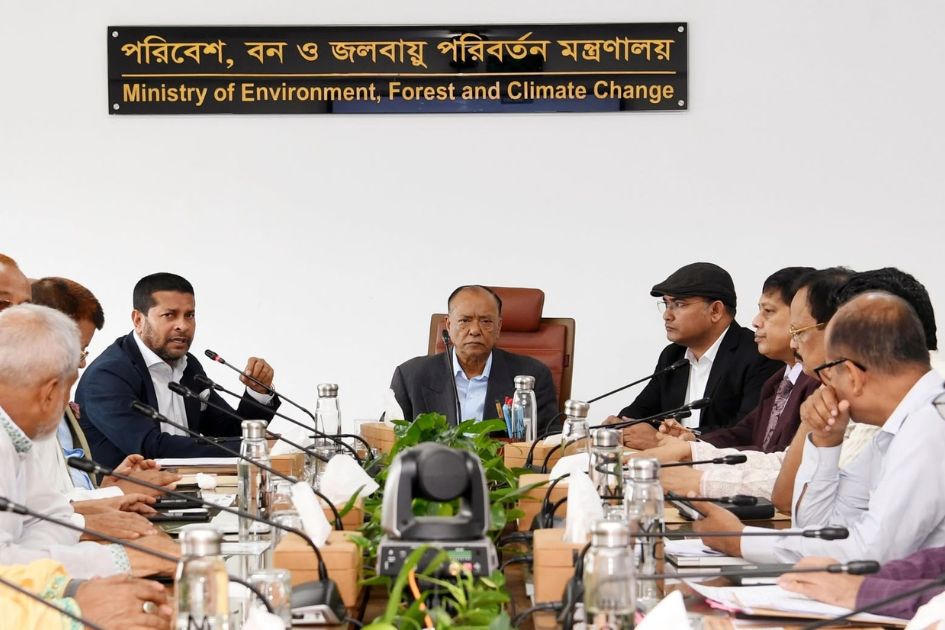
Two separate meetings were held on Sunday at the meeting room of the Ministry of Environment, Forest and Climate Change in Bangladesh Secretariat in Dhaka. They focused on increasing the use of environmentally friendly construction materials, reviewing progress in using blocks in government construction projects and issues related to the brick industry.
At the first meeting, participants reviewed efforts to ensure the use of environmentally friendly blocks in government construction, repair and renovation projects.
Special Assistant to the Prime Minister for Environment, Forest and Climate Change Dr Md Saimum Parvez, who attended the meeting as a special guest, said the prime minister supported increasing investment while protecting the environment.
“Therefore, brick kiln owners must adopt environmentally friendly technologies as quickly as possible,” he said.
The meeting reviewed proposals to rationalise duties and taxes on imports of raw materials, reduce value-added tax at the production stage, provide rebates on VAT paid for the purchase of raw materials, and offer incentives for recycling industrial and construction waste to increase the production and use of environmentally friendly blocks.
Participants stressed the importance of discussions with the National Board of Revenue on these issues.
The meeting also discussed involving the Housing and Building Research Institute, along with the Public Works Department and other government engineering departments, in quality control and monitoring to ensure block standards.
Training for engineers, technicians and masons was also discussed.
Representatives of various ministries and divisions, government engineering departments, the Department of Environment, the Housing and Building Research Institute, the Bangladesh Concrete Block Manufacturers Owners Association and other relevant stakeholders attended the first meeting.
The day’s second meeting focused on various issues related to the brick industry, with representatives of the Bangladesh Bricks Manufacturing Owners Association and the Bangladesh Auto Brick Manufacturers Association.
Discussions covered existing problems in the brick industry, compliance with environmental standards and laws, the use of raw materials and fuel, and the transition to more environmentally friendly and modern production systems.
Participants called for efforts to reduce the environmental impact of conventional brick kilns, take legal action against illegal brick kilns, discourage the use of topsoil from agricultural land in brick production, and support the expansion of modern technology-based automatic brick and environmentally friendly block production to control pollution.
Representatives of the brick industry presented their views and proposals on the sector’s problems, potential and required policy support.
The meetings were chaired by Dr Fahmida Khanam, acting secretary of the Ministry of Environment, Forest and Climate Change.
Additional Secretary of the Climate Change Department Mohammad Navid Shafiullah, relevant officials and representatives of the Bangladesh Concrete Block Manufacturers Owners Association, Bangladesh Bricks Manufacturing Owners Association and Bangladesh Auto Brick Manufacturers Association were also present.




