

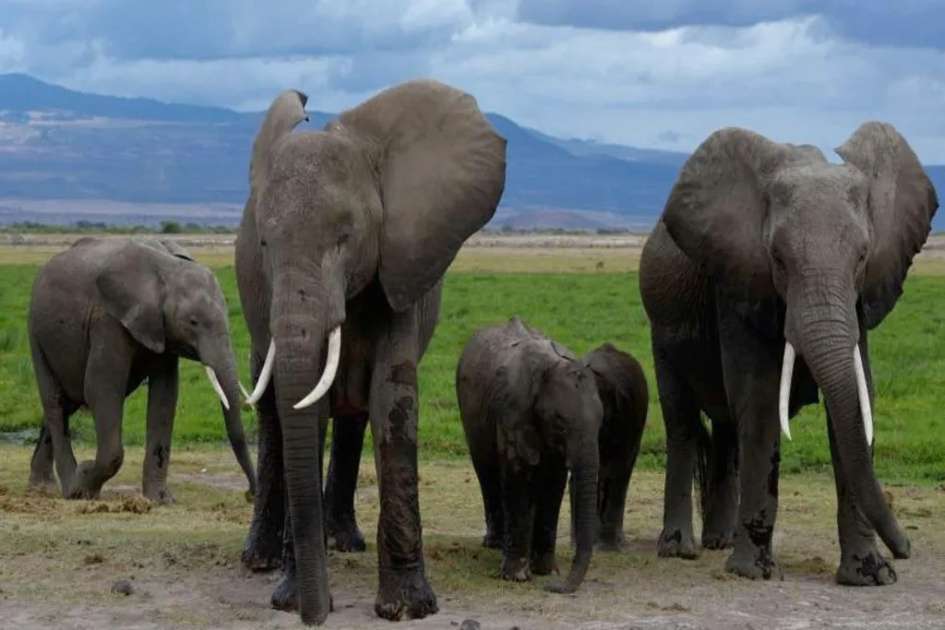



The deaths, recorded over a month in the Amboseli ecosystem, have raised fresh questions about farming pressure around wildlife habitats where elephants often seek food and water.
Fifteen elephants found dead near Kenya’s Amboseli National Park are suspected to have been poisoned after eating tomatoes sprayed with pesticides on surrounding farms, wildlife officials have said.
Preliminary laboratory tests detected cyanide in samples collected from the animals’ carcasses, according to the Kenya Wildlife Service.
Ten of the elephants showed signs of paralysis before dying within two days. The remaining five were already dead when they were discovered.
Investigations are continuing, although wildlife officials have for the time being ruled out foul play.
Wildlife authorities, seeking to reassure the public, told local media that the toxic substances consumed by the elephants posed no immediate risk to humans.
The deaths have heightened concern over the expansion of farming near the park, where elephants frequently wander onto agricultural land in search of food and water.
Amboseli National Park and its surrounding areas form the Amboseli ecosystem, a vast wildlife-rich region extending across Kenya’s border with Tanzania.
Officials said it was the first time in decades that elephant deaths on such a scale had been recorded in the region, where authorities have successfully cracked down on poaching.
The carcasses included elephants of different ages and sexes, indicating that the deaths were not confined to one family or demographic group.
The Kenya Wildlife Service said the elephants died over a one-month period between 24 June and 24 July 2026.
More than 2,000 elephants were living in the Amboseli ecosystem as of 2025, according to the Amboseli Trust for Elephants, which monitors their movements.




