

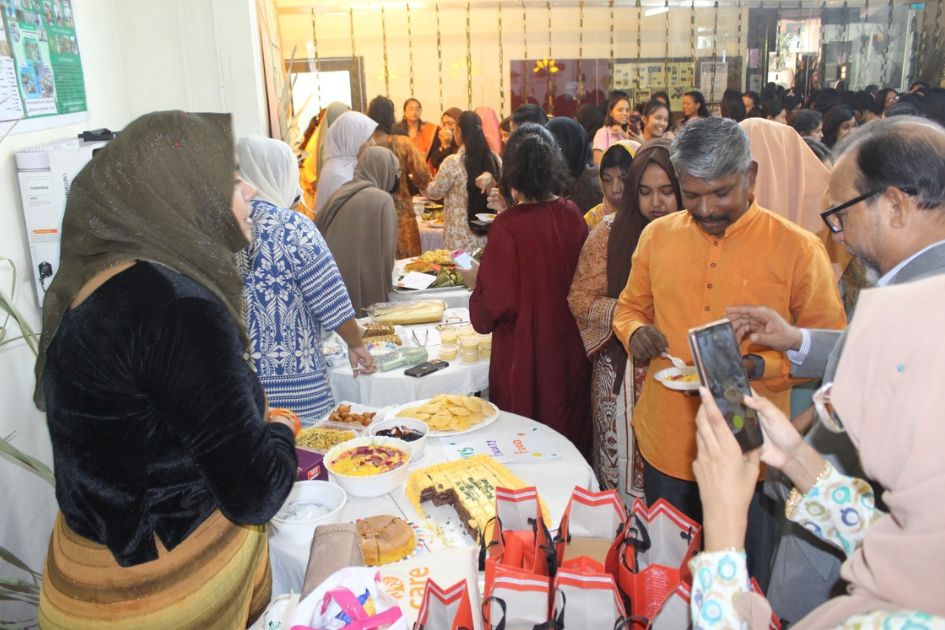



AUW’s Palmyra Fruit Festival 2026 highlighted Bengal’s traditional relationship with nature through food, art, cultural activities and environmental awareness.
A festival celebrating the palmyra palm and its links with Bengal’s food traditions, cultural memory and natural environment was held at the Asian University for Women (AUW) in Chittagong, bringing together students, faculty, artists and community members through food, art and environmental awareness.
The Palmyra Fruit Festival 2026 was organized by the Environmental Sciences Club and the Green Bangle Project of the Environmental Sciences Department at AUW in collaboration with the AUW Art Club. Hosted by Dr. Paulraj Mosae Selvakumar, the event took place on 24 September 2026 at Tale Space, Sun Valley Campus.
The program was inaugurated by Dr. Sangita Rayamajhi, Vice Chancellor of AUW. The opening session included remarks from Dr. Paulraj Mosae Selvakumar, Director of the Environmental Science and Biological Sciences Program, Amena Begam BPM DIG (Retd.) Deputy Registrar, followed by remarks from Dr. Mohiuddin Ahsanul Kabir Chowdhury, Associate Dean of Academic Affairs and Associate Professor of Public Health; Dr. Ahmedul Kabir, Director of MS in Apparel & Fashion Business Management and Assistant Professor of Environmental Sciences; Dr. Shanta Dutta, Assistant Professor of Environmental Sciences; and Ms. Afrida Asad, Senior Instructor of Environmental Science.
During his address, Dr. Paulraj compared three native trees with three different forms of friendship, using the banana plant, coconut tree and palmyra palm as symbols of different relationships.
He described the banana plant as representing friendships that develop quickly and provide immediate benefits but may not last, comparing them to a plant that grows easily and offers sweet fruit quickly but with shallow roots that cause it to wither after a single harvest.
He said the coconut tree represented a deeper relationship that requires continuous care and attention. While it provides benefits for a long time, its productivity eventually declines, similar to friendships built on mutual dependency and conditional care.
Dr. Paulraj described the palmyra palm as a symbol of lasting resilience, saying it requires no special care and takes decades to mature while developing deep roots in dry soil. He said that once established, no cyclone can uproot it and no drought can dry it out, allowing it to continue supporting communities for generations.
He concluded by saying that true friendship is not a quick harvest but a lifetime of standing together through difficult times, before offering the blessing: “Live like the palmyra.” “তাল গাছের মতো বাঁচো।”
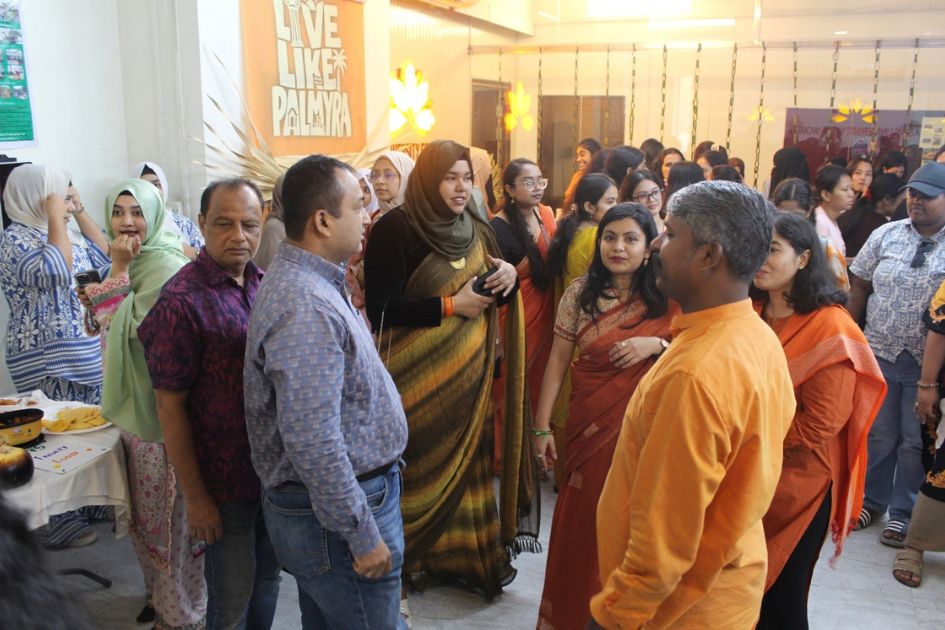
Guests included Mr. Paulak Paul from KFL Fish Meal Limited and Sonapahar Eco Resort, Mr. Dilshad Ahmed from PHP Family, and Mr. Shamsuddin Illius from The Business Standard and The Climate Watch.
Among those attending were Prof. Dr. Haseena Khan; Mr. Mohammad Masudur Rahman, Program Director of General Education; Dr. Ayan Roy; Dr. Ayan Saha, Assistant Professors of Bioinformatics and Joint Programme Director for Biological Sciences; Dr. Dominik, Assistant Professor of Philosophy, and others from various university departments.
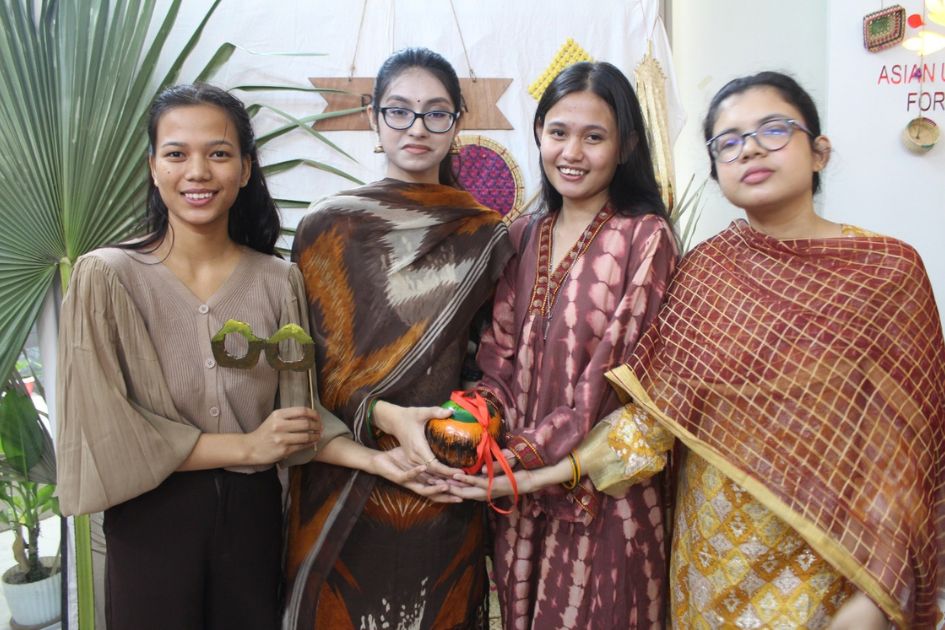
The festival featured eco-friendly decorations using palmyra, coconut, mango and banana plants, reflecting Bengali rural traditions. Fresh palmyra fruit, artwork and handmade crafts were incorporated into the venue design. Participants followed an orange and brown dress theme inspired by the inner and outer colours of the palmyra fruit.
Food was a central part of the event, with 26 different palmyra-based dishes prepared by faculty members and students. The creations included palmyra custard, cake, pitha, halwa, payesh, rosogolla, pickle, idli and kunafa among other dishes.
The stall featuring the widest variety of palmyra-based creations won first prize for its Palmyra Kitchen Creation.
The festival began with an inauguration ceremony and a palmyra-themed cake-cutting event, followed by cultural and recreational activities. Singing and dancing performances highlighted Bengali traditions, while a treasure hunt encouraged students to explore the festival area. Other activities included the Musical Palmyra game and a ring-throwing palmyra game involving students and faculty members.
School-going children from the AUW Lab School also participated in the event alongside members of the wider AUW community.
The festival concluded with a prize-giving ceremony for participants in the games and activities. Organizers said the event aimed to connect environmental education with everyday life by highlighting traditional foods, natural materials, local knowledge and the role of plants in Bengal’s communities and landscapes.
The Palmyra Fruit Festival 2026 focused on a plant that has long been part of Asian food traditions, rural landscapes and cultural practices. Through the celebration, participants explored the uses of palmyra and the traditional knowledge associated with it.
From the palm to the plate, the festival brought together nature, culture and community.




