

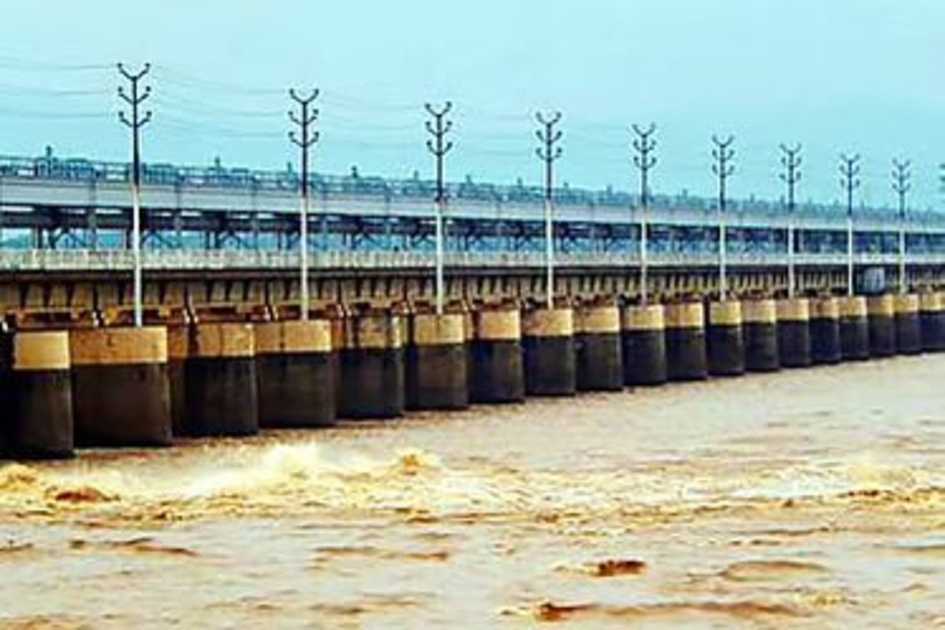



A water expert says Bangladesh must build the Padma Barrage to secure dry-season water flows, reduce salinity, restore southern rivers and counter the impacts of India’s upstream water diversion.
Bangladesh has no alternative to constructing the proposed Padma Barrage if it wants to secure its long-term water future and counter the effects of upstream water diversion by India, water and environmental expert Dr Md Sirajul Islam has said.
In an opinion article, the North South University professor argued that while river infrastructure projects can have environmental consequences, Bangladesh must weigh those risks against the country’s urgent need for water security, river restoration and salinity control in its southern regions.
Islam said the Padma Barrage became necessary only because India built the Farakka Barrage upstream and continues withdrawing water from the Ganges system.
“If the Farakka Barrage did not exist, there would be no need for the Padma Barrage,” he wrote.
The professor said concerns about environmental damage should be evaluated realistically. He noted that global environmental groups generally oppose structures on rivers unless they are absolutely necessary, but added that Bangladesh’s situation leaves little room for alternatives.
He said reduced dry-season flows caused by the Farakka Barrage have already increased salinity in southern Bangladesh and damaged ecosystems, particularly the Sundarbans, the world’s largest mangrove forest. According to him, rising salinity has contributed to the spread of the “top dying” disease affecting sundari trees in the forest.
Islam said the planned barrage includes modern features such as navigation locks, fish passages and sediment flushing systems that could help reduce environmental harm.
Debate over the Padma Barrage has intensified in recent months as engineers, environmentalists and policymakers question its long-term impact on rivers and livelihoods.
The professor acknowledged that it is still too early to make definitive judgments because the detailed design of the project has not yet been made public. However, he said preliminary information suggests the project is essential for Bangladesh’s water management system.
He said the barrage location had been carefully selected after extensive studies. According to him, the structure must be built between the Indian border and the Jamuna confluence with the Padma River.
Building it too far upstream would reduce the reservoir’s storage capacity while constructing it downstream would require a much higher barrage to push water into upstream distributaries, including the Gorai-Madhumati river system, he said.
Islam also addressed criticism that the barrage could worsen salinity downstream by reducing river flow toward the Meghna estuary.
He argued that fears of the Padma drying up below the barrage are misplaced because the Padma later merges with the Jamuna River, which retains substantial dry-season flow. He added that stored monsoon water released during the dry season would support not only distributary rivers but also downstream areas.
“For six to eight months of the year most gates of the barrage will remain open and the river will flow naturally,” he wrote.
He stressed that the success of the project would depend heavily on reservoir regulation rules governing how water is stored during the monsoon and released during dry months. He said artificial intelligence and modern technologies could be used to optimize water management decisions.
The professor said sedimentation could pose challenges but argued that dry-season sediment loads are relatively low because rainfall is limited during that period.
Most water in large perennial rivers like the Padma during dry months comes from groundwater seepage and snowmelt rather than rainfall runoff, he said. Sediment is mainly transported during the monsoon when heavy rains wash soil into rivers.
Islam added that Farakka Barrage upstream already traps much of the sediment before it reaches Bangladesh.
He warned, however, that poorly designed barrages can increase riverbank erosion downstream and emphasized the need for intelligent operational management.
Drawing international comparisons, Islam noted that many countries continue relying on dams and barrages despite environmental concerns.
He said the United States has dismantled around 2,400 dams and barrages but still retains nearly 92,000 such structures. Japan, he added, built around 3,000 dams in mountainous regions to store rainwater and regulate river flows while China has nearly 100,000 similar structures.
India currently operates around 5,300 dams and barrages, according to the article, while Bangladesh has only five major river structures, including the Teesta Barrage and Kaptai Dam.
Islam questioned claims that Bangladesh’s river management system is excessively infrastructure-dependent given the country’s limited number of large water-control projects.
He also highlighted the geopolitical dimensions of transboundary water sharing, saying upstream withdrawal of water from international rivers violates globally accepted principles.
“Access to water from a shared international river is not charity. It is a recognized right of downstream countries,” he wrote.
He noted that although neither Bangladesh nor India has signed the relevant international convention on watercourses, its principles are widely accepted internationally and can still serve as important references in negotiations.
Citing Indian water expert Kalyan Rudra, Islam said neither the Farakka nor Gazaldoba barrages had proven economically beneficial for India, raising questions about whether such projects were also being used as political tools.
He referred to remarks by India’s foreign minister regarding regional cooperation and water-sharing agreements, saying water could become a strategic pressure point in regional politics.
To illustrate the importance of water security, Islam recalled his experience studying at the National University of Singapore around 1999-2000 when Singapore launched major desalination research projects despite being able to buy cheaper water from Malaysia.
According to him, Singapore feared that in the event of geopolitical tensions Malaysia could simply shut off water supplies.
“Bangladesh must also begin planning with water security in mind,” he wrote. “In this regard there is no alternative to the Padma Barrage.”
Dr Md Sirajul Islam is a professor in the Department of Civil and Environment Engineering at North South University and a specialist in water and environmental issues.
The news is republished from The Daily Prothom Alo




