

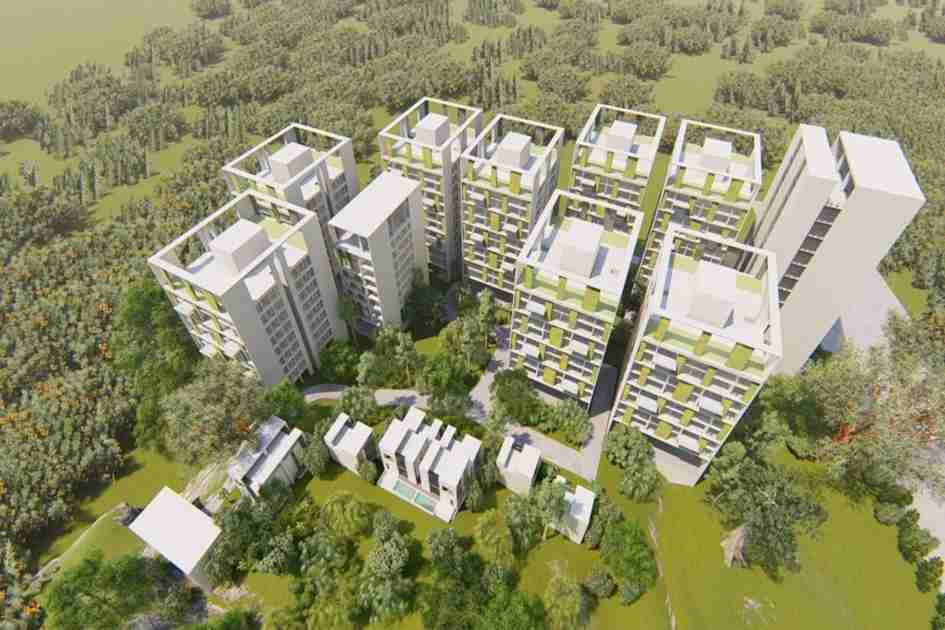

Tanvir Shahriar Rimon says Bangladesh’s one-degree warming has already intensified urban heat, energy demand, pollution and marine stress, urging greener cities, cleaner energy and collective climate action.
Bangladesh may have warmed by only one degree Celsius over the past five decades, but that seemingly modest increase has already transformed daily life, intensified urban heat, strained energy systems and deepened environmental pressures from cities to the Bay of Bengal, a sustainability advocate, and a CEO, Rancon, Tanvir Shahriar Rimon has warned.
In a commentary published on June 7, 2026, Rimon argued that the widespread belief that a one-degree rise is insignificant represents one of the greatest misunderstandings about climate change.
Recalling an event he attended a few months ago, Rimon said he asked audience members how much cooler they thought Bangladesh had been 20 years earlier.
Some estimated five degrees while others suggested ten.
When he revealed that the country’s average temperature had increased by only one degree Celsius over the last 50 years, the room fell silent.
“Only one degree.”
Yet that single degree has changed life so dramatically that many people genuinely feel the Bangladesh of their childhood was five or even ten degrees cooler, he wrote.
According to Rimon, scorching afternoons, sleepless summer nights, prolonged heatwaves, erratic rainfall, sudden flooding, waterlogging and disrupted seasonal patterns have become part of everyday life across the country.
He said climate change should not be measured solely by temperature figures but by the sweeping impacts those changes trigger across ecosystems, agriculture, public health, weather systems and human livelihoods.
“If one degree can already drive such profound change, it is easy to imagine what lies ahead if urgent action is not taken now,” he warned.
Rimon said Bangladesh is experiencing one of the fastest periods of urban transformation in its history. Around one-third of the population now lives in urban areas and that proportion continues to grow as cities expand and millions move from rural communities in search of economic opportunities.
Urbanisation itself is not the problem, he said. Cities have historically been centres of economic growth, innovation, education and social progress. The challenge lies in how urban growth is managed.
Globally, cities consume about three-quarters of total energy and produce a similar share of carbon emissions, much of it generated through fossil fuels.
As developing countries advance, one of the biggest challenges is balancing economic development with environmental sustainability. However, Rimon said many cities in Bangladesh and elsewhere have too often pursued growth at the expense of nature.
Trees are being cleared for concrete development, open spaces are shrinking, wetlands are being filled and natural air corridors are being blocked. Buildings absorb and retain heat, effectively turning urban centres into giant heat traps.
The result is the urban heat island effect.
In densely populated neighbourhoods, temperatures often remain significantly higher than surrounding areas. Increased use of air conditioners drives up electricity demand, leading to greater fossil fuel consumption and rising carbon emissions, which in turn reinforce the warming cycle.
Rimon described this as one of development’s greatest contradictions.
Development is intended to improve quality of life, he said, but when pursued without adequate planning it can make cities increasingly uncomfortable and even dangerous.
For decades, development has often been assessed by the number of roads built, buildings constructed or projects completed. Today, he argued, a more important question must be asked: how much nature is preserved alongside development?
He called for a new philosophy of urban growth that recognises environmental protection and economic progress as complementary rather than competing goals.
One promising approach, he said, is the concept of Green Plot Percentage (GPP).
Rather than treating greenery as an aesthetic addition, GPP measures both the quantity and quality of green infrastructure incorporated into development projects. Trees, rooftop gardens, vertical greening, landscaped open spaces, water bodies and biodiversity-friendly design should be considered essential components of urban infrastructure.
The benefits extend well beyond appearance, he said.
Urban greening helps lower temperatures, improve air quality, absorb carbon dioxide, manage rainwater, protect biodiversity and enhance both physical and mental wellbeing.
Most importantly, it helps maintain the liveability of cities as temperatures continue to rise.
Future urban development, he argued, should focus not only on maximising built space but on creating healthier, cooler and more resilient communities.
Policymakers, planners and developers should work together to establish meaningful minimum GPP standards for different types of projects so that nature becomes an integral part of urban growth rather than a casualty of it.
Rimon said green infrastructure alone will not be enough.
Energy, he noted, is the other critical component of sustainable urbanisation.
Every new apartment building, office tower, factory, shopping centre and transport system requires energy. As cities grow, demand for power inevitably increases.
The problem is that most of the world’s energy still comes from fossil fuels, making the sector one of the largest contributors to global warming.
The situation is worsened by a self-reinforcing feedback loop.
As temperatures rise, people rely more heavily on cooling systems. Increased electricity consumption generates more carbon emissions when the power is produced from coal, oil or gas, leading to even higher temperatures.
Breaking that cycle requires changes in both how energy is produced and how it is used, he said.
Renewable energy can no longer be viewed as a luxury reserved for wealthy nations. It has become essential for economic security and environmental protection.
Rooftop solar systems, local renewable energy generation, environmentally friendly industrial technologies and investment in green energy infrastructure can reduce emissions while strengthening national energy security, he said.
At the same time, efficient energy use is equally important.
“The best energy is often the energy that does not need to be used unnecessarily,” Rimon wrote.
Simple measures such as maximising natural daylight and airflow, adopting climate-responsive architecture and using energy-efficient technologies can significantly reduce electricity consumption.
He urged readers to imagine cities where buildings are designed in harmony with nature, where natural ventilation and daylight are widely utilised and where structures generate part of their own energy.
Such cities would consume less electricity, emit less carbon and create a healthier and more sustainable future for future generations, he said.
The benefits of renewable energy investment can also be substantial. A 100-kilowatt solar power system, for example, can prevent significant carbon emissions annually and stop thousands of tonnes of carbon dioxide from entering the atmosphere over its lifetime.
For that reason, Rimon said the future of sustainable urbanisation depends on three key pillars: greener cities, cleaner energy and more efficient energy use.
But sustainable development extends far beyond urban boundaries.
The way cities are planned and developed also affects rivers, coastal regions and the sea. Building a sustainable future therefore requires recognising cities and nature as parts of a single interconnected system.
While climate change impacts are becoming increasingly visible on land, another environmental crisis is quietly unfolding offshore, he said.
Bangladesh’s marine resources are vast and the Bay of Bengal directly and indirectly supports the livelihoods of millions of people, including fishers, traders, processors, exporters, transport workers and coastal communities.
However, marine ecosystems are facing growing pressure from rising sea temperatures, ocean acidification, plastic pollution, resource overexploitation, industrial waste and habitat degradation.
Many coastal residents report that fish are no longer available in the abundance they once were. Various marine species are also shifting from their traditional habitats.
The consequences extend beyond the environment.
Declining fish stocks reduce incomes. Falling incomes increase poverty. Rising poverty leaves communities more vulnerable to economic and social shocks.
The health of the sea is therefore directly linked to food security, employment, export earnings and the resilience of coastal populations, he said.
Protecting marine ecosystems is not only an environmental responsibility but an economic necessity.
Among the many threats facing marine environments, Rimon identified plastic pollution as one of the most visible and preventable.
Every year, large volumes of plastic waste travel through rivers, canals and drainage networks before reaching the Bay of Bengal.
Once there, the consequences can persist for decades.
Marine animals often mistake plastic for food, coastal habitats suffer damage, fishing operations are disrupted and microplastics enter the food chain before ultimately finding their way into drinking water and human food supplies.
Addressing the problem requires action at every level, he said.
Governments must strengthen waste management systems and enforce environmental regulations. Industries should adopt circular economy principles, reduce unnecessary plastic use and invest in sustainable alternatives. Cities need better waste collection, segregation and recycling infrastructure. Citizens must also adopt more responsible consumption and waste disposal habits.
Plastic pollution is one of the few environmental challenges where every stakeholder can make a direct contribution to the solution, he said.
Rimon argued that climate change, urban heat, energy use, marine degradation and pollution are often treated as separate issues when in reality they are deeply interconnected.
Carbon emissions from buildings, vehicles and industries accelerate global warming. Rising temperatures intensify urban heat. Urban expansion damages ecosystems. Pollution generated in cities eventually reaches rivers and seas.
The environmental crises facing society today are not isolated problems but different manifestations of the same interconnected system, he wrote.
As a result, solutions must also be integrated.
Governments cannot solve the challenge alone. Nor can businesses.
Educational institutions, civil society organisations, development partners, local communities and individual citizens all have critical roles to play in building a sustainable future.
Businesses should move beyond basic compliance and demonstrate environmental leadership. Governments must provide supportive policies, long-term incentives and effective enforcement. Consumers must make responsible choices and support sustainable practices.
“The road ahead demands cooperation, not conflict,” he said.
Marking World Environment Day, Rimon said the occasion should be seen as more than a symbolic observance.
It serves as a reminder that environmental protection is everyone’s responsibility, that the one-degree temperature rise many people dismiss has already changed lives and that the infrastructure being built today will shape the climate of tomorrow.
It is also a reminder that carbon emitted today will be borne by future generations and that plastic waste discarded on land ultimately reaches rivers and seas before returning to people through food and water.
Most importantly, he said, it is a reminder that the future remains within human control.
“A tree in a city and a fish in the sea may appear to belong to different worlds. In reality, their futures depend on the decisions we make today because cities, rivers, seas and climate are all interconnected,” he wrote.
“The question is not whether change will come. The question is whether we will lead that change or remain busy coping with its consequences.”
To build a greener, more resilient and more sustainable Bangladesh, he said, governments, businesses, educational institutions, development partners, local communities and citizens must all play their part.
Because people are not only beneficiaries of the planet.
They are also its guardians.
And if one degree of warming can change so much, the decisions made today will ultimately determine whether tomorrow’s Bangladesh is defined by crisis or by sustainability and resilience.
This article is republished from The Daily Star With the permission from the Author.




