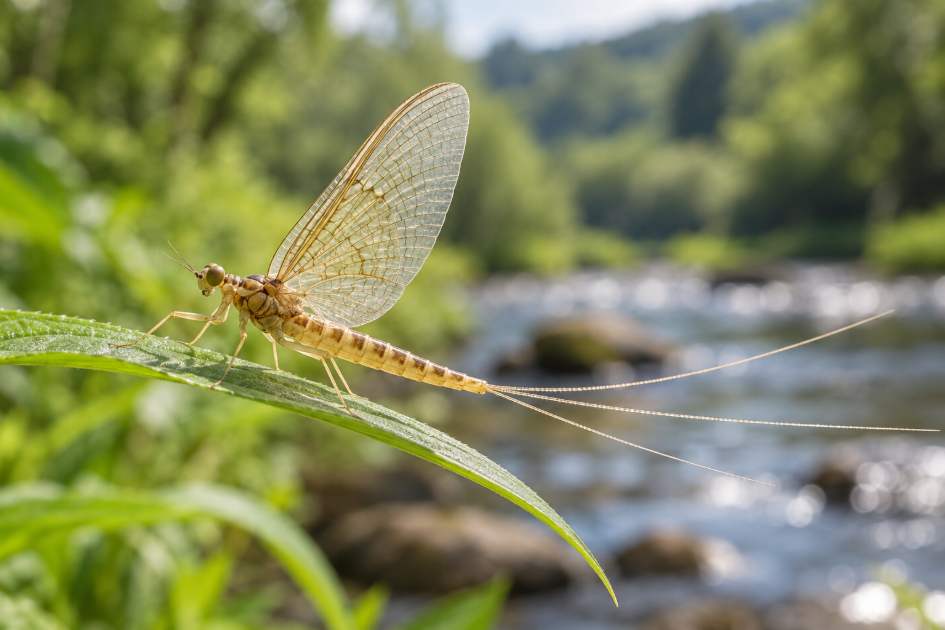



Morphological and DNA analysis confirmed the mayfly’s distinct identity, marking a milestone in Bangladesh’s freshwater biodiversity research as researchers call for better waste management and habitat monitoring.
A new mayfly species, Ephemera primitiva, has been discovered in a hill waterfall in Chattogram, Bangladesh. Analysis of its physical characteristics and DNA has confirmed its distinct identity. The discovery highlights the potential for unexplored freshwater biodiversity in the country while raising concerns about waste management at tourist destinations.
A tiny insect growing on the sandy and rocky riverbed downstream of Khoiyachhara Waterfall in Mirsarai, Chattogram, southeastern Bangladesh, has added a new species to the country’s biodiversity records. The pale yellow to golden mayfly has been scientifically named Ephemera (Ephemera) primitiva. However, researchers have also observed plastic, polythene and discarded food accumulating in the same watercourse where the species was discovered.

The discovery highlights two realities. Bangladesh’s hill streams offer opportunities to identify species previously unknown to science. At the same time, human pressure on their habitats is increasing even before their life cycles and ecological roles are fully understood.
The new species was described in a study titled The first named new Ephemera species from Bangladesh (Ephemeroptera:Ephemeridae) published on 6 August 2026 in the international zoological journal Zootaxa. The research was conducted by Shibly Sadique Shashi, a PhD researcher at Nanjing Normal University in China and Professor Changfa Zhou of the same university. Shashi is a former student of the Institute of Marine Sciences at the University of Chittagong in Bangladesh.
According to the study, this is the first formally named and described new species of the genus Ephemera from Bangladesh. Although specimens belonging to this genus had previously been found in the country, their species-level identity had not been confirmed.
From the waterfall bed to the laboratory
The process of establishing the new species’ identity began with immature insects living underwater. Researchers first collected nymphs from Khoiyachhara in January 2025. In August of the same year, three adult females were collected at night using light traps. Between January and March of the following year, researchers collected several dozen more nymphs, winged intermediate-stage insects and adult specimens from the same location.

Nymphs were collected from the stream using hand nets during the day, while winged insects were captured with light traps at night. Examining specimens from different life stages provided multiple lines of evidence for determining the species’ identity.
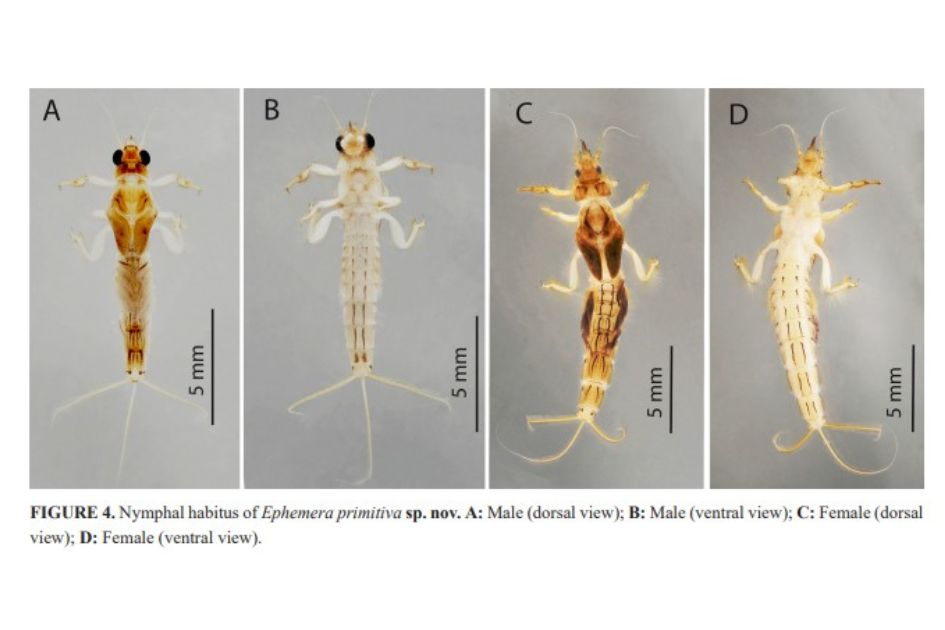
Using microscopes, the researchers examined the structures of the wings, legs, mouthparts, gills and reproductive organs. Closely resembling species can often be distinguished by subtle differences in these structures.
Golden body and distinctive wing markings
Adult males of the new species measure 12 to 15 millimetres in body length, while females measure 13 to 15.5 millimetres. The slender, tail-like appendages of males measure between 20 and 23.5 millimetres.
The yellowish to golden body bears brown and dark markings on various parts. Distinct dark markings on the forewings, hindwings and bases of the hind legs are important identifying characteristics. The first two abdominal segments are dark brown, while subsequent segments display paired longitudinal stripes.
The front of the nymph’s head is nearly square. The two tooth-like projections extending forward from the jaws are relatively short compared with the head. The structure of the male reproductive organs also helps distinguish the species from others.
Although the species bears some external resemblance to Ephemera rufomaculata from China, researchers identified differences in body colour, wing markings, nymphal jaws and male reproductive organs.
The name “primitiva” comes from the Latin word “primitivus”. The naming reflects its status as the first formally described new species of this genus from Bangladesh.
DNA provides further evidence of distinctiveness
Alongside morphological examinations, researchers extracted DNA from two adult male specimens. They analysed a 582-base-pair section of the mitochondrial COI gene and compared it with data from eight other Asian Ephemera species.
The genetic distance between the new species and the other species included in the comparison exceeded 21% in the analysed gene segment. The distance was 21.33% from Japanese specimens of Ephemera formosana, 22.27% from Chinese specimens of Ephemera rufomaculata and 22.59% from South Korean specimens of Ephemera sachalinensis.
These figures represent comparisons based on the tested section of the COI gene. Researchers considered both morphological characteristics and genetic evidence when describing the insect as a new species. The corresponding DNA sequences have been deposited in GenBank.
A brief winged life after a long period underwater
Although the winged stage of a mayfly’s life is short, its entire life cycle does not last just a few days. Mayflies spend most of their lives underwater as nymphs. Depending on the species, this stage can last several months or longer. They subsequently emerge into winged stages and reproduce.
Based on the discovery of nymphs of different ages and winged insects in January, March and August at Khoiyachhara, researchers suggest that the new species may produce multiple generations each year. However, long-term monitoring is needed to confirm the duration of its life cycle and reproductive patterns.
Mayflies generally form part of freshwater food webs. Both nymphs and adults serve as food for various animals. However, the extent of Ephemera primitiva’s role in the local food web at Khoiyachhara has yet to be determined.
Tourism waste reaches the habitat
The specimen collection site is located some distance from human settlements. Nevertheless, researchers found plastic bottles, polythene bags and discarded food there.
Speaking to The Business Standard, Shibly Sadique Shashi said plastic and polythene discarded at the waterfall could be carried downstream by the current and damage nymph habitats. Food scraps and other waste could also place additional pressure on the aquatic ecosystem.
However, the research also has limitations regarding these concerns. The study did not measure whether pollution has reduced the species’ population or, if so, by how much. Nor did it determine whether the species faces a risk of extinction.
Regular monitoring is therefore needed to understand the presence of waste in the habitat and its actual effects on the species. Collecting information on population size, distribution, water conditions and the riverbed environment would help establish conservation priorities.
The researchers have called for improved waste management and greater visitor awareness at tourist destinations such as Khoiyachhara.
Major gaps in understanding unexplored biodiversity
The new discovery also highlights the limited scope of mayfly research in Bangladesh. According to previous records cited in the study, a checklist published in 1978 mentioned five species from two families. Another study in 2014 reported collecting four species from three families in two water bodies near the University of Chittagong.
These scattered records do not provide a complete picture of the country’s mayfly diversity. More extensive surveys could help identify additional species while improving understanding of the distribution and evolutionary relationships of known species.
The discovery at Khoiyachhara provides a new foundation for such investigations. The next priorities are to gather information on the insect’s life cycle and ecological role while preventing waste from entering the watercourse that supports its existence.