

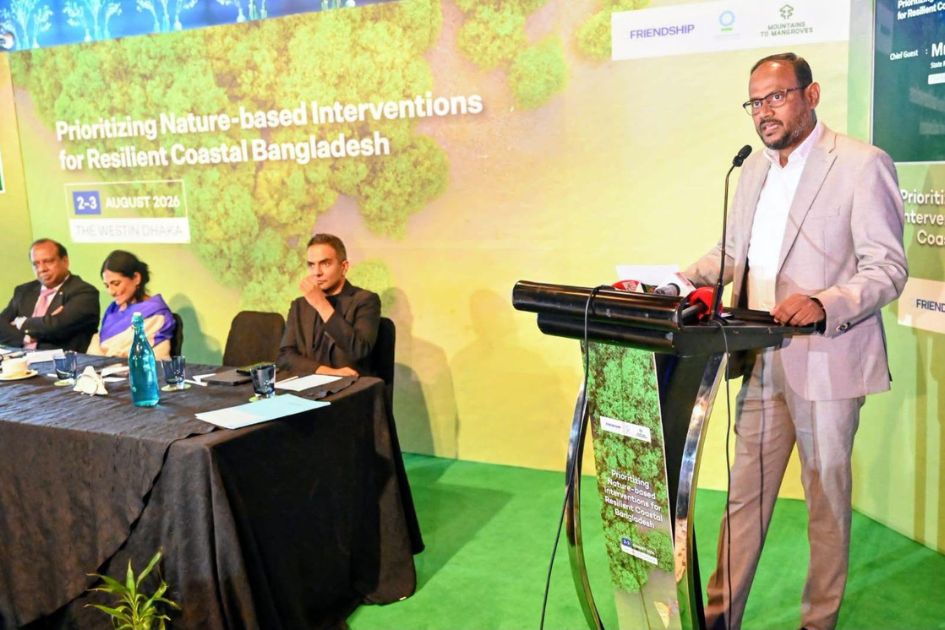



The workshop brought together government officials and conservation experts to discuss ecosystem restoration and science-based planning as strategies to reduce climate risks in Bangladesh’s vulnerable coastal regions.
Bangladesh State Minister for Fisheries and Livestock Sultan Salahuddin Tuku on Monday said nature-based solutions can play a crucial role in protecting coastal communities, ensuring food security and strengthening Bangladesh’s climate resilience.
He made the remarks while addressing a national technical workshop titled “Prioritizing Nature-Based Interventions for Resilient Coastal Bangladesh” held at a hotel in Dhaka. The workshop was jointly organised by Friendship and Conservation International.
Highlighting the importance of ecosystem-based approaches, Tuku said forests, wetlands, coastal vegetation belts and integrated agroforestry systems not only protect the environment but also support livelihoods and strengthen community resilience.
“These interventions improve the availability of animal feed, enhance livestock health and support the One Health approach, which recognises the interconnected well-being of humans, animals and the environment,” he said.
The workshop began with a welcome address by Friendship founder Runa Khan.
Coastal communities on climate frontline
While acknowledging Bangladesh’s global recognition for its proactive role in addressing climate change, the State Minister said the country’s coastal areas remain among the most climate-vulnerable regions in the world.
Frequent cyclones, storm surges, sea-level rise, salinity intrusion and coastal erosion are threatening coastal ecosystems, food systems and millions of livelihoods.
He said the fisheries and livestock sectors are key pillars of rural employment and the national economy, but they are also among the sectors most exposed to climate impacts.
Millions of coastal families depend on livestock, including cattle, buffaloes, goats, sheep and poultry, for income, nutrition, employment and financial security. During disasters, these animals often serve as a critical economic safety net for vulnerable households.
Restoring ecosystems for resilience
Reiterating the government’s commitment to sustainable development, Tuku said climate resilience must be strengthened through sustainable natural resource management, ecosystem restoration and science-based development planning.
He highlighted that the national initiative to plant 25 million trees over the next five years would contribute to restoring ecosystems and increasing the resilience of climate-vulnerable communities.
Former secretary Dr Md Faridul Islam, Director General of the Department of Livestock Services Md Shahjaman Khan and Conservation International South Asia Managing Director Saurabh Malhotra attended the event as special guests and shared their views on strengthening nature-based approaches for coastal resilience.




