

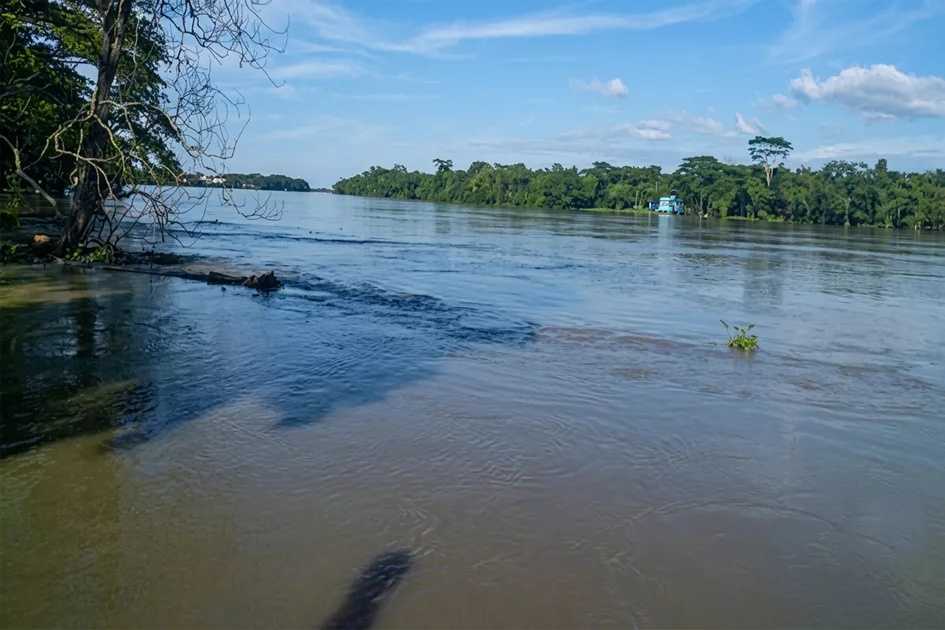



Researchers warn that waste dumping and sewerage flows are degrading the Kushiyara’s sediment, threatening aquatic life, fisheries and public health through contaminated food chains.
Kushiyara River in Beanibazar upazila of Bangladesh’s northeastern Sylhet district is turning into a dumping ground for toxic heavy metals and microplastics, according to a recent study that has raised alarm among environmentalists.
The study by the Department of Environmental Science and Technology found tiny plastic particles or microplastics as well as heavy metals such as cadmium and lead, even in sediment collected from depths of 10 to 20 centimetres. Researchers said the contamination is making the local environment increasingly risky.
For the study, samples were collected from nine densely populated points along the Kushiyara River at depths of up to 30 centimetres. Laboratory tests found as many as 4,300 microplastic particles per kilogram of sediment, with an average of 2,800 particles per kilogram.
The research found microplastics in riverbed samples from depths of 10 to 30 centimetres. Alongside microplastics, high levels of toxic heavy metals, including chromium, nickel, copper, lead and cadmium, were detected in the riverbed.
Fish and other aquatic animals are consuming these microplastics as food, allowing toxic heavy metals to enter the human food chain, the study said. Such contamination can cause cancer and other complex diseases.
Large volumes of waste are being dumped into the Kushiyara River from riverside areas of Beanibazar, while waste from different canals and drains is also mixing with the river. As a result, the riverbed is becoming increasingly burdened with toxic metals.
According to the environmental risk index, pollution in the river sediment has reached an “extremely high” or “Class V” level. Excess cadmium and nickel are pushing the river’s biodiversity towards destruction.
Plastic waste and direct sewerage connections have degraded the river’s health to such an extent that, without swift action, restoring its natural ecosystem may become impossible.
Jabed, a fisherman from the Bairagibazar area of Beanibazar who has been fishing for more than two decades, said fish numbers in the river were declining day by day.
“The fish in the river are decreasing day by day. The water is not good. When I used to come to the river with my net, I would catch fish. That is no longer the situation. Even surviving has become difficult,” he said.
Beanibazar Upazila Fisheries Officer Hasibul Hasan said various types of waste were continuously flowing into the Kushiyara River without obstruction.
He said effective steps were urgently needed to protect the environment and ecology, calling for modern, science-based waste management as well as a pollution-free and unobstructed flow of the river.
“Otherwise, we will have to face a major disaster,” he said.
Amir Hossain Khan, sub-divisional engineer of the Bangladesh Water Development Board in Sylhet, said the Kushiyara River’s erosion and transport capacity had declined because of a reduction in current speed. As a result, the river’s depth had also decreased.
He said initiatives were needed to remove waste from the river, but the most important requirement was awareness among people living along its banks.
“From now on, dumping waste into the river must be stopped,” he said.




