




In low-income neighbourhoods, unreliable water supplies add to women’s unpaid domestic work, workplace demands and struggles to maintain privacy and hygiene.
Behind the busy urban life of Chattogram, low-income people are struggling with water scarcity. The impact is even deeper on women’s lives. Alongside the pressure of collecting and storing water, cooking, raising children and working, they are facing various challenges related to personal health and menstrual hygiene.
Around Chattogram city, there are now high-rise buildings, modern residential areas, shopping malls and busy roads. People travel from one end of the city to the other. In some places, there is no major concern over water supply, while in some densely populated low-income residential areas of the same city, a bucket of water is an important resource for the day.
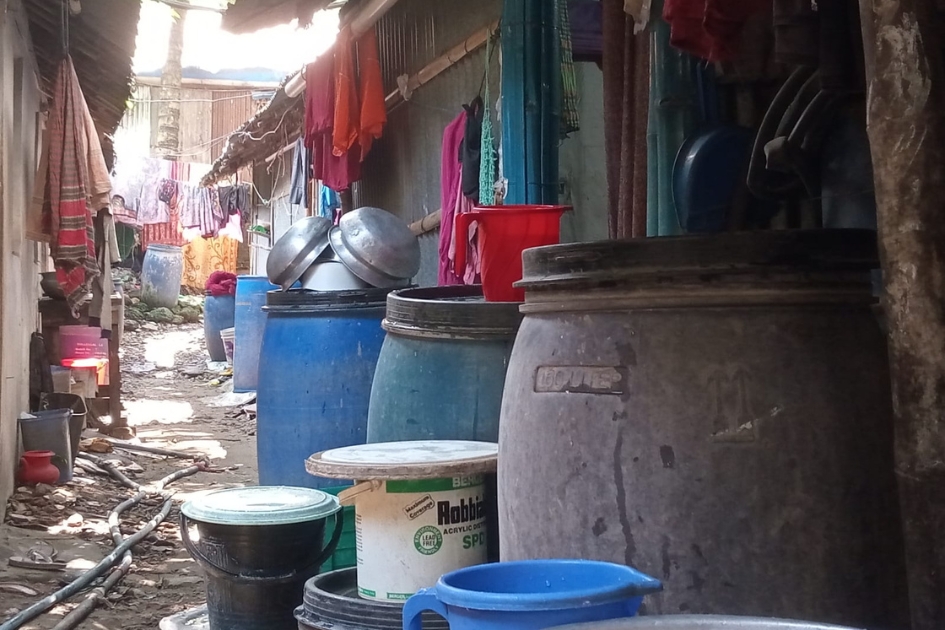
In a narrow lane beside a colony in the Akbar area of Chattogram, rows of large drums, buckets and various containers can be seen. Some are used to store water for cooking, while others are used for bathing or daily needs. With uncertainty over when water will arrive and how long it will remain available, residents have to collect and store water in advance.
Speaking about this reality, a woman named Sohana Akter (pseudonym) said, “Money is short, water is scarce, but the suffering is greater.”
The single sentence seems to capture another reality of urban life: although people live in the same city, access to water is not equal for everyone.
Water is available, but not equally for everyone.
Low-income families complain that a large part of their income goes towards meeting the costs of water, electricity, gas and other essential services. The owners say that in many cases they have arranged deep tube wells or water supplies themselves. But even there, the suffering does not end. Sometimes the water pressure is low and sometimes there is no water. If the motor breaks down, the entire system becomes inoperative. Yet bills for water and other services have to be paid regularly.
Residents say that in addition to various expenses in residential areas, water bills, gas bills, the salary of a security guard and various types of monthly contributions make it difficult to balance expenses at the end of the month.
Women carry the biggest burden of the crisis
Although the impact of water scarcity is felt by everyone in the family, women have to bear the largest share of it.
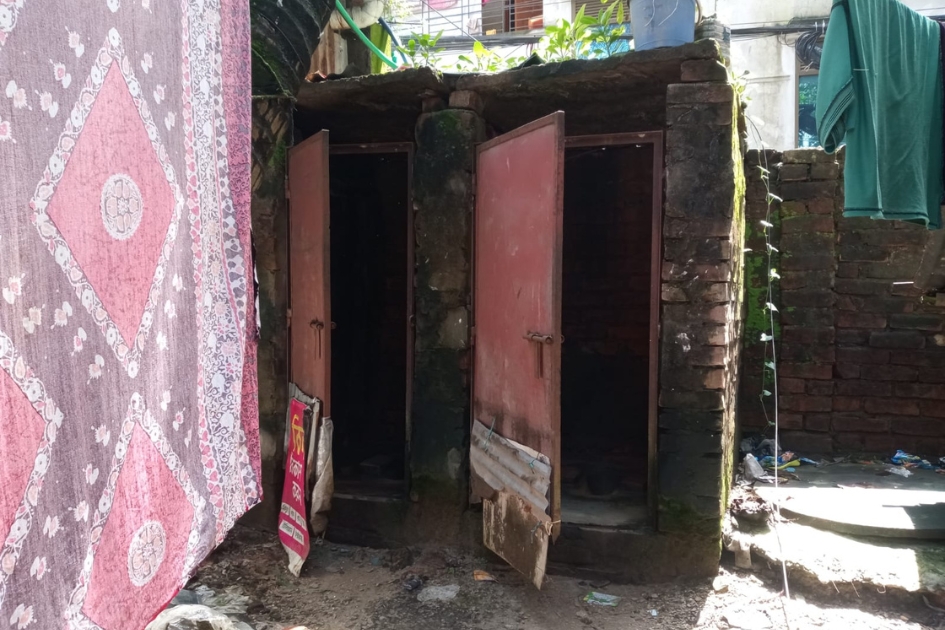
When two or three rooms in the same house have to share a common bathroom and bathing area, maintaining personal privacy and hygiene also becomes difficult. The issue is even more sensitive for women. During menstruation, adequate water, clean and private space are needed. But because of cramped living conditions and common bathrooms, many women have to use less water than they need or adjust to the available time and opportunity.
This is compounded by working long hours, inadequate rest, lack of opportunities for physical activity and physical labour throughout the day.
These are not just inconveniences of daily life. In the long term, they can also affect women’s physical and mental well-being.
Water in the morning, factory during the day, household at night
Many women working in garment factories have to collect and store the water needed for their families before starting their workday. Waking up early to fill containers with water, preparing food for the children and finishing household chores before rushing to the workplace. This is how the day begins. After long working hours, they have to return home through the city’s traffic congestion at night.
Another round of responsibilities awaits them at home: cooking, caring for children and household chores. At the end of the day, when it is time to rest, sometimes there is no electricity. They have to sleep in the heat and discomfort. The same routine begins again the next day.
This continuous pressure can affect a woman’s mental comfort, sleep and overall well-being.
As the city grows, some stories disappear
Chattogram is not just a city of large buildings and busy roads. Behind these structures are many families who are contributing their labour to the city’s economy but are still lagging behind in access to civic services.
Many of their children go to school. They are people of the city and part of its economy. But adequate water, sanitation, electricity and a safe living environment remain major questions in their lives.
The water containers, therefore, are not just containers for storing water. They hold a family’s daily uncertainty.
A drum filled with water may mean that cooking will be possible the next morning. A bucket of water means there is an opportunity to bathe. And the water stored in several small containers may be an attempt to meet the needs of an entire family for the day.
Who is being left out of the development equation?
When urban development in Chattogram is discussed in terms of infrastructure, roads, buildings and economic activities, the quality of life in these low-income residential areas also needs to be part of that discussion.
Because safe water is not just a service. It is directly linked to public health, women’s dignity, children’s well-being and a family’s ability to live a normal life.
A person’s need for water does not decrease when their income is low. Rather, in low-income families, the additional responsibility of collecting and managing water often falls on women. So the question should not simply be whether Chattogram has water.
The question should be, “How much water is reaching whose home, at what cost is it reaching them and how much time, labour and health costs are being borne by whom to collect that water?”
These homes standing in the shadows of high-rise buildings may be very small on the city map. But the lives of the people here are also part of this city.
And the story of that life may be captured most briefly in the words of the woman: “Money is short, water is scarce, but the suffering is greater.”




