

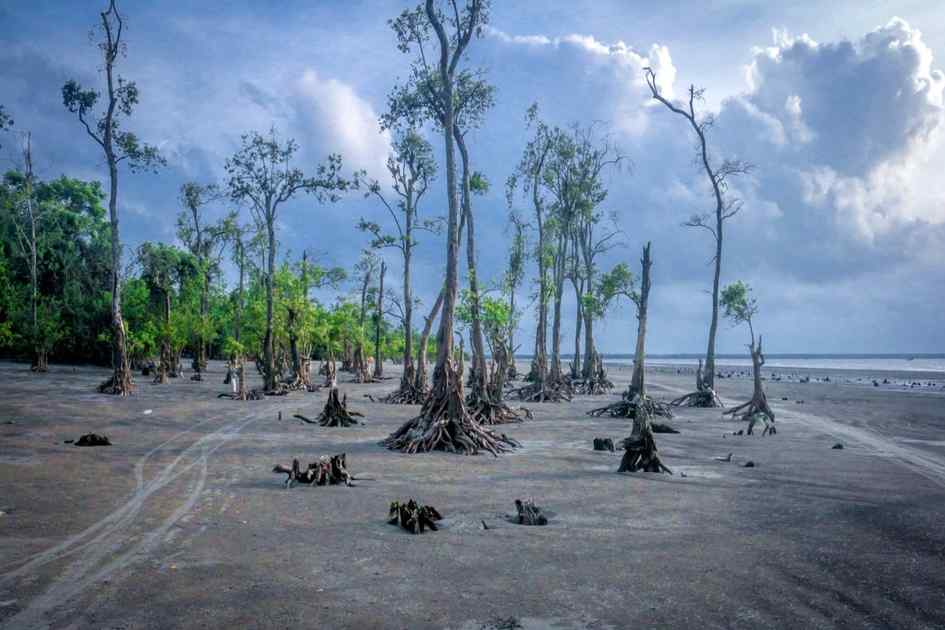



As tourism and coastal development reshape Kuakata and nearby areas in southern Bangladesh, Rakhine leaders warn that disappearing place names are weakening ties to ancestral memory, language and land.
Lost names, fading voices and shrinking villages reveal how one of Bangladesh’s oldest ethnic communities is fighting to protect its language, land and identity. Indigenous Rakhine villages in Patuakhali and Barguna face cultural disappearance as traditional names are replaced, raising concerns over heritage, identity and historical recognition.
When Rakhine community member Mathen stands on the beach at Kuakata and looks toward the forest once known as “Lyum Phru Bon”, she sees more than a changed signboard. She sees a piece of history that she believes has been erased.
“Why was it named Lebu Bon? Are there lemon trees here? How can Lyum Phru become Lebu? The person who protected this forest did not even have his name preserved,” she said.
Her memory reflects a wider struggle among Bangladesh’s coastal Rakhines, whose ancestral names, language and cultural spaces are disappearing under social, economic and environmental pressures.
From villages and forests to rivers and religious sites, dozens of centuries-old Rakhine names in Patuakhali and Barguna have gradually been replaced with names that community members say fail to reflect their original meanings and historical connections.
For the Rakhines, one of Bangladesh’s oldest ethnic minority communities, these names are not simply words on maps. They preserve ancestral memories, traditional ecological knowledge and the relationship between people and nature.
The story of Bangladesh’s Rakhines reflects a wider global challenge faced by indigenous communities, where language loss, displacement and development pressures threaten cultural survival.
A community rooted in coastal history
The Rakhines trace their roots to Arakan, a historic Buddhist kingdom in present-day Myanmar. Following political upheaval and conflict in the late 18th century, many Rakhines migrated across the Bay of Bengal and settled along the coastal areas of present-day Bangladesh.
Over generations, they transformed forested and difficult coastal landscapes into agricultural settlements. Their villages developed around Buddhist monasteries, sacred ponds and community spaces.
Historical records describe Rakhine communities as skilled settlers who reclaimed forest areas and developed farming communities across the southern coast.
Today, however, many of those settlements are shrinking.
Language and culture on the brink
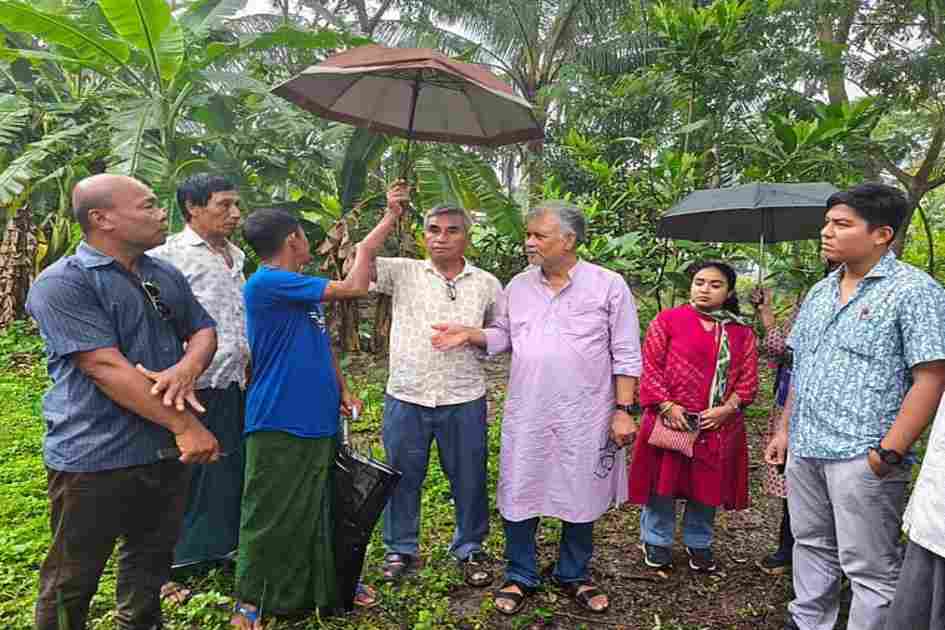
The decline of Rakhine place names is closely connected with the weakening of the Rakhine language and cultural traditions.
Community members say there is limited institutional support for preserving their mother tongue. Buddhist monasteries once played a central role in teaching the language outside formal education systems, but that tradition has weakened.
Filmmaker and cultural worker Aung Rakhine recalled learning the language through monastery-based education.
“The Rakhine language was taught in Buddhist monasteries outside the formal education system. But now there is no government funding or initiative for that, and it depends solely on individual efforts,” he said.
As younger generations increasingly depend on Bangla for education and employment, many Rakhine children struggle to maintain their mother tongue. Community members say appointing Rakhine teachers in schools near Rakhine villages could help children enter formal education without losing their linguistic identity.
Cultural traditions have also declined. Traditional boat races, wrestling competitions and Rakhine folk theatre, once common across villages, have largely disappeared.
A local official said cultural academies in Kuakata and Taltoli exist mostly in name, with buildings remaining inactive for years without regular programmes.
Lost names, lost histories
Kuakata, one of Bangladesh’s most popular coastal tourism destinations, carries a deep Rakhine history. Its Rakhine name is Kyan Chai Chowan.
Near the beach lies an ancient settlement once called Nangiri Rowa, meaning “the neighbourhood of dark-skinned people” in the Rakhine language. The area is now known as Naioripara.
The forest beside Kuakata beach, originally known as “Lyum Phru Bon”, remains one of the most debated examples.
Lyum Phru, meaning “tall and fair person” in Rakhine, was the name of the person who established the settlement and protected the forest. Over time, the name became known as “Lebu Bon”, or lemon forest.
Rakhine residents argue that such changes remove the historical connection between people and landscapes.
Across the coastal districts, several other Rakhine place names have undergone similar transformations.
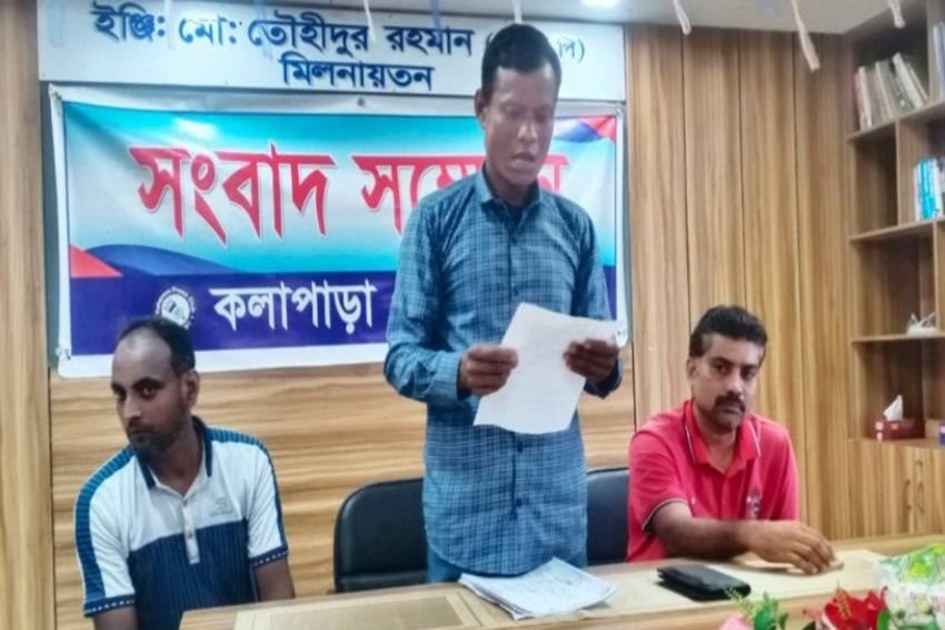
Kalapara, a major coastal upazila of Patuakhali, is commonly explained as a place associated with banana trees. However, Rakhine historians say the name originated from Kyuhla Para, derived from the names of two Rakhine brothers, Kyuhla and Khyapru.
In Barguna’s Amtali area, Rakhine accounts connect the name to Amprui Rakhine, while Taltali is believed to have originated from “Tatli”, where “ta” means boundary in the Rakhine language.
Other examples include Hwysenpara becoming Hossainpara, Mao Pro Sai Rowa becoming Pakshiapara and Ngae Shwe Guang becoming Mishripara.
Mishripara, home to a popular Buddhist monastery near Kuakata, originally carried a Rakhine name meaning “the golden bird’s high open ground”, reflecting the community’s relationship with the landscape.
A shrinking population and disappearing settlements
The disappearance of place names has taken place alongside a decline in the Rakhine population and concerns over the survival of their settlements.
According to census data, the Rakhine population declined from around 17,000 in 1991 to 13,610 in the 2022 census. A 2018 research article titled “A Rakhine Proverb” estimated the population at around 14,500.
Sanjeeb Drong, general secretary of the Bangladesh Indigenous People’s Forum, said historical estimates of the Rakhine population in the coastal region were much higher than current official counts.
“Once Kalapara, Taltoli, Kuakata and Amtali were almost entirely Rakhine. They had a population of over 50,000; now barely 2,200 remain across the whole region,” he said.
He attributed the decline to land loss, migration, natural disasters and long-term marginalisation.
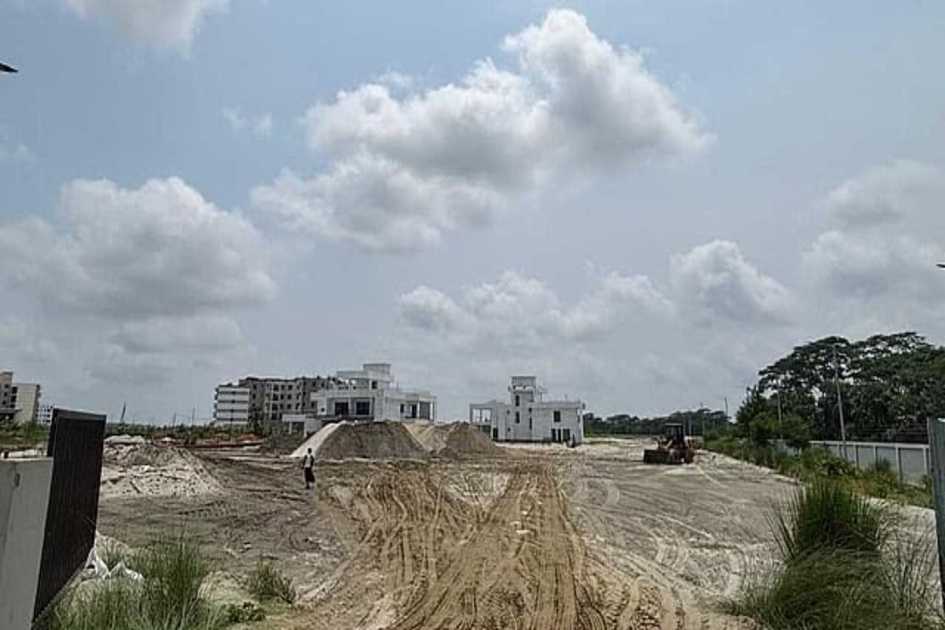
Community representatives and rights groups allege that Rakhine villages, agricultural lands, ponds, cremation grounds, Buddhist monasteries and religious sites have faced encroachment over decades.
Development organisations working with the community have also raised concerns about land disputes, documentation problems and limited access to justice.
For the Rakhines, land is not only an economic resource. It is tied to religious practices, community identity and ancestral memory.
Women preserving a fading tradition
Rakhine women have played a central role in protecting cultural traditions, especially through weaving.
Traditional textiles, shawls and handicrafts remain among the few sources of income available to many families after the loss of agricultural land. Women are often the primary custodians of these skills, passing techniques from one generation to another.
However, community members say the craft sector faces challenges due to limited institutional support, weak market access and lack of formal financial assistance.
Tourism must protect heritage
Kuakata has become a major tourism destination, attracting visitors to its beaches, Buddhist temples and Rakhine markets.
But observers say tourism must recognise that the area is not only a destination; it is also a living cultural landscape shaped by generations of Rakhine history, knowledge and traditions.
Sohanur Rahman, Executive Coordinator of YouthNet Global, said the protection of Rakhine heritage should be viewed as part of climate justice and inclusive development in coastal Bangladesh.
“Indigenous communities should not be seen only as victims of climate change. They are custodians of ecosystems and holders of knowledge that can help build resilient futures. Protecting their languages, cultures and identities is also part of climate justice,” he said.
Rahman said climate-resilient development must ensure the meaningful participation of indigenous and local communities.
“Those who have contributed least to the climate crisis should not be further marginalised by development processes,” he added.
Community members say Rakhine villages are often treated as tourist attractions rather than living communities, with visitors entering private spaces without understanding local customs.
They argue that protecting traditional names, cultural practices and indigenous knowledge would not only preserve heritage but also make tourism more authentic, respectful and inclusive.
Preserving a forgotten chapter of history
The debate over Rakhine place names is part of a broader discussion about protecting Bangladesh’s historical and cultural diversity.
Former Jahangirnagar University professor Dara Shamsuddin, in his book,History of Place Names of Bangladesh: Footprints of the Past (2015), wrote that while personal names belong to individuals, place names are part of national heritage.
“The creation, preservation and public recognition of accurate and meaningful place names is a national necessity,” he wrote.
Researcher Pavel Partha said restoring Rakhine place names is a matter of recognising Bangladesh’s diverse historical heritage.
“The lost place names of Rakhine settlements are part of our national history. The state must ensure justice for these names and recognise their rightful place in the country’s heritage,” he said.
As concerns grow over the decline of the Rakhine language, Professor Md Mehedi Hasan of the Department of Language and Communication at Patuakhali Science and Technology University called for urgent measures to preserve the community’s mother tongue. He suggested establishing Rakhine-language schools and introducing dedicated curricula where literature, songs and traditional theatre can be promoted. He also recommended expanding the limited use of Rakhine in administrative settings, digitally preserving dictionaries, literature and oral traditions, and providing government support for linguistic research and documentation to support the language’s long-term survival.
Kalapara Upazila Nirbahi Officer Md Arifuzzaman said four learning centres are currently operating for Rakhine children to learn their mother tongue through the Buddhist Association, with support from the Prime Minister’s Office. “We highlight their traditions at different social events. We will assess whether a school can be established in the Kuakata area and take further initiatives accordingly,” he said.
For the Rakhines of Bangladesh’s southern coast, restoring lost names is not simply about changing signboards.
These names are the last visible traces of a people’s journey, memory and belonging.
As climate change, coastal development and tourism reshape the region, protecting Rakhine language, land and place names may determine whether future generations can still recognise the stories and cultures that built Bangladesh’s coast.




