

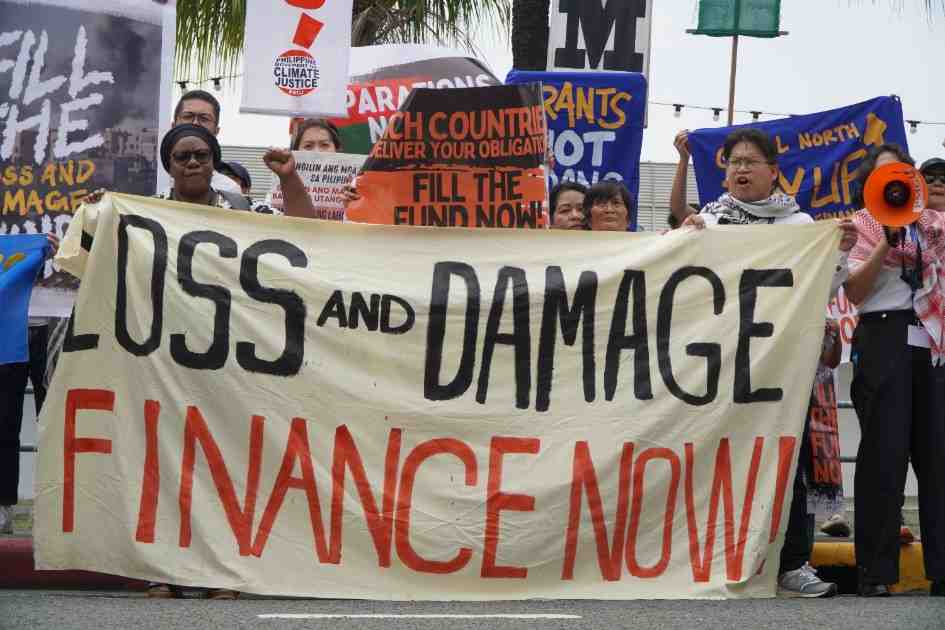



The Fund for Responding to Loss and Damage (FRLD) launched its first call for proposals at COP30 in Belém, offering climate-vulnerable countries access to an initial $250 million. While the move signals the fund’s transition from negotiation tables to real-world implementation, experts warn that its current size remains far below the more than $400 billion needed annually and that equitable access, inclusion of local communities and simplified procedures will be critical for meaningful impact.
The Fund for Responding to Loss and Damage (FRLD) launched its first-ever call for proposals on Thursday at the COP30 climate summit in Belém, marking a major step toward delivering finance to countries already suffering irreversible climate impacts. The initial window will allow vulnerable nations to apply for projects against an allocation of more than USD 250 million.
The announcement signals that the long-awaited Loss and Damage Fund agreed at COP27 and operationalised at COP28—is moving beyond political promises and beginning to channel resources to frontline communities. But the launch has also reignited questions over the fund’s size, accessibility and whether its design will ensure fair distribution.
The FRLD currently holds about USD 397 million, far short of the estimated USD 400 billion developing countries collectively need each year to cope with worsening climate impacts such as cyclones, salinity intrusion, sea-level rise and drought. Although global leaders pledged roughly USD 700 million for 2023–24, much of the money remains neither fully secured nor ready for disbursement. Several delegates at COP30 described the current scale of the fund as “symbolic” in comparison to mounting losses.
Still, climate policy experts say the announcement represents a meaningful start.
“This is undoubtedly a real beginning to mobilise the fund,” said Sumaiya Salim Sudha, Programme Coordinator at the International Centre for Climate Change and Development (ICCCAD). She urged Bangladeshi institutions to rapidly strengthen their readiness. “We must improve our proposal development skills during this six-month window. And given the small initial budget, our applications must be competitive. Research institutions and civil society need to collaborate more closely with the government and partner organisations to make this fund truly accessible.”
Youth voices echoed similar concerns.
Saidur Rahman Siam, youth activist and founder-director of Brighters, attending COP30 as a Bangladesh government delegate, described the call for proposals as “a significant step that finally moves money from negotiating rooms to affected people.” He stressed the need for inclusive preparation if Bangladesh hopes to secure a share. “The government must include young people, civil society and research institutions in proposal development. Local experience and research-backed evidence will help build strong, impactful proposals,” he said.
Brazil, the COP30 host, highlighted the speed at which the fund has been set up, an unusual feat in the often slow-moving world of climate finance. Brazilian officials called it “the fastest global climate fund to become operational in the history of climate governance,” noting that the fund represents not only financial support but “political recognition of climate justice.”
Under the timeline announced in Belém, the first stage of proposal approvals may be completed by July next year, with the first loss-and-damage projects expected to receive real disbursements shortly afterward. But experts warned that the FRLD’s administrative procedures remain complex and may pose barriers for the countries most in need.
Small island developing states (SIDS) and least developed countries (LDCs) have repeatedly said they fear being shut out due to limited capacity, despite facing the world’s most severe climate losses.
At several sessions and side events at COP30, Indigenous leaders voiced frustration that the knowledge and leadership of local communities were not adequately reflected in the fund’s governance process. “The worst climate damage happens on our land, but the decisions are made elsewhere,” one leader said, calling for direct-access provisions and stronger safeguards for community rights.
With climate impacts intensifying and financial needs soaring, many observers say the launch of the FRLD’s first call for proposals is a breakthrough but only the beginning of a much longer battle for resources, equity and justice.




