

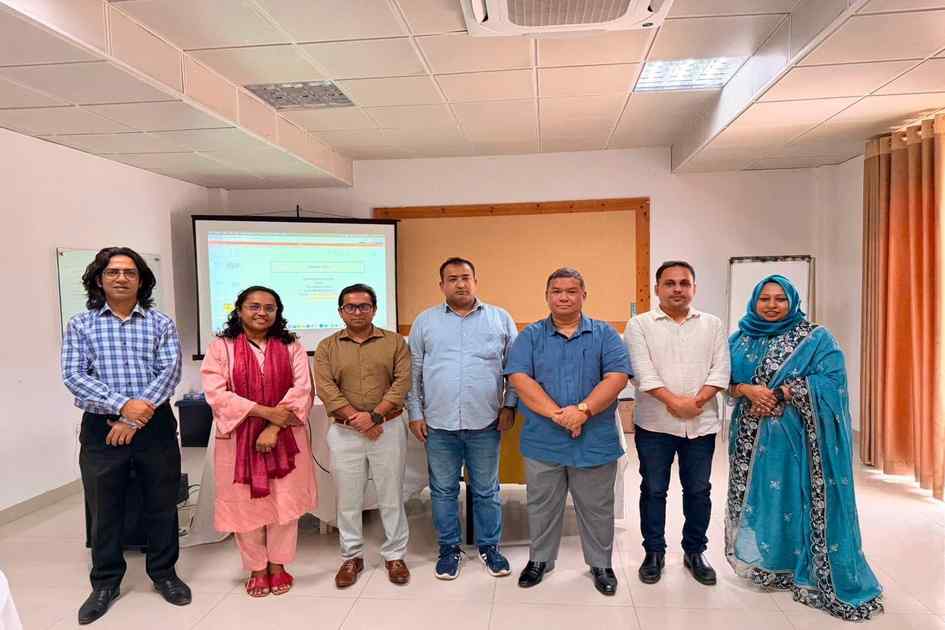



Faculty from four Bangladeshi universities refined teaching plans, reporting methods and assessment approaches as AGILE moves from curriculum design toward classroom implementation for future climate journalism students.
A two-day AGILE Climate Change Reporting Workshop concluded in Dhaka with participating universities finalizing course outlines and lesson plans to introduce climate journalism education at the university level.
The workshop, held on 7–8 August at Chhuti Resort in Purbachal, was organized by Rokeya Collective and CJEN Bangladesh with support from Fojo Media Institute.
Faculty members from Begum Rokeya University, Jagannath University, the University of Liberal Arts Bangladesh and the University of Barishal took part in the workshop.
Building on the first co-design workshop, participants presented and refined university-specific course outlines and lesson plans based on feedback from the panel and fellow participants.
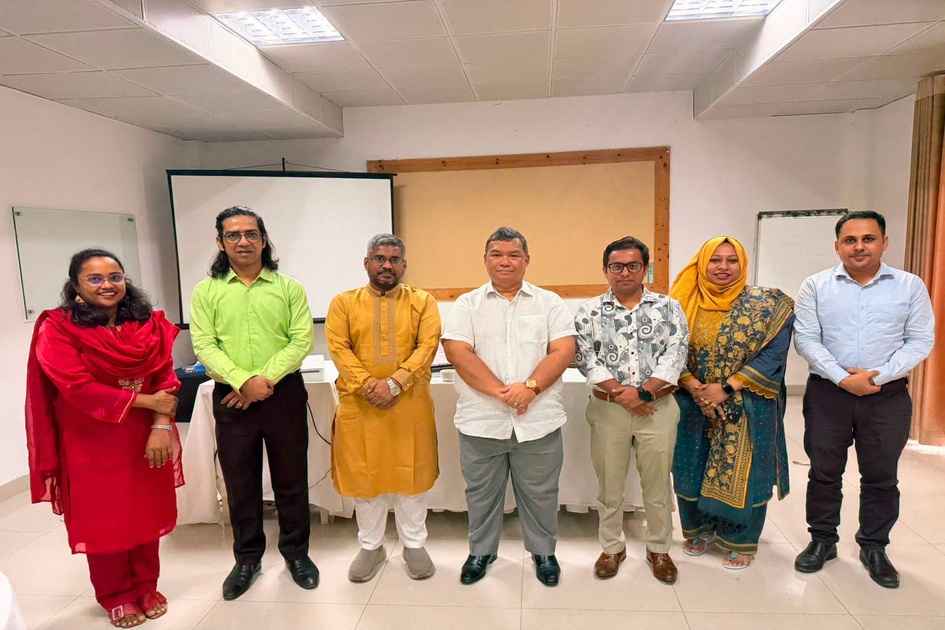
The final outputs cover course content, learning objectives, teaching methods, assessment approaches and implementation plans.
The workshop also focused on practical aspects of climate reporting, including story development, research, field reporting, interviewing, writing, publication, story pitching and mentoring.
Professor Jude William Genilo of CJEN Bangladesh and journalist Jesmin Papri of Rokeya Collective facilitated the workshop. Professor Dr. Ahmad Kamruzzaman Majumder of Stamford University Bangladesh served on the panel.
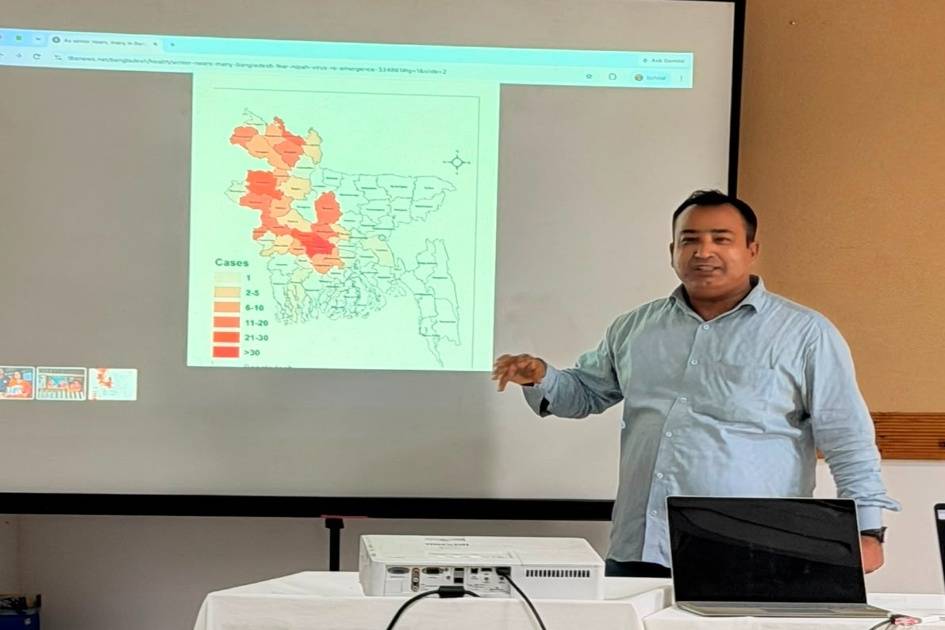
Shamsuddin Illius, founder and editor of The Climate Watch, led a special resource session on the growing importance of climate journalism. He guided participants through the full reporting process, from identifying compelling story ideas and conducting background research to field reporting,interviewing and writing.
Illius also bureau chief of The Business Standard discussed how journalists can use scientific studies, government documents, data and community voices to strengthen climate stories. Illius also explained the publication process, including verification, editing and visual storytelling. He stressed that climate journalism should go beyond publication by tracking responses, policy changes, public engagement and real-world impact.
Professor Gift Gwindingwe of Great Zimbabwe University joined a special session online.
With the course outlines now finalized, the participating universities are preparing to move into the implementation phase and introduce climate journalism courses for their students in the near future.
The workshop marked the conclusion of the AGILE climate journalism education co-design process in Bangladesh, moving the initiative from curriculum development to implementation.
AGILE is a global initiative supported by the European Union for 2025–2028. Its consortium includes Internews Europe, Fojo Media Institute, CFI Développement Médias, Thomson Media and ARTICLE 19. Fojo Media Institute leads Workstream 5 which focuses on the future of journalism.




