

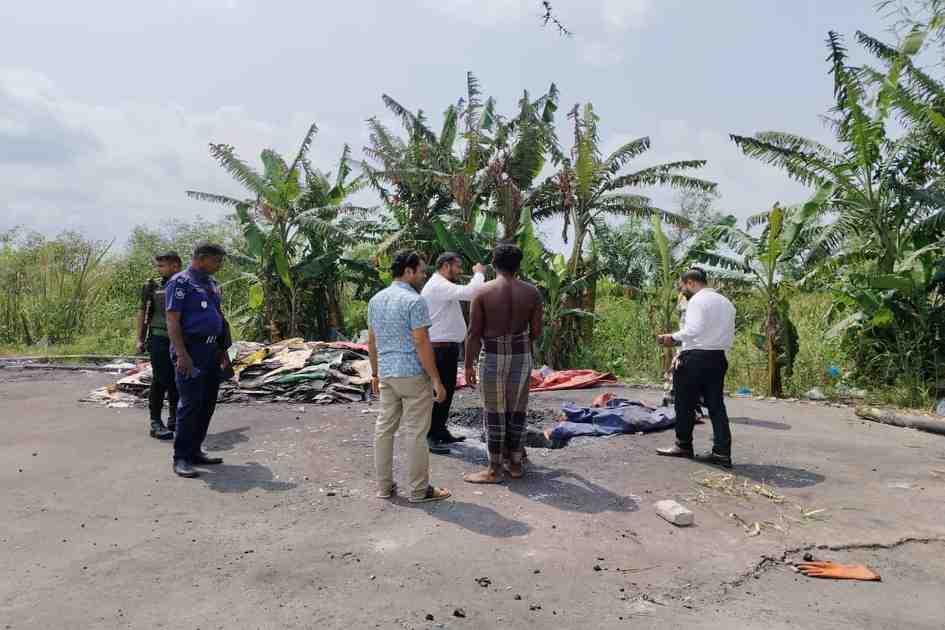

Authorities shut an illegal lead smelting unit in Barguna again after residents reported toxic smoke, raising concerns over weak enforcement, recurring pollution and health risks in Bangladesh’s climate-vulnerable coastal region.
A banned lead smelting unit operating illegally along the Payra River in southern Bangladesh has been shut down again by the Department of Environment (DoE), highlighting persistent enforcement challenges in one of the country’s most climate-vulnerable coastal regions.
Officials said the facility in Angulkata village under Gulishakhali Union of Amtali upazila in Barguna had resumed operations despite being previously sealed and penalised. The unit was allegedly processing used batteries to extract lead without environmental clearance, releasing toxic emissions into surrounding communities.
The DoE carried out the latest raid after receiving intelligence about the renewed activity. However, inspectors found the site abandoned upon arrival, with authorities saying those involved likely fled after learning about the operation.
Following the inspection, the department dismantled parts of the structure and ordered an immediate halt to all activities. Officials also instructed local monitors and youth volunteers to report any attempts to restart or relocate the operation.
Local residents said the plant had been operating mainly at night, burning used batteries in makeshift facilities. They reported frequent exposure to toxic smoke and waste contamination affecting nearby homes.
“Night-time smoke made it impossible to sleep. Children were the worst affected,” said one resident, adding that many villagers experienced respiratory problems, eye irritation and throat discomfort.
According to factory owner Md Ataur Rahman, the unit did not have environmental clearance, confirming its illegal status.
Environmental authorities said this was not the first enforcement action against the facility. Muhammad Mujahidul Islam, director of the DoE’s Barishal divisional office, said the same unit had earlier been shut down following a mobile court drive in June 2025, when owner Sojal Howlader was fined Tk 400,000 and sentenced to four months’ imprisonment in default of payment. The site was also sealed at that time.
“Lead pollution is extremely hazardous to public health, agriculture and livestock. Strict action against such illegal operations will continue,” he said.
Despite earlier enforcement measures, residents claim the unit resumed operations in recent months, raising concerns over regulatory oversight, monitoring gaps and the effectiveness of post-raid compliance systems.
Environmental activists say communities in Bangladesh’s coastal belt are increasingly facing a dual burden of climate vulnerability and industrial pollution. They warn that illegal lead smelting exposes children and workers to long-term neurological and respiratory risks.
YouthNet Global Executive Coordinator Sohanur Rahman said the situation reflects a deeper governance and justice challenge.
“This is not just an environmental violation. It is a climate justice failure,” he said. “Communities already facing climate vulnerability are being pushed further into health and livelihood insecurity due to unchecked toxic industries. Strong enforcement and just transition-based accountability must be ensured immediately.”
Activists also stressed the need for stronger accountability mechanisms beyond periodic raids, calling for continuous monitoring, stricter penalties and measures to prevent the re-establishment of such facilities at alternative sites.
Local residents and environmental campaigners demanded the permanent closure of the unit, legal action against those responsible and sustained field-level surveillance to prevent recurrence.
Without stronger enforcement, they warned, toxic contamination could further threaten public health, agriculture and biodiversity in the Payra River basin, deepening an already fragile environmental situation in southern Bangladesh.




