

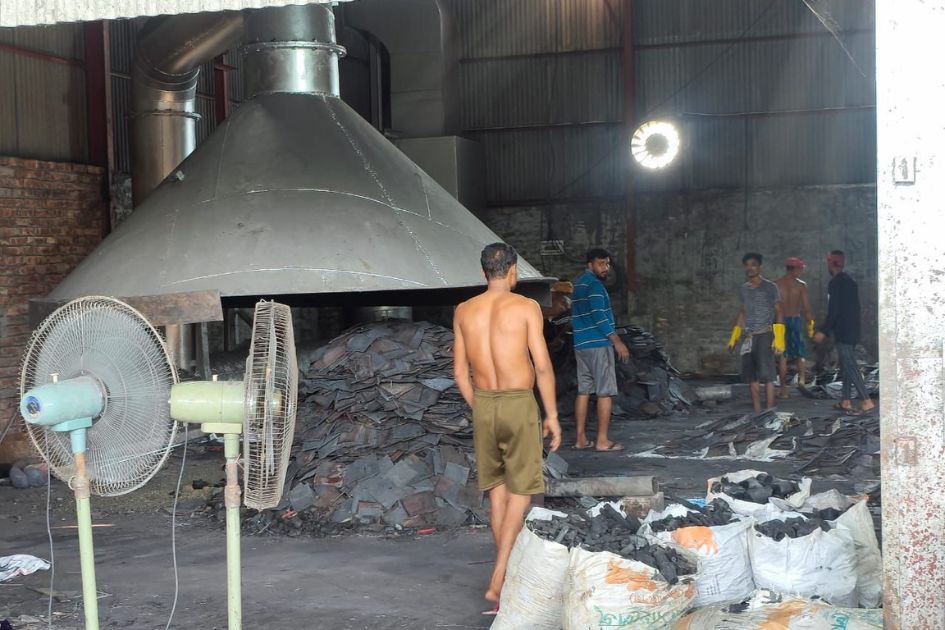



Residents near a suspected lead recycling facility in Kishoreganj allege toxic emissions are causing health problems, while environmental concerns and demands for transparency intensify following a recent official inspection.
Allegations surrounding a suspected lead and used-battery recycling facility in the Pakundia-Katiadi area of central Bangladesh have raised health and environmental concerns among local residents, prompting calls for investigation and regulatory transparency.
According to residents, a facility operating under the name “KG Enterprise” began operations in the area approximately one year ago. Locals allege that the site is burning used batteries and processing lead, activities widely recognized as highly hazardous if not properly controlled with adequate pollution prevention and worker safety measures. These claims could not be independently verified.
During a recent field visit, a large tin-shed industrial structure was observed amid extensive agricultural land. The site includes a tall chimney and industrial installations. Observations indicated signs of ongoing industrial activity, including lighting and nighttime operations. However, the specific processes being carried out could not be independently confirmed.
Residents living near the facility reported recurring emissions from the chimney, which they believe are linked to health issues such as breathing difficulties, coughing, eye irritation and headaches, particularly among children and older people.
“One can barely stay inside the house because of the smell, especially at night and early morning when the smoke becomes heavier,” said a local resident speaking on condition of anonymity. “We are deeply worried about our children’s health.”
Another resident described increasing difficulty in daily life due to persistent fumes and odor in the area.
Farmers in the surrounding villages have also expressed concern that possible contamination of air, soil and water could affect agricultural land and nearby water bodies, threatening crop production and local livelihoods.
“We depend entirely on farming,” said a local farmer. “If the soil and water are polluted, our survival will be at risk.”
Bangladesh has in recent years faced growing scrutiny over informal and semi-formal battery recycling activities, which have been linked in multiple studies to elevated lead exposure risks. Lead is a toxic heavy metal that can cause serious long-term health impacts, particularly in children, including neurological and developmental harm. Without proper safeguards, such operations may also contaminate soil and groundwater.
When contacted, Md Momin Bhuiyan, Assistant Director of the Department of Environment (DoE), confirmed that the facility is located between Moddhopara and Baniagram villages under Katiadi upazila. He said concerns raised by residents had been brought to the attention of authorities.
He further stated that the site was inspected on May 7, 2026 and that regulatory processes are underway based on the inspection findings. Detailed outcomes of the inspection have not yet been publicly disclosed.
Authorities have not yet confirmed whether the facility holds valid environmental clearance, nor have they provided public information regarding pollution control measures or waste management practices at the site.
Residents are demanding greater transparency, including disclosure of the environmental clearance status, inspection findings and what immediate steps are being taken to protect public health and the surrounding environment.
The allegations against the facility management could not be independently verified and no official response from KG Enterprise was available at the time of publication.
Environmental observers note that lead processing and informal battery recycling remain high-risk activities in Bangladesh due to weak enforcement and the toxic nature of lead exposure, particularly when safeguards are insufficient.
Sohanur Rahman, Executive Coordinator of YouthNet Global, said lead exposure poses serious public health risks and called for an urgent investigation into the facility’s operations. He also emphasized the need for full disclosure of environmental compliance status, publication of inspection findings and strict enforcement of safety standards to prevent further risk to surrounding communities.




