

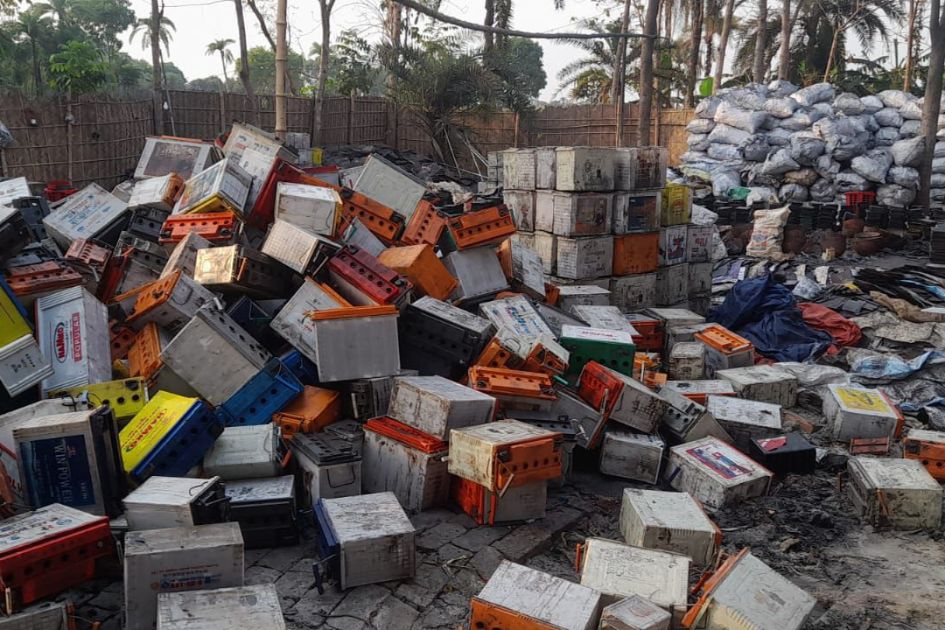

Authorities shut an illegal battery recycling plant in Ashulia and fined operators Tk 200,000 amid rising concerns over toxic lead pollution threatening public health and the environment in densely populated industrial outskirts.
A mobile court has shut down an illegal battery recycling facility and fined it Tk 200,000 in Ashulia on the outskirts of Dhaka, as authorities step up action against hazardous informal recycling operations linked to toxic lead pollution in South Asia.
The crackdown highlights a growing environmental and public health concern in rapidly industrialising areas, where unregulated battery recycling has been associated with severe air, soil and water contamination.
According to a press release from the Department of Environment (Bangladesh), the enforcement drive was conducted on April 13 in the Beribadh area by a joint team from its Dhaka district office and the headquarters’ Monitoring and Enforcement Wing.
Officials said the facility was illegally melting used batteries and carrying out recycling operations without authorization or the required environmental safeguards. Authorities confirmed that toxic materials, including lead, were being handled in ways that posed significant risks to nearby communities.
Environmental experts warn that exposure to lead can cause long-term neurological damage, particularly in children, along with kidney disorders and other chronic health complications. Informal recycling sites are widely identified as major sources of such contamination in densely populated peri-urban settlements.
The mobile court was led by Executive Magistrate Foyjunnessa Akhter, while Inspector SM Manzur-ul-Alam of the Department’s Dhaka district office conducted the prosecution. Assistant Director Md Rajjak Hossain was also present during the operation.
Police and Fire Service teams assisted in the enforcement drive.
The Department of Environment said it will continue nationwide operations against illegal and environmentally hazardous industrial activities, with enhanced monitoring based on public complaints and field surveillance.
Authorities noted that informal battery recycling remains a persistent challenge in Bangladesh, where weak enforcement and unregulated industrial clusters continue to expose vulnerable communities to toxic contamination risks.




