




Bangladesh has approved the $2.8bn Padma Barrage project to restore rivers, reduce salinity intrusion, expand irrigation and strengthen ecological resilience amid growing climate and water security challenges.
Bangladesh has approved the ambitious “Padma Barrage (1st Phase)” mega project with an estimated cost of Tk 34,497.25 crore, around $2.8 billion, aiming to restore drying river systems, reduce salinity intrusion, strengthen irrigation and enhance ecological sustainability across large parts of the country.
The project, however, is already drawing attention from river experts and environmental advocates who say its long-term success will depend not only on water retention but also on effective sediment management, ecological safeguards and regional water cooperation.
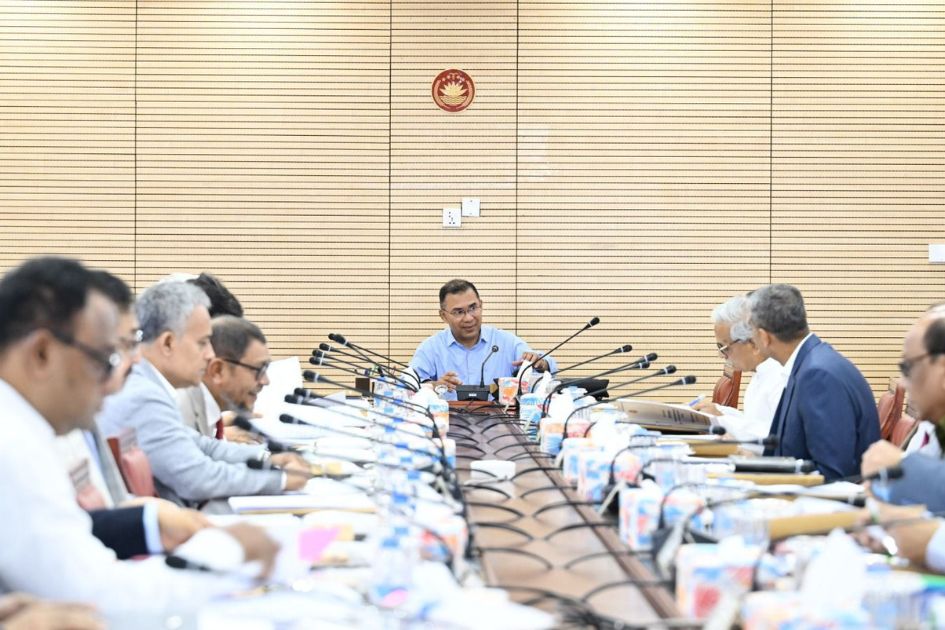
The mega project was approved at a meeting of the Executive Committee of the National Economic Council (ECNEC), chaired by Chief Adviser Tarique Rahman at the Bangladesh Secretariat on Wednesday.
The project will be implemented by the Bangladesh Water Development Board under the Ministry of Water Resources from July 2026 to June 2033 and will be fully financed by the government.
Officials say the initiative is designed to revive major river systems that have steadily lost navigability and freshwater flow over decades due to upstream water diversion, sedimentation, reduced dry-season flows and climate-related pressures.
Bangladesh’s planners argue that the crisis intensified after India constructed the Farakka Barrage in the 1970s, diverting large volumes of dry-season water from the Ganges-Padma system toward the Bhagirathi-Hooghly River to improve navigability at Kolkata Port.
As a result, dry-season freshwater flow in Bangladesh’s southwest and northwest regions has declined significantly, contributing to river degradation, salinity intrusion, loss of fisheries, reduced agricultural productivity and growing ecological stress in climate-vulnerable areas.
The project covers 19 districts across the Khulna, Dhaka, Rajshahi and Barishal divisions and is expected to benefit nearly 70 million people, roughly one-third of Bangladesh’s population.
Water Resources Minister Md Shahiduddin Chowdhury Anee described the initiative as “nationally significant,” saying it would improve water security, irrigation, agriculture and livelihoods across the country’s southwest and northwest regions.
At the center of the initiative is a 2.1-kilometre Padma Barrage alongside associated river management infrastructure, including spillways, undersluices, fish passes, navigation locks, embankments and river restoration structures.
The project also includes dredging of major river systems, re-excavation of drainage channels and construction of river training structures aimed at restoring flow in the Gorai-Madhumati, Hisna-Mathabhanga, Chandana-Barashia, Baral and Ichamati river networks.
The barrage is expected to retain around 2.9 billion cubic meters of water and expand irrigation coverage across approximately 2.88 million hectares of farmland in the greater Kushtia, Faridpur, Jashore, Khulna, Barishal, Pabna and Rajshahi regions.
Two hydropower plants with a combined capacity of 113 megawatts are also planned under the project.
Government estimates suggest the initiative could contribute around 0.45 percent to Bangladesh’s GDP and generate annual economic returns of approximately Tk 8,000 crore through increased agricultural productivity, improved navigation and enhanced water availability.
The Planning Commission said the project is particularly important for addressing rising salinity intrusion in the southwestern districts of Satkhira, Khulna and Bagerhat, where declining freshwater flow has increasingly threatened agriculture, fisheries, biodiversity and the fragile Sundarbans mangrove ecosystem.
Environmental experts say the project comes at a critical moment as Bangladesh faces increasing climate-related challenges, including sea-level rise, prolonged dry seasons, erratic rainfall and intensifying water insecurity across the Ganges delta.
However, analysts caution that river engineering alone may not solve the country’s complex water crisis unless sediment dynamics are carefully addressed.
Bangladesh’s rivers carry enormous volumes of sediment from the Himalayan basin every year. Without a comprehensive sediment management strategy, experts warn that excessive siltation could reduce the barrage’s effectiveness over time, obstruct navigation routes, alter natural river flows and create new environmental and economic risks.
Hydrologists and environmental observers also stress the need to maintain ecological flow, protect wetlands and fisheries and avoid unintended impacts on river-dependent communities whose livelihoods rely on seasonal flooding and sediment distribution.
They further emphasize the importance of strong environmental monitoring, transparent implementation, public consultation and independent social and ecological impact assessments throughout the project period.
Analysts say the Padma Barrage represents one of Bangladesh’s largest water infrastructure investments in decades and reflects the country’s growing focus on climate adaptation, ecological restoration and long-term water security.
At the same time, they note that transboundary water governance between Bangladesh and India remains a sensitive issue in South Asia, particularly as climate change intensifies pressure on shared river systems across the region.
As Bangladesh moves forward with the massive infrastructure initiative, the Padma Barrage may ultimately test whether large-scale river engineering can successfully balance development ambitions with ecological sustainability in one of the world’s most climate-vulnerable delta regions.




