

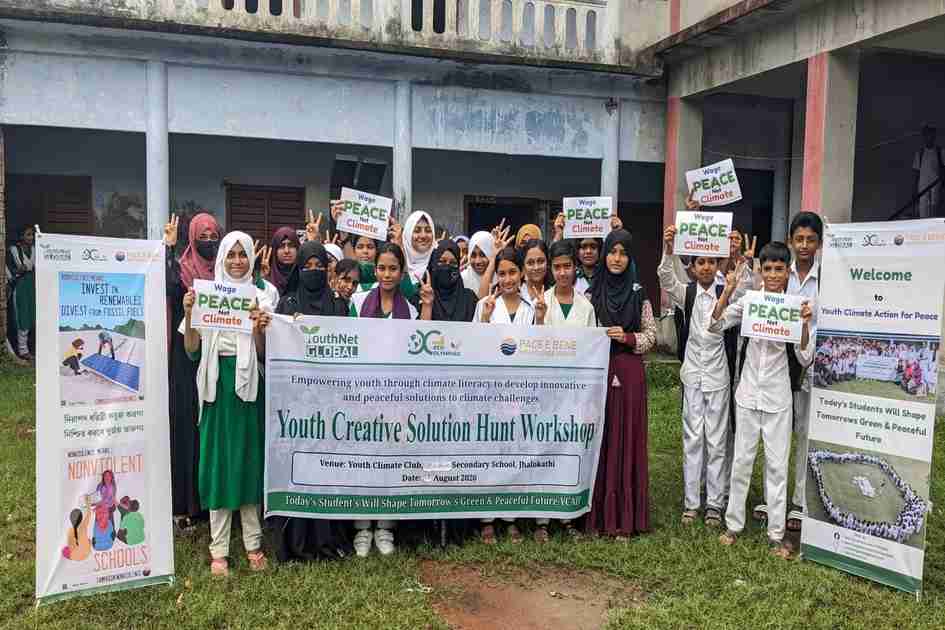



The workshop used discussions, games and problem-solving activities to help Youth Climate Club members connect climate awareness, peacebuilding and community resilience in vulnerable areas.
Students of Udbodhon Secondary School joined a workshop in Jhalakathi on Monday to explore youth-led solutions to climate-related challenges and conflicts as part of the ‘Youth Climate Action for Peace’ initiative of YouthNet Global, supported by the Pace e Bene Nonviolence Service, a global organization dedicated to fostering peace and justice through active nonviolence.
The ‘Youth Creative Solutions Search Workshop’ was organised for members of the school’s Youth Climate Club, focusing on climate awareness, youth leadership, peacebuilding, and locally driven solutions to address growing environmental challenges.
Mohon Lal Baral (Ratan), Assistant Headteacher of Udbodhon Secondary School, attended the event as the chief guest. Sazid Mahmud, Divisional Coordinator of YouthNet Global, was also present along with 30 student members of the school’s Youth Climate Club.
Building youth leadership for climate resilience
Bangladesh is one of the countries most vulnerable to climate change, facing recurring floods, droughts, storm surges, river erosion, and other environmental pressures. These impacts are disrupting livelihoods, education, and future opportunities, while young people continue to face serious consequences despite contributing little to global emissions.
Climate-related impacts can increase pressure on communities through displacement, resource shortages, and loss of livelihoods. The organisers said youth engagement is essential for strengthening resilience and promoting peace in climate-vulnerable areas.
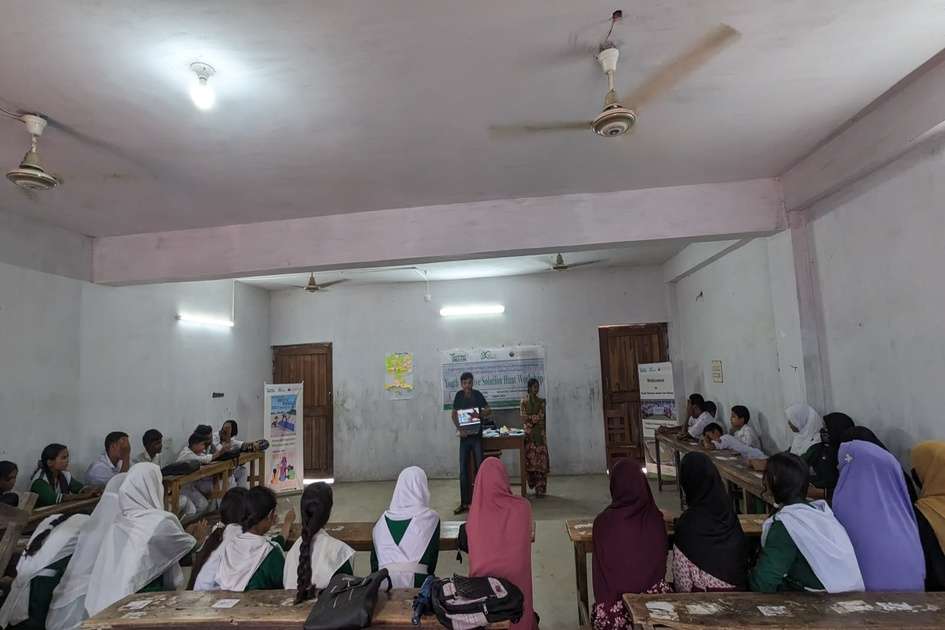
YouthNet Global’s ‘Youth Climate Action for Peace’ initiative aims to develop student leadership and encourage young people to identify practical solutions to local environmental challenges. Monday’s workshop was the second session under the initiative, featuring group discussions, interactive games, and problem-solving activities on climate impacts and community-based solutions.
Students encouraged to lead climate action
Speaking at the event, chief guest Mohon Lal Baral (Ratan) highlighted the growing impact of climate change on Bangladesh.
“Due to climate change, our traditional land of six seasons has effectively been reduced to three. Although Bangladesh has contributed very little to global climate change, our students are suffering immensely from its consequences. To overcome these challenges, students must come forward and lead climate action,” he said.
Sazid Mahmud, Divisional Coordinator of YouthNet Global, said the initiative aims to expand youth climate leadership across the country.
“Through this initiative, which started in Jhalakathi, we want to spread the message of climate action among students nationwide. At the same time, we aim to develop Youth Climate Club members as conscious and active student leaders in climate advocacy,” he said.
Reflecting on the workshop, Youth Climate Club member Sumaiya Aktar said the activities helped students understand climate change, its social impacts, and their role in addressing the crisis.
“Through the games and activities, we learned about climate change, the conflicts created by its impacts, and our own role in finding solutions,” she said.
The organisers said similar youth-focused workshops will continue to encourage students to become leaders in local climate action and contribute to building more resilient communities.




