

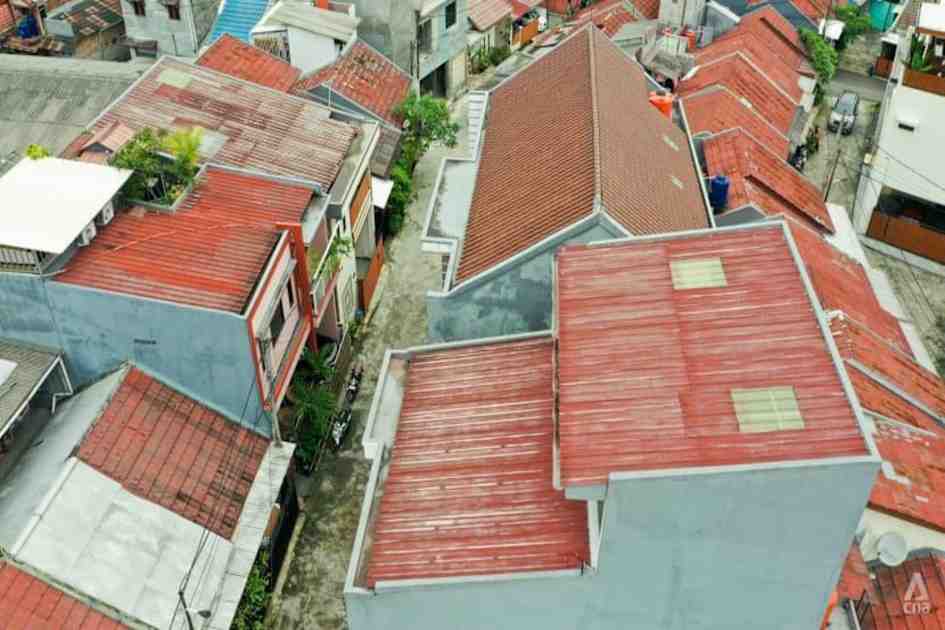



Indonesia plans to replace zinc roofs with clay tiles under a national beautification drive, aiming to cool homes and boost jobs, while experts warn of environmental, cultural and structural challenges.
Indonesia’s President Prabowo Subianto has announced a nationwide initiative to replace corrugated zinc roofs with clay tiles, aiming to improve the country’s aesthetic appeal, cool homes, revitalize the domestic roof tile industry and attract tourists. The programme, known as gentengisasi or “mass roofing,” is part of a broader national campaign called Asri, which stands for safe, healthy, clean and beautiful.
Speaking to regional leaders in Sentul, West Java, on February 2, Prabowo described zinc roofs as hot for occupants and prone to rust. He recalled traditional homes in his mother’s village in Minahasa that used thatch roofs, which naturally kept houses cooler. “Indonesia wouldn’t be beautiful if all its roof tiles were made of zinc,” he said, displaying images of homes with clay tiles in sky blue, navy, terracotta, green and grey. He added that the government hopes to eliminate “rusty” roofs within two to three years.
Finance Minister Purbaya Yudhi Sadewa estimated the programme’s budget at below one trillion rupiah, roughly 59 million US dollars, affecting only a portion of homes. Housing and Settlement Minister Maruarar Sirait said surveys have been conducted to assess production capacity in West Java and emphasized that the policy aims to stimulate domestic industry rather than rely on imports. Jakarta Governor Pramono Anung added that new public housing in the capital will no longer use zinc roofs.
While clay roofs are longer lasting, rust free and less prone to leaks than zinc, experts warn that mass adoption could harm the environment and require costly structural upgrades. Soil for clay tiles is often taken from paddy fields, rendering it unsuitable for agriculture and potentially affecting local ecosystems. The firing process for tiles also increases carbon emissions.
Clay roofs are heavier than zinc, which may require stronger foundations and new roof frames. Analysts said many homeowners may be reluctant to replace zinc roofs without government support and the plan may need to focus on new housing, tourism facilities or subsidized renovations. The domestic steel industry would also need to increase production to support stronger roof structures.
Cultural and regional factors could further limit adoption. In many areas outside Java, communities prefer zinc or traditional wood and palm fibre roofs due to local beliefs or climatic conditions. Clay tiles can only be produced in regions with suitable soil and high altitude or mountainous areas often favor zinc roofs for better heat retention in cooler climates.
Despite these challenges, traditional roof tile makers have welcomed the initiative. In Tasikmalaya, West Java, former tile maker Nurdin Husnudin said he is ready to resume production if suitable soil can be sourced. Experts also note that revitalizing the roof tile industry could contribute to job creation, supporting President Prabowo’s broader employment goals.
The government hopes the initiative will combine aesthetic, economic and sustainability goals, supporting local industry while promoting more comfortable and climate resilient housing. Observers say its success will depend on careful planning, regional adaptation, government subsidies and consideration of environmental and cultural impacts.
Officials have not provided a specific completion timeline, but surveys, pilot projects and coordination with local governments and industry associations are expected in the coming months. The programme highlights the challenge of balancing modernization, tourism promotion, environmental responsibility and cultural sensitivity in a country as diverse as Indonesia.




