

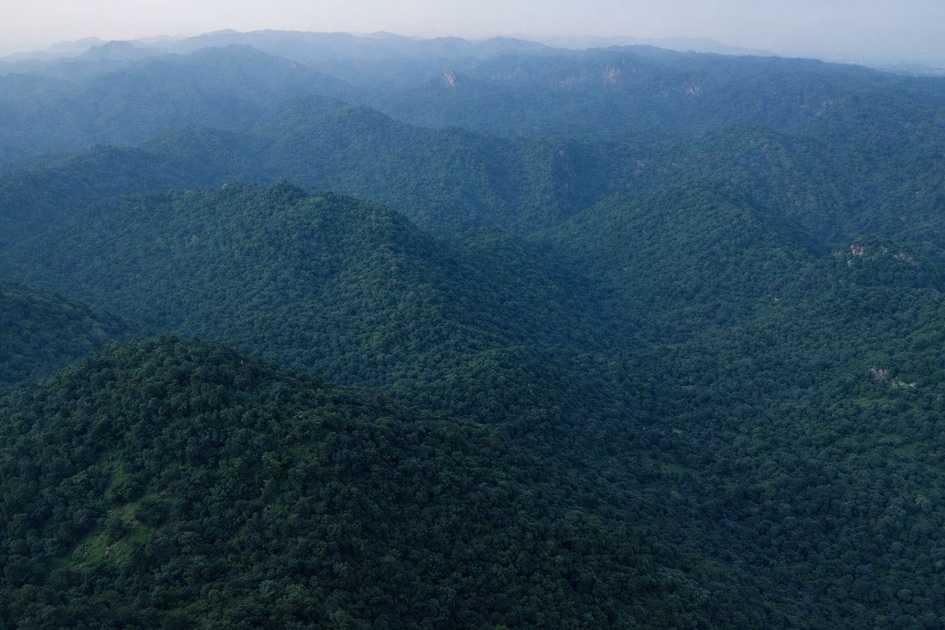

India has declared an eco-sensitive zone around Rajasthan’s Kumbhalgarh Wildlife Sanctuary to protect biodiversity regulate activities and promote sustainable livelihoods for indigenous and local communities living near the protected area.
India has designated the area surrounding the Kumbhalgarh Wildlife Sanctuary in the western state of Rajasthan as an eco-sensitive zone (ESZ), Union Environment Minister Bhupender Yadav announced on Tuesday.
A government notification formalising the decision has been issued, the minister said in a social media post. The sanctuary is part of the Aravalli mountain range, one of the oldest geological formations in the world, and is known for its rich biodiversity.
According to Yadav, the protected area provides habitat for a range of wildlife species, including leopards, striped hyenas, jungle cats, Indian pangolins, blue bulls and chinkaras. The sanctuary is also home to several bird species, such as the painted francolin.
The minister said the ESZ designation would strengthen biodiversity conservation while promoting sustainable livelihood practices, including organic farming and agroforestry, in surrounding areas. These initiatives are expected to benefit indigenous and local communities living near the sanctuary.
The move is part of India’s broader efforts to safeguard ecologically sensitive regions by regulating activities around protected areas, reducing environmental pressure while encouraging community participation in conservation.
Eco-sensitive zones are notified to balance environmental protection with sustainable development, limiting harmful activities while supporting responsible use of natural resources.




