

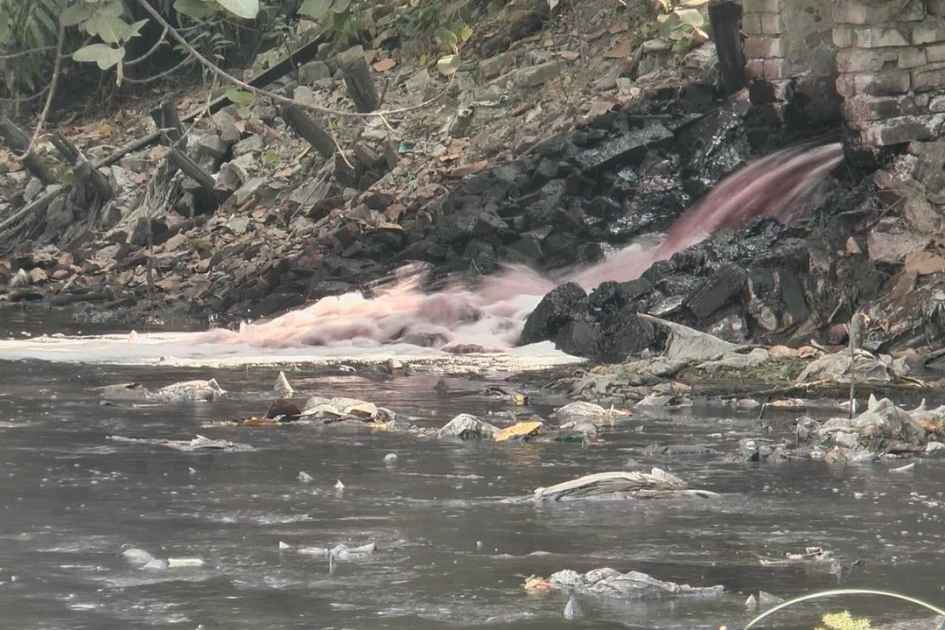



The High Court has ordered utilities cut to 20 Narayanganj factories operating without effluent treatment plants after reports they were dumping untreated industrial waste into the Shitalakkhya River.
The High Court of Bangladesh has ordered the disconnection of electricity and gas supply to 20 industrial factories operating without effluent treatment plants (ETPs) along the banks of the Shitalakkhya River in Narayanganj, citing ongoing water pollution.
The order was issued on Thursday by a High Court bench comprising Justice Fahmida Kader and Justice Mohammad Asif Hasan.
The court directed authorities to cut electricity and gas connections of factories that continue to operate without ETPs, a key environmental safeguard used to treat industrial wastewater before it is discharged into nearby rivers.
The bench instructed the chairman of the Bangladesh Inland Water Transport Authority, the director general of the Department of Environment and the district commissioner of Narayanganj to implement the order and submit a compliance report to the court by April 30.
The directive came following a public interest litigation filed by Human Rights and Peace for Bangladesh, which raised concerns over industrial pollution along the Shitalakkhya River.
The petition cited media reports indicating that several factories were operating without ETPs and releasing untreated waste into the river, contributing to severe water pollution.
Earlier, on May 6 last year, the High Court issued a rule asking authorities to form a monitoring committee to identify polluting industries and assess the environmental damage caused by them.
Following the court’s order, the Department of Environment submitted a report on December 8 detailing the operational status of industries in the area. The report found that at least 20 factories were continuing their operations without installing ETPs.
Among the factories identified in the report are Khaleq Textile, Leena Paper Mill, RSK Dyeing, Khan Brothers Textile, SRS Knit Dyeing, Rubel Dyeing, Bangladesh Dyeing and Processing, Asian Fabric, Jilani Dyeing, Gazipur Board Mills, New Alam Dyeing, Mayer Doa Dyeing, MR Dyeing, Abdur Rob Dyeing, Bismillah Knit Dyeing, Shimul Dyeing, Razzak Washing and Haji Rasul Dyeing.
Based on the findings, the petitioner submitted a supplementary application requesting the court to order the disconnection of electricity and gas supply to the factories operating without ETPs.
After hearing arguments from the parties, the court issued the directive to halt utility services to the identified industries unless they comply with environmental standards.
Senior Advocate Manzill Murshid represented the petitioner in court, assisted by Advocate Sanjay Mondal. Advocate Muntasir Uddin Ahmed appeared for the Department of Environment while Deputy Attorney General Mohammad Shafikur Rahman represented the government.
Environmental experts say the ruling marks an important step in enforcing pollution control measures in Bangladesh’s industrial zones, particularly around rivers that serve as critical water sources and transport routes.




