





Pakistan warned India against disrupting its Indus water share, saying the treaty remains legally binding, as renewed tensions raise concerns over food security, livelihoods and regional stability.
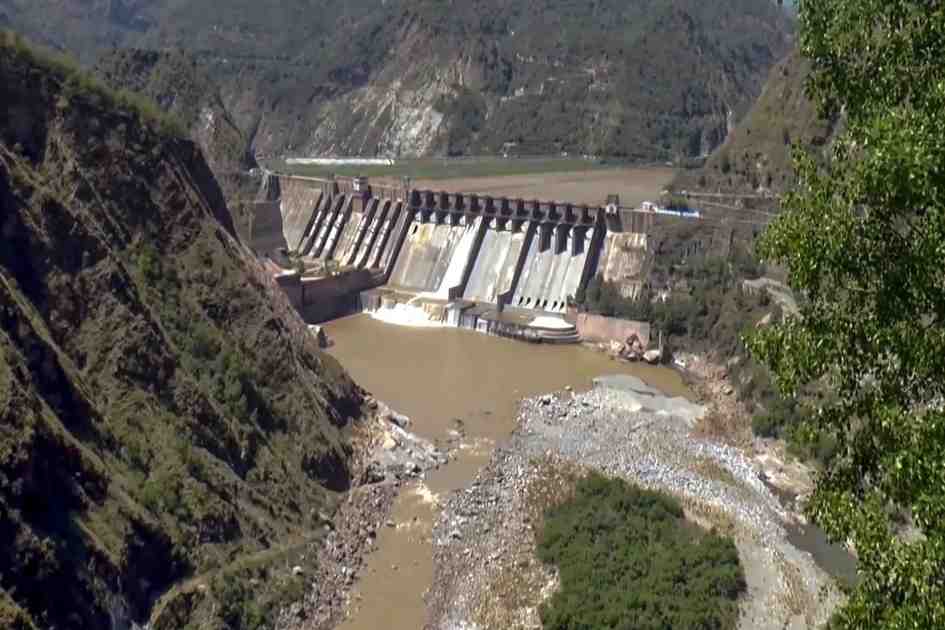
Tensions between Pakistan and India have intensified following sharp warnings from Islamabad over its share of the Indus River waters amid renewed friction linked to the 1960 Indus Waters Treaty.
The escalation comes after India moved to suspend aspects of the treaty following the 2025 Pahalgam attack, which reportedly killed 25 tourists and one local resident. Indian authorities have disputed Pakistan’s broader claims related to the incident.
In a recent press conference, Pakistan’s Minister for Climate Change, Musadik Malik, accused New Delhi of attempting to “control” Pakistan’s rightful share of water. Referring to remarks from Indian leaders about potentially halting water flows, Malik issued a strongly worded warning against any disruption.
“We have already made it clear that any attempt to deprive the country of its rightful share of water will have dire consequences. We haven’t just made announcements. We have proven that if anyone tries to touch our water, that hand will be chopped off,” Malik said.
Malik stressed the existential importance of the issue for Pakistan, saying that 40 to 50 percent of the country’s population depends on agriculture for its livelihood.
“Someone is trying to control the food security, 50 percent of the employment and 25 percent of the economy of an entire country,” he added.
Highlighting the legal status of the Indus Waters Treaty (IWT), Malik questioned the morality and international implications of any attempt to alter the established water-sharing arrangement.
“If upstream countries begin to block water flows to downstream nations, what becomes of international norms? We have a formal treaty in place, yet there is talk of blocking the flow. We will take this matter to the international arena to determine the rights of children living in downstream regions,” he said.
Pakistan’s Minister for Information, Attaullah Tarar, also maintained that the treaty remains legally binding. He said the agreement cannot be unilaterally suspended, revoked or amended.
“The treaty is legally effective. Our position has received international support,” Tarar said, adding that Prime Minister Shehbaz Sharif and Army Chief Field Marshal Asim Munir have described water as Pakistan’s “lifeline” and “red line.”
On the Indian side, Union Minister for Jal Shakti C.R. Patil has said India intends to fully utilise its allocated share of the Indus river system within the next 18 to 24 months. Indian authorities maintain that the treaty will remain in abeyance unless Pakistan takes verifiable steps to address India’s concerns over cross-border militancy.
Amid the escalating rhetoric, Sohanur Rahman, Executive Coordinator of YouthNet Global, cautioned that water disputes in South Asia require cooperation rather than confrontation.
“Water is not only a resource for survival but also a bridge for peace. Regional stability depends on strengthening transboundary cooperation mechanisms, not escalating rhetoric that puts already vulnerable communities at greater risk,” he said.
The Indus Waters Treaty, brokered by the World Bank in 1960, has long been regarded as one of the world’s most durable transboundary water-sharing agreements. Despite decades of political and military tensions between the two neighbours, the treaty has survived multiple crises.
However, the latest exchange of warnings has raised concerns among observers about the stability of the agreement and its broader implications for water security and regional stability in South Asia.




