

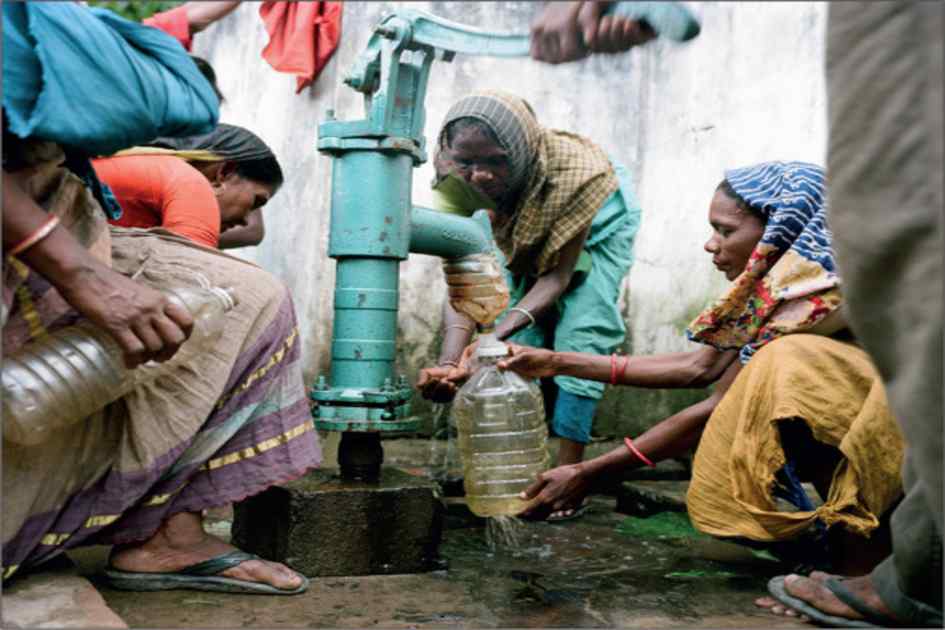



Bangladesh says 11 percent of its population remains exposed to arsenic risk, as the government expands safe water projects through deep tube wells, rainwater harvesting and piped supply systems.
About 11 percent of Bangladesh‘s population remains at risk from arsenic contamination, Local Government, Rural Development and Cooperatives Minister Mirza Fakhrul Islam Alamgir told parliament on Tuesday, citing the 2019 Multiple Indicator Cluster Survey jointly conducted by the Bangladesh Bureau of Statistics and UNICEF.
He said the Department of Public Health Engineering, under the Local Government Division, has taken a range of measures to protect people from arsenic exposure and reduce the threat.
The minister provided the information in response to a starred question tabled in parliament by ruling party lawmaker Selina Sultana from a reserved women’s seat.
He said the Department of Public Health Engineering is implementing several projects in rural areas. Under those projects, around 1,215,948 arsenic-safe water sources have been installed by 2026.
These include not only deep tube wells but also piped water supply systems, rainwater harvesting facilities, pond excavation and re-excavation, as well as solar-powered pond sand filters.
He expressed hope that the share of people currently exposed to arsenic contamination risk would fall to 5 to 6 percent by 2026.
Detailing progress under the measures taken, the minister said 615,497 water sources have so far been installed.
Under the safe water supply project through rainwater harvesting in coastal districts, 199,485 water sources have so far been installed.
Under the project to mitigate arsenic risk in water supply, which has already been completed, 174,676 water sources have so far been installed.
Under the rural water supply project, also completed, 88,235 water sources have so far been installed.
Under the priority rural water supply project, which has been completed as well, 138,055 water sources have so far been installed.




