

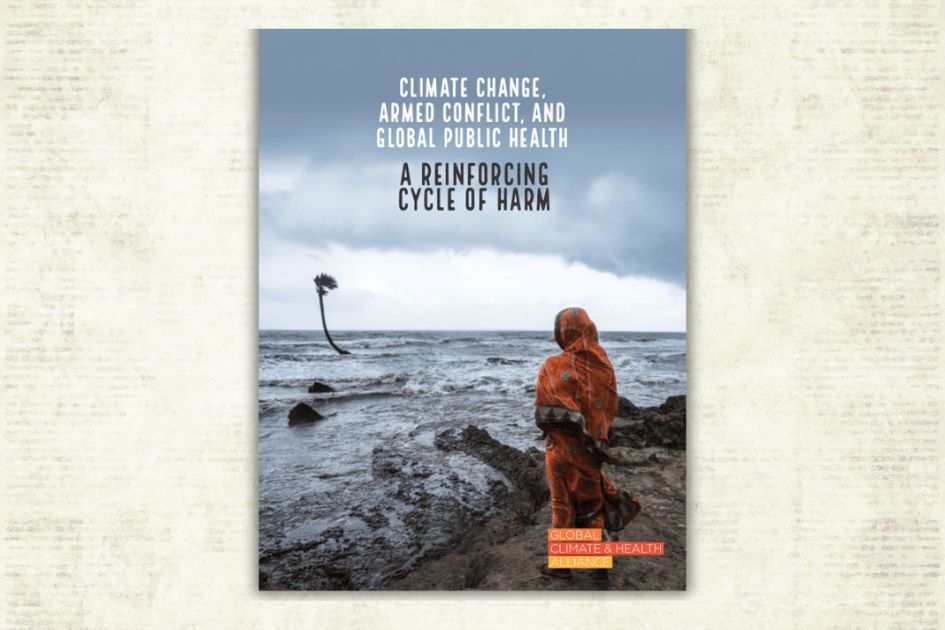

The GCHA report offers a global warning, but Cox’s Bazar’s July monsoon response shows why Bangladesh must link refugee protection, health resilience and climate planning.
A new global analysis says climate shocks, war and fragile health systems reinforce one another. Fresh monsoon data from Cox’s Bazar shows how that cycle is already straining shelters, clinics and aid budgets in Bangladesh.
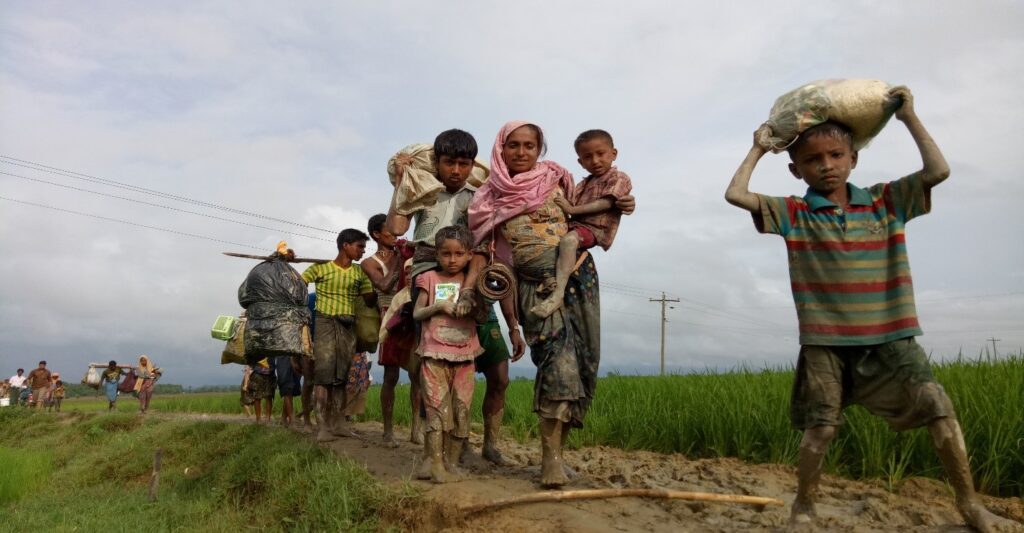
An eight-day burst of monsoon weather in July 2026 triggered 482 reported incidents across the Rohingya refugee camps in Cox’s Bazar, affecting about 43,000 people and temporarily displacing 9,707, according to an official inter-agency update. The incidents included 259 wind or storm incidents, 164 landslides and 42 floods.
Between 5 and 12 July, 4,327 shelters were partially damaged and 19 destroyed. The same update recorded damage to 67 water points, 387 latrines and 53 learning centers, a reminder that a weather emergency in a densely populated camp can quickly become a public-health and education crisis.
That Bangladesh evidence gives immediate context to a new report from the Global Climate and Health Alliance (GCHA), which argues that climate change, armed conflict and weak health systems form a reinforcing cycle of harm. The alliance represents more than 200 health organisations across more than 125 countries.
The global report, released in July, does not contain a Bangladesh chapter or a country-level assessment. It includes two photographs from Cox’s Bazar, one of a makeshift medical camp and another of a Rohingya mother and newborn, but its findings are global. The Bangladesh conclusions in this article therefore come from official local data read alongside the report, not from a Bangladesh case study by GCHA.
That distinction matters. It avoids overstating what the report says while showing why its central warning is relevant to a country hosting a population displaced by conflict in neighbouring Myanmar and exposed to repeated cyclones, floods, landslides, heat and disease risks.
Cox’s Bazar: climate exposure meets displacement
UNHCR’s Global Trends 2024 count put the number of forcibly displaced people worldwide at 123.2 million at the end of that year.
Cox’s Bazar hosts more than one million Rohingya refugees in one of the world’s most densely populated humanitarian settings. The 2026 Joint Response Plan seeks $710.5 million to assist up to 1.6 million people, including Rohingya refugees in Cox’s Bazar and on Bhasan Char and Bangladeshi host communities in Ukhiya and Teknaf. Its 98 partners include 49 national Bangladeshi organisations.
The July monsoon update identified $98.4 million in emergency-priority activities and estimated a $45.2 million gap for those priorities. That is a specific emergency gap, not the funding status of the full Joint Response Plan. The distinction is important in a response where donors, agencies and host communities need to know exactly which needs remain uncovered.
Health facilities experienced temporary waterlogging but no prolonged closure during the July emergency, the update said. Seventeen mobile medical teams, 13 medical hubs and a 33-ambulance disaster-response network were placed on standby. The system held, but the scale of preparation needed to keep it functioning shows how climate resilience has become part of routine healthcare.
WHO reporting from Cox’s Bazar says cholera remains a recurrent risk during the monsoon. Bangladesh authorities, WHO and partners are using the Go. Data platform with the Early Warning, Alert and Response System to link cases and speed up outbreak investigation. WHO Representative Dr Ahmed Jamsheed Mohamed described the approach as “scalable” for strengthening preparedness in high-risk settings.
The pressure is not limited to infectious disease. A 2025–26 health-needs assessment cited by WHO found that about one in 10 Rohingya households had at least one member with a mental-health condition. More than 150 primary-care providers have been trained through WHO’s mental-health programme, while another 150 frontline workers received training in non-communicable disease care. High patient volumes, medicine shortages and limited specialist support remain constraints.
A threat multiplier, not an automatic cause of war
GCHA is careful not to claim that climate change automatically causes armed conflict. Instead, it can amplify existing pressures by reducing food and water security, damaging livelihoods, pushing up prices and increasing displacement. Whether those pressures lead to violence depends heavily on governance, inequality, political exclusion and the strength of public institutions.
Courtney Howard, chair of GCHA’s board, called environmental instability a “threat multiplier and driver of risk across all systems”. In Bangladesh, the useful lesson is not that climate hazards make conflict inevitable. It is that fair services, reliable institutions and inclusive planning can prevent environmental shocks from deepening tension between refugees and host communities.
The Cox’s Bazar camps illustrate the interaction. The original displacement was caused by conflict and persecution in Myanmar, not by Bangladesh’s climate. But once people are living on steep, crowded and hazard-exposed land, intense rainfall can damage shelters, water systems, roads and clinics at the same time. Each failure increases pressure on the others.
Climate change is already a health crisis
WHO estimates that climate change could cause about 250,000 additional deaths each year between 2030 and 2050 from undernutrition, malaria, diarrhoea and heat stress. The timeframe is essential: the estimate is a projection for those two decades, not a current annual toll.
A separate WHO-backed 2025 assessment estimated that heat-related deaths had averaged 546,000 a year worldwide. Climate hazards can also interrupt vaccination, disease surveillance, safe water, maternal care, medicine supply and emergency transport, precisely when demand for care is rising.
Bangladesh’s exposure is already visible. WHO’s 2026 national climate-health analysis says heatwaves are becoming more frequent and severe, temperatures regularly exceed 40°C, and dengue has expanded from a seasonal urban threat into a nationwide, year-round risk. The government’s Health National Adaptation Plan 2026 sets priorities for resilient infrastructure, surveillance, workforce readiness and governance.
The practical test is implementation: hospitals and community clinics need safe water, cooling, backup power and communications; surveillance systems need to connect local alerts with rapid action; and preparedness plans need to include people whose age, disability, income or displacement status makes it harder to obtain care.
Conflict damages health systems, and adds emissions
GCHA says 80% of WHO’s humanitarian workload and 70% of the disease outbreaks to which it responds occur in conflict-affected settings. Conflict can disable clinics, interrupt vaccination and disease monitoring, displace health workers and make clean water and medicine harder to obtain. GCHA vice-chair Dr Omnia El Omrani said the safety of health professionals “should be sacrosanct”.
The report also estimates that military activity produces about 5.5% of global greenhouse-gas emissions. GCHA presents that as an estimate, not an audited total, because military emissions are incompletely and inconsistently reported.
The most recent figures from the Stockholm International Peace Research Institute show world military spending rose by 2.9% in real terms to $2.887 trillion in 2025, the eleventh consecutive annual increase.
GCHA executive director Jeni Miller argued that shifting resources away from climate and health and towards the military “will not in itself deliver security”. For climate-vulnerable countries, the policy question is not whether all defence spending can be redirected, but whether health resilience, adaptation and humanitarian response are being financed at anything close to the scale of the risks.
Distant conflicts can reach Bangladesh through prices
The report also traces how conflict can spread harm through energy and food markets. The Strait of Hormuz is one example, but the numbers require careful wording. US Energy Information Administration data show that in 2024, 84% of the crude oil and condensate and 83% of the liquefied natural gas moving through the strait went to Asian markets.
China, India, Japan and South Korea together received 69% of the crude oil and condensate flows. A disruption can still affect Bangladesh indirectly: higher fuel and fertiliser costs can feed into electricity, transport, farming and food prices, increasing pressure on households and public budgets.
That makes clean energy more than an emissions issue. Reliable solar power and storage can help clinics protect vaccines, maintain communications and continue essential care during grid failures. In refugee and host communities, investments designed around shared water, energy and health infrastructure can reduce humanitarian risk without creating parallel systems that exclude residents.
Trusted information is part of preparedness
GCHA also warns that misinformation and disinformation can undermine responses to disasters, outbreaks and conflict. The World Economic Forum’s Global Risks Report 2026 ranked misinformation and disinformation second in its two-year global risk outlook.
For Bangladesh, preparedness therefore includes trusted Bangla-language and Rohingya-language alerts, clear explanations of health measures, and rapid correction of false claims. Digital monitoring can help, but it needs safeguards, trained staff and local organisations that communities already know.
What the findings mean for Bangladesh
Bangladesh already has two important frameworks: the 2026 Health National Adaptation Plan and the 2026 Joint Response Plan for the Rohingya response. The immediate task is to connect them with district disaster plans, disease surveillance, climate finance and infrastructure investment.
In Cox’s Bazar, that means using landslide and flood mapping to move the most exposed households where possible; reinforcing shelters, slopes, drains, water points and clinics before peak monsoon periods; and maintaining mobile health teams and referral transport. It also means publishing funding gaps in clear categories so donors can distinguish immediate emergency needs from the wider annual appeal.
Nationally, it means financing climate-resilient primary care, heat and dengue preparedness, clean backup energy, safe water and a health workforce able to operate through disasters. Women, children, older people, people with disabilities, refugees and low-income host communities should be represented in planning, because equal exposure does not produce equal harm.
The global report’s strongest contribution is its definition of security. Security is not only military capacity; it also depends on functioning clinics, reliable energy, safe water, stable food systems and public trust. Bangladesh’s July monsoon emergency shows that these systems meet in the same place, and that failure in one can quickly weaken the rest.
GCHA’s warning is broad, but the Bangladesh evidence is specific: climate resilience, refugee protection and public health cannot be planned in isolation. Treating them as one connected agenda would make the country’s response more accurate, more efficient and more secure.




