

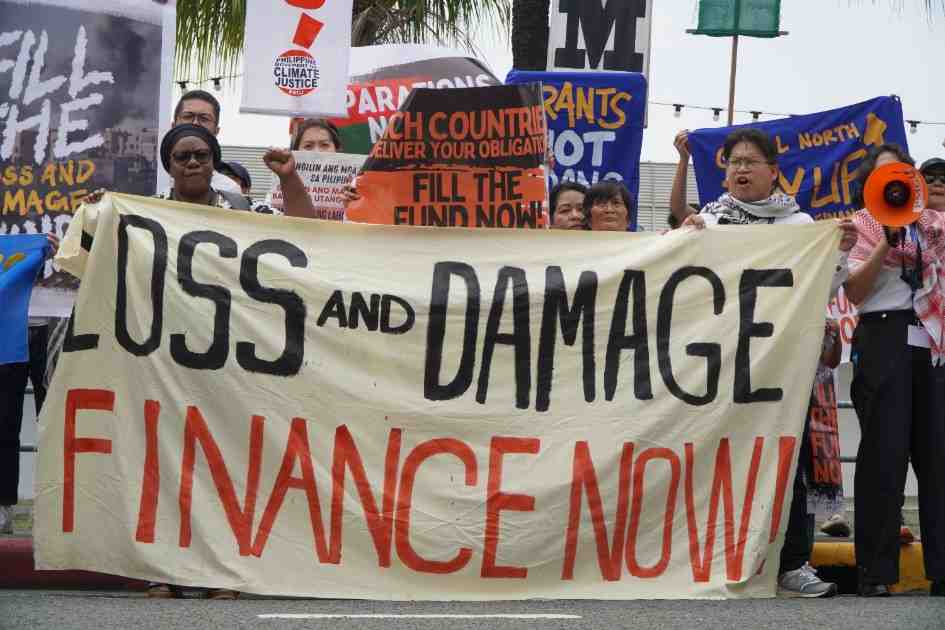

At the Manila meeting, the Loss and Damage Fund adopted policies critics say will delay urgent aid. Activists warn the fund remains empty and overly bureaucratic, denying swift relief to climate-hit nations. They urge polluters to pay their fair share before COP30.
Civil society leaders and climate justice advocates have denounced the outcomes of the 7th Board Meeting of the Fund for Responding to Loss and Damage (FRLD), calling it a “profound injustice” and a betrayal of climate-vulnerable nations.
The meeting, held over three days in Manila, was expected to finalize operational policies to make the fund fully functional. Instead, campaigners say the board endorsed a slow, bureaucratic, and under-resourced mechanism that undermines the fund’s original purpose, providing rapid relief to communities hit hardest by climate disasters.
A fund still without action or money
Nearly three years after its establishment at COP27 in Sharm El-Sheikh, the Loss and Damage Fund remains non-operational. Despite being hailed as a landmark achievement for climate justice, it has yet to deliver a single dollar to any climate-affected nation.
The Manila meeting was widely seen as a decisive moment to get the fund moving. However, civil society groups argue that the approved policies and procedures have instead entrenched slow, top-down systems reminiscent of traditional aid programs, contradicting the fund’s founding vision.
Ambassador Elizabeth Thompson of Barbados, a member of the FRLD Board, acknowledged the progress made in adopting the “Barbados Implementation Modalities (BIM)” but underscored that procedural steps alone cannot substitute for genuine financial commitment.
“While I am happy to see the BIM operationalized, it must lead to innovative approaches that give vulnerable countries access to resources at scale,” Thompson said. “But that cannot happen unless the fund is filled. The scale of the crisis far exceeds the money available. Following the recent International Court of Justice decision, it is clear that countries responsible for the climate crisis have a legal duty to pay for the loss and damage suffered by others. This is about justice, responsibility, and international law.”
Civil Society: ‘30 years of struggle and still nothing’
Global campaigners expressed deep frustration that despite decades of advocacy, the fund remains bogged down in red tape.
“It took us 30 years of struggle to establish this fund in 2022, and now, nearly three years later, not a single penny has reached the people who need it most,” said Harjeet Singh, Founding Director of Satat Sampada Climate Foundation and Global Convenor of the Fill The Fund campaign. “While the board deliberates, people are losing their homes, livelihoods, and lives. This is not just bureaucratic delay—it’s a profound injustice.”
Civil society leaders noted that the fund’s newly approved operational structure introduces multiple layers of approval and multi-month project cycles—entirely inconsistent with the urgency of climate disasters that destroy lives within hours.
Bureaucracy over urgency
“The board has approved an extremely traditional, multi-month project cycle that completely fails to meet the fund’s core purpose—getting money to disaster-hit countries within 24 to 48 hours,” said Brandon Wu, Policy Director at ActionAid US. “The root problem is the lack of funding. The fund was supposed to be needs-based, but because developed countries have failed to deliver, the board is designing policies around a few hundred million dollars when the actual need runs into trillions.”
Liane Schalatek, Associate Director of Heinrich-Böll-Stiftung US, said the newly adopted access rules further complicate the process instead of simplifying it.
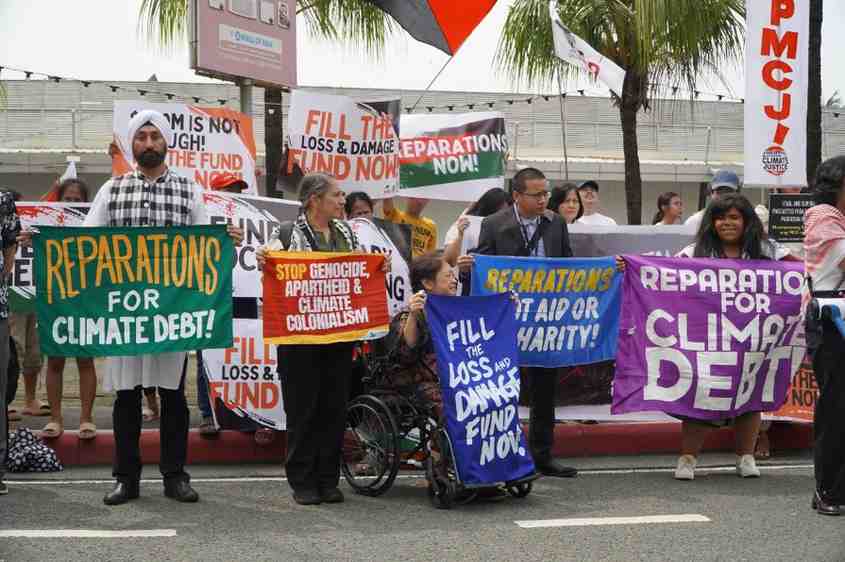
“The decision is a nine-page document with three annexes—ensuring that access will be complicated and slow,” Schalatek explained. “It fails to deliver the direct budget support that developing countries asked for and channels initial financing through multilateral development banks, the same intermediaries we wanted to bypass. That defeats the purpose.”
Global South decries ‘Deliberate Delays’ and loan traps
Developing country advocates accused rich nations of employing stalling tactics and pushing loan-based assistance rather than the grant-based support promised under the Paris Agreement.
“Governments of the Global North are simply not serious about this fund,” said Lidy Nacpil, Coordinator of the Asian People’s Movement on Debt and Development (APMDD). “Their delaying tactics have been on full display. While over $750 million was pledged, only about half has been delivered. What we need is a rapid-response fund that can disburse within hours of a disaster, not a slow, project-based system tied to loans. This is unjust and unacceptable for a crisis the South did not create.”
The fund’s interim hosting arrangement with the World Bank also came under heavy fire. Activists argue that the Bank’s involvement has crippled innovation and reinforced outdated practices.
“Three years down the line, we can say: we told you so,” said Mwanahamisi Singan, Focal Point for the Women and Gender Constituency. “We opposed housing this fund at the World Bank because it’s not fit for purpose. The Bank has shown efficiency only in charging its fees while killing innovation. It has dragged the fund back to a failed, traditional project cycle that will never work for loss and damage.”
‘Loss and Damage is a legal obligation’
Youth voices, too, demanded accountability and legal recognition of responsibility for historical emitters.
Charles Zander Deluna, Campaigner for World’s Youth for Climate Justice, highlighted the recent International Court of Justice opinion that frames financial support for loss and damage as a legal duty.
“The ICJ made it clear—compensating for climate harm is a legal obligation, not charity,” Deluna said. “Every emitting country bears responsibility for the damage caused and must make full reparation. Filling the fund is not an act of goodwill—it is compliance with international law. Every delay compounds the injustice already recognized by the court.”
‘From Manila to Belém’: Pressure builds ahead of COP30
As frustration mounts, civil society movements have vowed to intensify global mobilization ahead of COP30, set to take place in Belém, Brazil, in November 2025.
“This fund was established to deliver rapid, life-saving support—not to become another bureaucratic machine,” said Tasneem Essop, Executive Director of Climate Action Network International. “Civil society fought for this fund through relentless pressure, and we will continue that fight to ensure it fulfills its promise. Governments must now be held accountable to fill and operationalize it at scale.”
The Fill The Fund campaign and its allies plan a series of coordinated global actions in the lead-up to COP30, calling on wealthy nations to turn pledges into tangible, timely disbursements.
As climate disasters intensify across Asia, Africa, and Latin America, activists warn that every week of inaction deepens the suffering of millions. The Manila meeting, they say, should have been a turning point, yet instead, it has become another reminder of how global climate justice remains deferred.




