

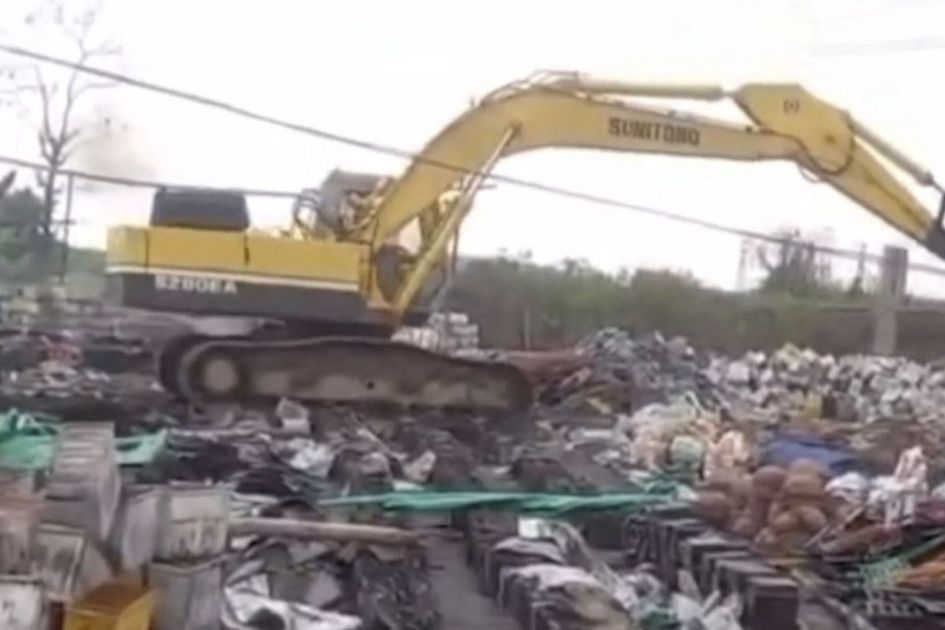



Authorities in Savar demolished two illegal battery recycling plants and seized used batteries during a raid targeting toxic lead pollution threatening public health and the environment in surrounding industrial communities.
A mobile court drive in Savar dismantled two illegal lead-acid battery recycling facilities and seized a truckload of used batteries during an enforcement operation targeting severe environmental pollution linked to informal lead processing.
The operation took place on Monday (18 May) at noon in the Hallmark area under Tetuljhora Union of Savar. It was led by Department of Environment Executive Magistrate and Senior Assistant Secretary Foyzunnesa Akhter.
According to the Department of Environment Bangladesh, the facilities were illegally burning used batteries to extract lead, a highly toxic process that poses serious risks to both the environment and public health. Acting on intelligence, the enforcement team conducted the raid, dismantled the illegal installations on site using excavators and seized a truckload of used batteries.
Officials confirmed that the dismantled units were operating within the premises of Hallmark Group in Savar, where hazardous recycling activities were allegedly taking place without authorization. They warned that such operations significantly contribute to air, soil and water contamination in surrounding industrial and residential areas.
Executive Magistrate Foyzunnesa Akhter said the drive is part of ongoing efforts to shut down illegal industrial operations violating environmental regulations, adding that similar enforcement actions will continue in vulnerable industrial zones.
Environmental experts note that informal lead-acid battery recycling remains a persistent challenge in Bangladesh, particularly in rapidly industrializing areas like Savar, where regulatory enforcement continues to struggle against informal and unregulated industrial activities.
Sohanur Rahman, Executive Coordinator of YouthNet Global, said the incident highlights a deeper systemic issue linking environmental harm with social injustice.
“Illegal battery recycling is not just an environmental violation; it is a justice issue. Communities living near these sites are paying the price of unsafe production systems. A just transition means ensuring worker protection, eliminating pollution and making sure no community is sacrificed for profit,” he said.




