

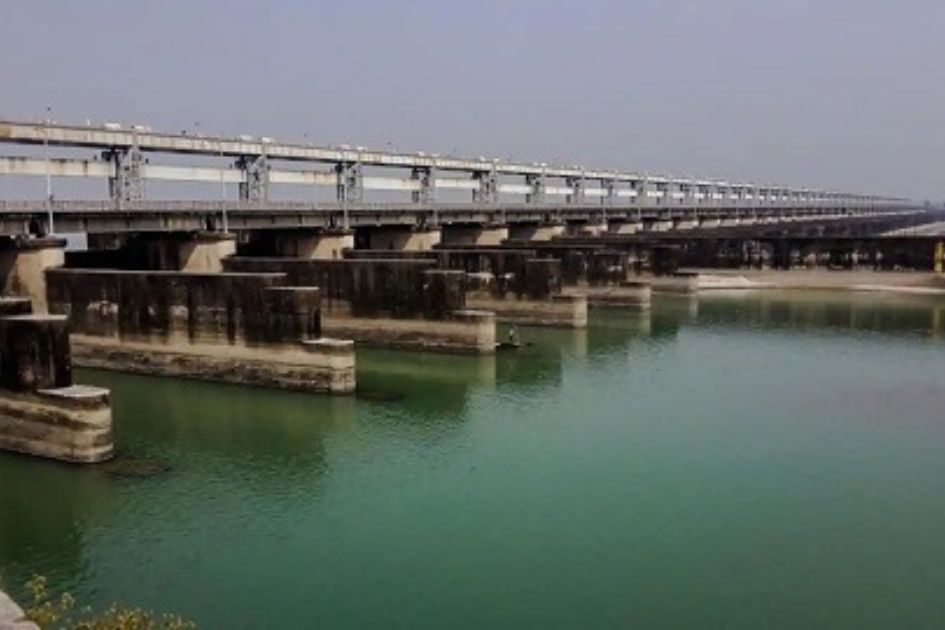



The treaty’s expiry offers India and Bangladesh a chance to rethink Ganges governance around climate adaptation, ecological flows, real-time data sharing and basin-wide cooperation.
New Delhi-Dhaka water dialogue faces 2026 deadline, with experts calling for a climate-resilient agreement beyond traditional water sharing.
The future of one of South Asia’s most important rivers is entering a critical phase. As the 1996 India-Bangladesh Ganges Water Treaty approaches expiry in December 2026, policymakers are being urged to begin negotiations without delay and develop a new agreement that reflects a changing climate, declining dry-season flows and the growing vulnerability of river-dependent communities.
India’s parliamentary panel on foreign affairs has urged the government to begin discussions with Bangladesh “without further delay” on renewing the Ganges Water Treaty, which governs the sharing of dry-season water from the Ganges River at the Farakka Barrage.
The recommendation comes as both countries face growing pressure to redesign the three-decade-old agreement amid major shifts in river flows, climate variability and increasing ecological challenges across the Ganges Basin.
The Parliamentary Standing Committee on External Affairs, chaired by Congress leader Shashi Tharoor, said renewal discussions should begin early, based on updated hydrological data and climate change projections, while taking into account the concerns of Indian states, particularly West Bengal and Bihar.
The committee’s report noted that bilateral talks on renewing the treaty had not yet started, although India formed an inter-ministerial committee in July 2023 to review the agreement internally.
Signed in 1996 for a period of 30 years, the Ganges Water Treaty has long been considered a key pillar of India-Bangladesh relations. However, climate change and changing river dynamics have exposed limitations in an agreement designed for a different environmental era.
A treaty built for a different climate era
The current agreement was developed using historical river flow data from 1949 to 1988, a period when climate patterns were relatively more stable. Scientists and water experts argue that these historical averages no longer fully represent today’s increasingly unpredictable river behaviour.
The treaty focuses mainly on dry-season water allocation from January to May, with fixed formulas for sharing available flows. However, it does not include strong mechanisms to respond to extreme drought conditions, sudden changes in river discharge or long-term climate impacts.
Climate change is challenging the assumptions behind traditional river treaties, which were often designed around historical averages. Future agreements increasingly need adaptive mechanisms that can respond to changing rainfall patterns, extreme events and ecosystem needs.
The agreement also does not comprehensively address several emerging challenges, including monsoon-driven floods, increasing sediment accumulation, riverbank erosion, ecosystem protection and biodiversity conservation.
Climate change reshaping the Ganges Basin
The Ganges Basin is experiencing significant hydrological changes due to rising temperatures and shifting rainfall patterns. More intense but irregular monsoons are contributing to a combination of flash floods and prolonged dry periods across the region.
Groundwater depletion is adding further pressure to river systems. Groundwater contributes significantly to maintaining dry-season flows in parts of the basin, but increasing extraction for agriculture and urban use is threatening long-term water security.
The retreat of Himalayan glaciers, which feed major rivers including the Ganges, is creating uncertainty over future water availability. Scientists warn that glacier loss may initially increase seasonal fluctuations before contributing to long-term reductions in river flow.
These changes are making transboundary river management increasingly complex, as future water availability will depend not only on past patterns but also on evolving climate conditions.
Downstream impacts on Bangladesh
As a downstream country, Bangladesh has experienced the consequences of declining dry-season flows in the Ganges system.
Reduced freshwater availability has contributed to rising salinity intrusion in southwest coastal Bangladesh, affecting agricultural production, drinking water supplies, fisheries and the fragile ecosystem of the Sundarbans mangrove forest.
For millions of people living along river systems, water availability is directly connected to livelihoods, food security, public health and climate resilience. Communities already facing rising sea levels, coastal erosion and extreme weather events are becoming increasingly vulnerable to changes in freshwater flows.
Bangladesh has repeatedly raised concerns over declining dry-season water availability and the impacts of upstream river management, emphasising the need for updated agreements that protect downstream ecosystems and communities.
Bangladesh seeks review of transboundary water agreements
Bangladesh has also indicated that it is reviewing existing transboundary water-sharing agreements with India and exploring a broader regional approach to river management.
Last month, Bangladesh Water Resources Minister Shahid Uddin Chowdhury Anee said the government was reviewing existing agreements and understandings related to transboundary water sharing with India. He said the issue had been given significant importance in the government’s election manifesto, with plans to pursue new agreements, strengthen the Joint Rivers Commission (JRC) and promote integrated river basin management involving all basin countries, including India, Nepal, Bhutan and China.
Anee said concerns over reduced dry-season water flows into Bangladesh due to upstream infrastructure development on transboundary rivers were not unfounded. He also highlighted that natural changes and climate impacts are reducing water availability in upstream regions, adding further pressure on downstream communities.
Earlier this year, following the formation of the new government after the February national election, Bangladesh Foreign Affairs Adviser Humayun Kabir also raised the issue of renewing the Ganges Water Treaty. With the 1996 agreement set to expire in December 2026, observers had expected treaty renewal to become one of the early priorities in bilateral discussions between Dhaka and New Delhi.
Kabir said Bangladesh would approach negotiations in a way that protects the country’s national interests while recognising the concerns of all stakeholders. Previous discussions on river agreements have often emphasised the importance of considering the interests of Indian states involved in water management, particularly those sharing the Ganges Basin.
“We will move forward in a way that serves our national interests,” Kabir said, while calling for a new beginning in bilateral relations based on the current political realities in Bangladesh.
The statements signal Dhaka’s interest in moving beyond a traditional water-sharing framework toward a broader model of cooperation that addresses climate change, river basin management, ecological sustainability and the long-term security of communities dependent on shared rivers.
Indian states also face water challenges
While Bangladesh remains highly dependent on downstream flows, Indian states including West Bengal and Bihar also face significant concerns related to water availability, irrigation needs, flood management and sediment-related challenges.
Future negotiations will require domestic consensus within India as well as cooperation with Bangladesh, ensuring that the interests of river-dependent communities on both sides of the border are considered.
From water sharing to basin-wide management
Experts say the renewal of the treaty provides an opportunity for India and Bangladesh to move beyond a narrow water-sharing arrangement and develop a comprehensive river basin management framework.
A future agreement needs to recognise that rivers do not follow political boundaries. Real-time data sharing, flexible water management, ecological flow protection and joint climate adaptation strategies could help both countries respond to future uncertainties.
Speaking about the need for a new approach to transboundary rivers, Sohanur Rahman, Executive Coordinator of YouthNet Global, said, “Water cannot be managed through borders alone because rivers connect ecosystems, communities and economies across countries. The future of the Ganges depends on moving from fragmented water-sharing negotiations to basin-wide management that prioritises climate adaptation, ecological protection and the rights of river-dependent communities. India, Bangladesh and other basin countries must work together to build climate-resilient river governance for future generations.”
The Farakka Barrage has remained one of the most debated issues in India-Bangladesh water relations, with Bangladesh frequently raising concerns about reduced downstream flows during the dry season. Greater cooperation in managing infrastructure, sediment movement and river systems could help address shared challenges.
Experts argue that the Ganges should be viewed as a living ecosystem rather than only a water-sharing resource.
Regional cooperation needed
The future of the Ganges Basin cannot be addressed through bilateral discussions alone. Experts increasingly argue that the region requires broader cooperation involving all basin countries, including India, Nepal, Bhutan and China.
Upstream decisions, Himalayan changes and climate impacts cross national boundaries, making regional river governance essential for long-term water security.
Strengthening institutions such as the Joint Rivers Commission and developing integrated river management approaches could help countries respond more effectively to climate risks.
A test for climate-era river diplomacy
The renewal of the Ganges Water Treaty offers India and Bangladesh an opportunity to transform a decades-old water-sharing arrangement into a climate-resilient partnership.
In an era of shrinking freshwater security and rising climate risks, the challenge is no longer only how much water countries share, but how they protect the future of a shared river system.
As the 2026 deadline approaches, the Ganges Treaty is emerging not only as a bilateral water issue but also as a test of South Asia’s ability to manage shared rivers in the age of climate change.




