

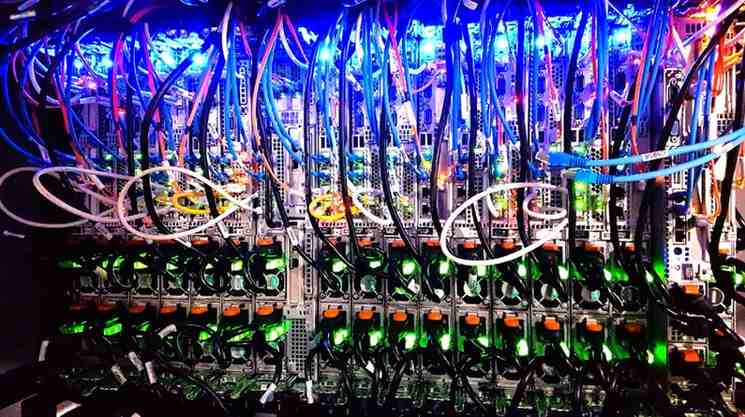



As Bangladesh expands domestic computing capacity, large AI data centres could intensify pressure on groundwater, electricity and ecosystems unless strict environmental safeguards govern their development.
Artificial intelligence is rapidly becoming part of the infrastructure of modern economic and political power. Countries capable of storing their own data, training domestic models and operating secure computing systems will exercise greater control over their economies, public services and national security. Those that remain entirely dependent on foreign cloud platforms may find themselves technologically capable but digitally subordinate.
Bangladesh therefore has legitimate reasons to develop domestic AI and data-centre capacity. The country already possesses important infrastructure, including the Tier-IV National Data Centre at Kaliakair. Its draft National Artificial Intelligence Policy 2026–2030 also reflects an intention to build an inclusive and innovation-oriented AI ecosystem.
Well-designed AI infrastructure could support Bangla-language models, cybersecurity, digital government, financial services, medical diagnosis, agricultural advisory systems, flood forecasting and climate-risk analysis. It could reduce the latency associated with overseas servers, improve control over sensitive information and provide universities and start-ups with access to advanced computing capacity.
However, AI is frequently described as though it exists somewhere in an immaterial “cloud.” In reality, the cloud consists of highly material infrastructure: land, concrete, steel, semiconductors, transmission lines, backup generators, batteries, electricity and water.
The most underestimated of these requirements in Bangladesh is water.
The hidden physical cost of artificial intelligence
AI data centres contain thousands of high-performance processors operating continuously. These processors generate enormous quantities of heat. Unless the heat is removed, the equipment becomes inefficient, unreliable or unusable.
Cooling can be provided through several technological systems. Some rely heavily on electricity, while others use water evaporation to remove heat. Water-cooled systems may improve energy efficiency under certain conditions, but they can also consume considerable quantities of water, particularly in large facilities operating around the clock.
A 2025 peer-reviewed assessment estimated that global data centres directly consumed approximately 140 billion litres of water in 2023. It derived an implied average direct water-use intensity of around 0.56 litres for every kilowatt-hour of data-centre electricity consumption.
Using that intensity only as an illustration, a continuously operating 100-megawatt data centre could directly consume around 491 million litres of water annually. The true amount would depend on the climate, cooling technology, operating load, water-recycling arrangements and the definition used to measure consumption.
That figure also excludes indirect water consumption. Thermal electricity generation can itself require water for cooling. Semiconductor fabrication is highly water-intensive, and manufacturing servers, batteries and cooling equipment creates additional ecological footprints.
The implication is straightforward: the water demand of an AI data centre cannot be assessed by examining only the water pipes entering the building. Its entire electricity, equipment and supply-chain footprint must be considered.
A water-rich country that increasingly lacks safe water
Bangladesh is often regarded as a water-abundant country because it sits within one of the world’s largest river deltas. That description is technically correct but increasingly misleading.
The country experiences an abundance of monsoon water and flood flows, yet it faces worsening shortages of clean, accessible and reliable freshwater during the dry season. Water availability also varies sharply across regions.
Dhaka remains heavily dependent on groundwater. According to the Asian Development Bank, groundwater levels in the capital have been declining by approximately two to three metres annually. The rate could reach five metres annually by 2030 without effective intervention.
This depletion is accompanied by serious surface-water contamination. Rivers and canals around Dhaka have been damaged by untreated sewage, industrial effluent, solid waste and unplanned urbanisation. In February 2026, the World Bank approved substantial financing intended partly to reduce water pollution and restore rivers and canals in Dhaka and surrounding areas, an indication of the severity of the problem.
The coastal belt faces a different crisis: salinity is entering rivers, ponds, soils and groundwater. Northwestern districts experience recurring drought and irrigation stress. Wetlands are being filled, rivers are encroached upon and groundwater recharge areas are disappearing beneath concrete.
Bangladesh is therefore becoming not uniformly but seasonally, geographically and qualitatively water-stressed. It may have water in aggregate while millions of people lack reliable access to water that is safe to drink, cultivate with or depend upon for ecosystem survival.
Placing water-intensive AI infrastructure within this context requires far more scrutiny than an ordinary industrial investment decision.
The economic promise must be examined honestly
Data centres are often promoted through the language of foreign investment, innovation and employment. Some of these benefits are real, but they are regularly exaggerated.
Large data centres require substantial capital during construction, but once operational they may employ relatively few permanent workers compared with manufacturing, agriculture or labour-intensive service industries. Their principal economic benefits arise from enabling other activities: cloud services, software development, digital finance, research, e-commerce and secure public administration.
Bangladesh should therefore not offer cheap land, tax exemptions, subsidised electricity or unrestricted water merely to host servers belonging to foreign corporations. Public incentives should be conditional upon measurable national benefits.
These could include affordable computing access for Bangladeshi universities, support for local-language models, domestic research partnerships, employment and training commitments, local cloud availability, cybersecurity capacity and transparent tax contributions.
Otherwise, Bangladesh could bear the energy, water and environmental costs while most profits, intellectual property and strategic control remain abroad.
Electricity presents a parallel challenge
Water is not the only constraint. AI data centres require uninterrupted and highly concentrated electricity supplies.
The International Energy Agency projects that global data-centre electricity consumption could more than double to approximately 945 terawatt-hours by 2030. Data-centre consumption is expected to grow much faster than electricity demand from other sectors.
Bangladesh already struggles with expensive power generation, fuel-import exposure, capacity payments, grid constraints and periodic supply shortages. A major AI data centre connected without adequate planning could place additional pressure on the grid or create demands for captive gas, diesel or imported liquefied natural gas.
This would introduce a dangerous contradiction: Bangladesh might pursue twenty-first-century artificial intelligence through an increasingly expensive and carbon-intensive fossil-fuel system.
Data centres should therefore be approved only when developers can demonstrate additional renewable generation, energy storage, demand-management capacity and grid-support arrangements. Merely purchasing renewable certificates while consuming fossil-dominated grid electricity should not be treated as genuine clean-energy compliance.
Location is a question of justice
Developers frequently select data-centre locations based on land availability, fibre connectivity, proximity to cities and access to power. Bangladesh must add three non-negotiable considerations: water availability, climate exposure and community rights.
Dhaka and its surrounding industrial corridors are convenient for connectivity, but they are also among the country’s most environmentally stressed areas. Groundwater depletion, heat, pollution, congestion and wetland destruction already affect residents.
Coastal areas may offer land or access to power infrastructure, but they face cyclones, storm surges, salinity and freshwater scarcity. Floodplains and wetlands may appear inexpensive, yet construction there can destroy natural drainage and increase disaster risks elsewhere.
A project-level environmental impact assessment is insufficient. Approval must be based on a cumulative watershed or aquifer assessment examining all existing and proposed users within the same ecological system.
A data centre may appear sustainable within its boundary while collectively contributing to the collapse of the surrounding water system.
A water-secure AI policy for Bangladesh
Bangladesh should establish a dedicated regulatory framework before approving hyperscale or AI-focused data centres.
First, the use of drinking-quality municipal water and unrestricted groundwater for routine cooling should be prohibited in water-stressed areas. Human access to water, food production and ecosystem survival must take precedence over computational demand.
Second, developers should be required to prioritise closed-loop cooling, direct-to-chip liquid cooling, recycled municipal or industrial wastewater and rainwater harvesting. “Water-neutral” claims should not be accepted unless independently verified within the same watershed.
Third, every major facility should publicly disclose its annual and seasonal water withdrawals, water consumption, water source, Water Usage Effectiveness, electricity consumption, Power Usage Effectiveness, carbon emissions and backup-fuel use.
Fourth, licensing should consider dry-season water availability rather than annual averages. A facility that appears manageable during the monsoon may become socially destructive during March or April.
Fifth, data centres should be excluded from depleted aquifers, ecologically critical areas, wetlands, natural drainage channels and locations where surrounding communities already lack safe water.
Sixth, developers receiving public incentives should contribute to local water restoration, wastewater treatment, aquifer recharge and renewable-energy infrastructure. These contributions must be additional, independently monitored and protected from greenwashing.
Finally, Bangladesh should determine how much centralised computing capacity it genuinely needs. The country may gain greater economic and social value from efficient smaller models, distributed computing and specialised AI applications than from competing symbolically to host enormous frontier-model training facilities.
Technology must remain subordinate to natural rights
The policy debate is not about rejecting artificial intelligence. Bangladesh cannot afford technological isolation. It needs secure national computing capacity and must build expertise in AI systems that serve its people.
But no technology should receive an automatic right to consume water, energy or land simply because it is labelled innovative.
Under a Natural Rights Led Governance approach, rivers, aquifers, wetlands, ecosystems, present communities and future generations are not expendable inputs for technological growth. They are rights-bearing stakeholders whose survival establishes the limits within which investment must operate.
The correct question is therefore not merely whether an AI data centre will increase GDP or foreign investment. The questions are whether it will diminish the water security of nearby communities, exceed the regenerative capacity of the aquifer, increase fossil-fuel dependence or transfer environmental costs to people who receive few benefits.
Bangladesh should build an AI economy, but it must build one suited to the ecological reality of Bangladesh.

A nation does not achieve technological sovereignty by sacrificing its water sovereignty. And an AI facility that makes computers more powerful while leaving people, agriculture and nature more vulnerable cannot reasonably be described as intelligent development.




